My Experience
Listening to “The Out Crowd” has been a devastating experience. The MPP policies effects on the lives of migrants from central America left me feeling a sense of frustration with the current climate not only of my own country but the world as a whole. The story told of migrant perspectives but also from the perspective of Asylum officers whose job has essentially turned to be the exact opposite of what they had originally chosen the job to do. I have already had my own frustrations with how our government treats its own people, like me and many other veterans who experienced ill living and deployment conditions which could have been prevented by simple cleanup methods. After my own experience working directly with the Kampala Embassy in Uganda on humanitarian things like toilets, beds, clothes, water and other living essentials for people there, the treatment of those seeking asylum at our own border has left be baffled. In reality, these could very well be future Americans with respect and admiration to our country if it was the pillar of safety they supposed it to be, yet we let our first impression be to let them suffer in a host of danger and death. This left me feeling genuinely disgusted more than anything.
Classifying My Experience
I would classify my experience as Frustration. Though frustration seems like a lesser way to express how I feel, maybe “Fucking Appalled” would be a better way to classify my experience to a more realistic interpretation of the knots that formed in my stomach while listening to this.
Features prompting my experience
Almost the entirety of this podcast? Episode could be listed as a feature prompting my experience, but I’ll give you excerpts from each of the sections and my opinions on the individual situations as they came to me.
First, in the beginning we are introduced to some of the refugees and the people helping them just outside the US Border. The conversation goes as follows:
Helen Perry
And so what we want to do is put in a water purification system right over here, run a hose out into the water. It’ll suck up the water, purify it, and they’ll have their own water source.
Ira Glass
And you’re the one organizing this?Helen Perry
Yeah.Ira Glass
Not a government?Helen Perry
No, no.Ira Glass
Not the UN?Helen Perry
Nope.Ira Glass
Just you, a person.Helen Perry
I’ve never– people are like, have you done water? And I’m like, no, but like, I’ll Google it.Ira Glass
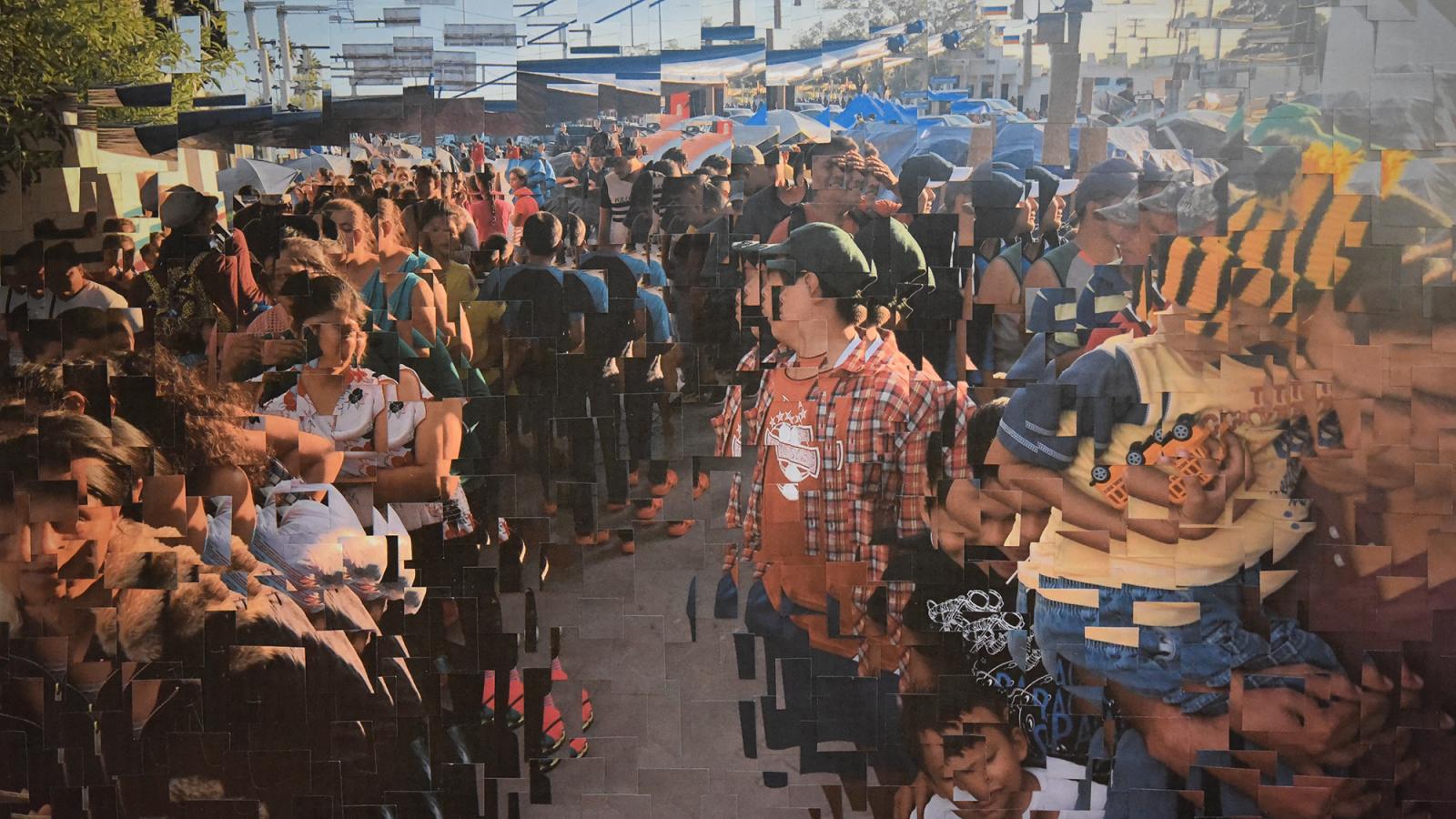
I have to say, this is the thing that hit me hardest in Matamoros. You have thousands of people stuck there, right on our border, two big governments– the United States and Mexico– one of them, of course, a lot richer than the other, and nobody’s looking after these people with food and water and shelter, except a bunch volunteers who raised their hands and said, we cannot ignore this.
This was the first moment that made me sit back and really the start to my irritation that only grew as the episode progressed. There wasn’t even sanitary water afforded to these people and neither government was aiding them. this was something that regular people were just googling and trying to do themselves because otherwise it would never happen.
The next section was interviews with Asylum Officers about what had actually happened during the MPP implication, originally called “Remain in Mexico”. The following is an interview with Doug Stephans, an Asylum officer who quit and wrote up articles about the illegal operations within the MPP. It talks about a father and son duo from Honduras that Doug had interviewed under the MPP guidelines.
Molly O’Toole
Of course, the guy and his son don’t understand why they’re even talking about Mexico. They don’t understand any of this at all. The interview continued.Doug Stephens
So he had tried to find a place to live there, had tried to get a work permit in Mexico, and was essentially denied. And as they’re transiting, he’s talking about, you know, encountering cartels and witnessing other migrants being murdered and tortured in front of his son, and fleeing, and barely getting away, you know, while death threats are being shouted at him, and, you know, talking about his son having nightmares for weeks because of this.And then, they get stopped by the police, and the police take all of their money, their cell phones, and because I can’t get them to say these magic words of, like, yeah, they threatened me because I’m Honduran, but that’s all they had to say. But they don’t know that, right?
Molly O’Toole
Because I’m Honduran. Those would be the magic words that would put them in a protected category. They were targeted because of their nationality. Though even if the father had said because I’m Honduran, they probably still would have been sent back to Mexico, because odds are he didn’t have any evidence proving that any of this happened. Doug, he did what the policy told him to do. He sent them back to Mexico.
A vetting process, while required to maintain safety, shouldn’t require people to return to the violent areas they’re claiming asylum from. They should be protected by the rule of the governing country they came to with pleas of aid. They should not be punished for trying to save themselves and their families. For those that do lie to work the system, they will be found out and returned after the investigation and interviews. This way you can weed out the liars while still offering protection and support to those who actually need it.
The next section, David is a Honduran Refugee, seeking Asylum in the US for himself, his son, and his daughter. His daughter being nineteen was separated from them during these events luckily.
Emily Green
David says he wanted to ask for asylum in the US, but the agents didn’t listen to him. They just gave him documents to come back to a court date in December. He can’t go back to Honduras, he says.David
No tengo donde ir. No tengo nada. No tengo dinero. A mi me dicen aqui en esta lado donde vamos a pasar dicen que secuestran mucha la gente y no se que hacer.Emily Green
I don’t have anywhere to go. I don’t have anything. I don’t have money, he says. They say that here, where we’re being sent, a lot of people get kidnapped, and I don’t know what to do.We only talked for 10 minutes. I ended up lending him my phone. He called his sister in New Jersey and explained what happened– that he made it to the United States only to be sent back to Mexico.
It was getting dark out, and I’d been told not to stay in Nuevo Laredo past dusk. I crossed back into the US to go to dinner, probably not a mile away from where I’d last seen David, and my phone rang. It was David’s sister. I’ll call her Laura.
She had my number because it was my phone he called her from earlier today. She was crying so hard I struggled to understand what she was saying. She tells me David and his son had been kidnapped just hours after I’d left them. She’d gotten a call from a cartel demanding ransom.
Laura
[SPEAKING SPANISH]Emily Green
Laura says of the cartel told her the ransom was $9,000 for David, and another $9,000 for his son, so $18,000 total. They put David on the phone briefly so she knew he was alive, and then the kidnappers got on.
Kidnapping is rampant just outside the border as cartels work to make quick money by ransoming refugees to their American family counterparts. David trusted our government to keep him safe, and instead we sent him right back out into the hands of the kidnappers.
Narrative Technologies at Work
Moral Suasion is working at its height in this episode. We are to feel empathetic to the situation of the people within these horrible situations. The goal is to prompt some type of response in the audience to either help the situation themselves the way many people have in person, or maybe protest, speak out against, or even vote against this injustice.
Some Final Thoughts
When I was working with the Kampala Embassy in Uganda back in 2019, I was part of a Logistics Combat Element designated to crisis response operations within the African theatre of engagement. The majority of these orders were combative in nature and relative to a crisis of war related circumstances. Though even with the primary directive being in case of a threat to occur, we still engaged with humanitarian needs and classified them as a crisis as well. I was proud to serve a country who at the time designated humanitarian efforts as a crisis. We created contracts with different corporations or governments to offer clean water, beds, buildings, heavy machinery (for construction), clothes, and sometimes even other comfort items. It’s very sad to see that in a few years, the priorities of our government have shifted so much that we don’t even offer the same sanctuary to those doing their best to start their new American lives. Something all of our ancestors did at one point or another, the same thing that made this country a symbol of safety and freedom. It’s heart wrenching to see just how far from our roots of asylum. I’ll leave you with the very second paragraph of our own Declaration of Independence
We hold these truths to be self-evident, that all men are created equal, that they are endowed by their Creator with certain unalienable Rights, that among these are Life, Liberty and the pursuit of Happiness.–That to secure these rights, Governments are instituted among Men, deriving their just powers from the consent of the governed, –That whenever any Form of Government becomes destructive of these ends, it is the Right of the People to alter or to abolish it, and to institute new Government, laying its foundation on such principles and organizing its powers in such form, as to them shall seem most likely to effect their Safety and Happiness.
Declaration of Independence: A Transcription | National Archives
Featured Image
Photo Illustration: Lola Dupre; Photograph: Ira Glass. This American Life Produced in Collaboration with WBEZ Chicago, All Rights Reserved.