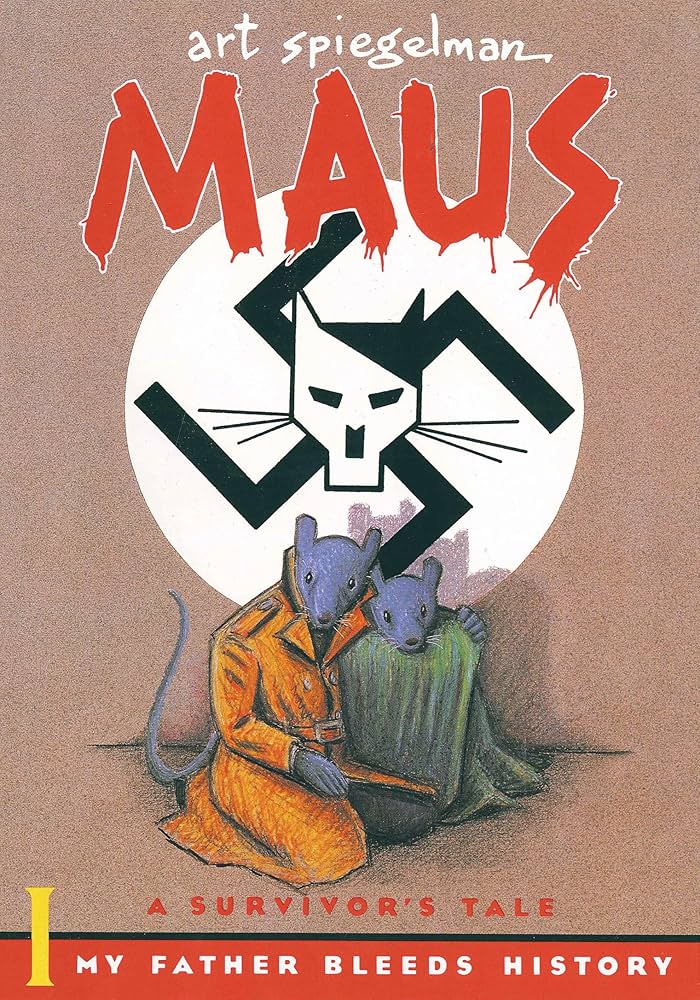
About the book
Maus is a graphic novel written and illustrated by Art Spiegelman. This is the first of two novels, the first being published in 1986. This graphic novel tells and illustrates his father’s story as a survivor of the Holocaust.
My Experience
This book was certainly an experience, it brought me through an emotional roller coaster and had me on the edge of my seat. It was particularly impactful because this was the real story, that knowledge while reading intensified every emotion I felt while reading. It was an incredible and deeply personal story that was amplified by the art and even the little details about how his father told the story. The symbolism behind depicting Jewish people as mice and the Nazis as cats is a choice that makes the telling of this story so much more profound and as well as a little haunting. I experienced new emotions that I’m not even sure how to classify. I heard plenty of stories about the Holocaust from history classes and such, but this felt like a completely different kind of retelling. I believe that significant difference can be attributed to the artistic choices Spiegelman made. The fact that this story is a graphic novel allows the reader to engage in this story in a completely different way than just a written text, the visualization of it made the experience far more intimate in a way. However, the simplistic art style made it so it didn’t take away from the story itself. Every choice made Maus feel less like an historical account and more like me as the reader was truly reliving his father’s memories. Overall, the combination of the art and the story telling was truly what made this graphic novel and incredible read.
Classifying My Experience
My experience reading Maus, I found, can’t quite be classified by any word found on WonderCat. The closest thing I found was connection. Connection meaning feeling a bond or linked to others in a community. Reading this story helped me better understand some of the struggles the victims of the Holocaust had to face, what exactly they were forced to do in order to survive, and the lasting effects the Holocaust had on its victims. After reading this I felt a level of understanding I hadn’t quite felt before. It was a strange realization, I felt as if I had been far more ignorant before reading this graphic novel. It prompted a completely new experience for me, it was different from any other retelling. Like the story was personal to me even though I don’t know Spiegelman or his father. That’s why I believe connection is the best word to use while describing my experience because after reading I felt I had a better understanding of this community and the horrors they went through. Even though that may sound a bit ignorant, after all it was just a graphic novel. However, I felt as if there was something so undeniably haunting about this read. Especially because it was told visually. In textbooks you may read about the Holocaust it’s just purely informational, but in Maus the horrors are drawn out for you. That is why I could only describe what I felt as a connection.
Features Promoting My Experience
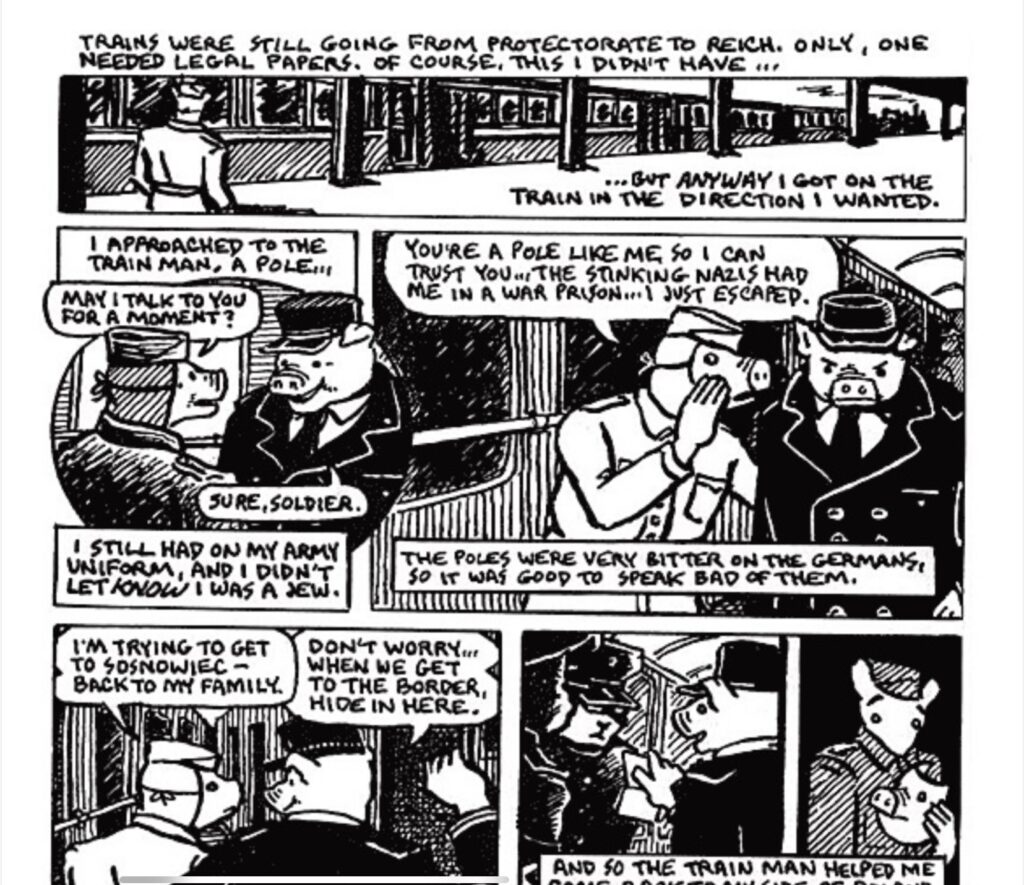
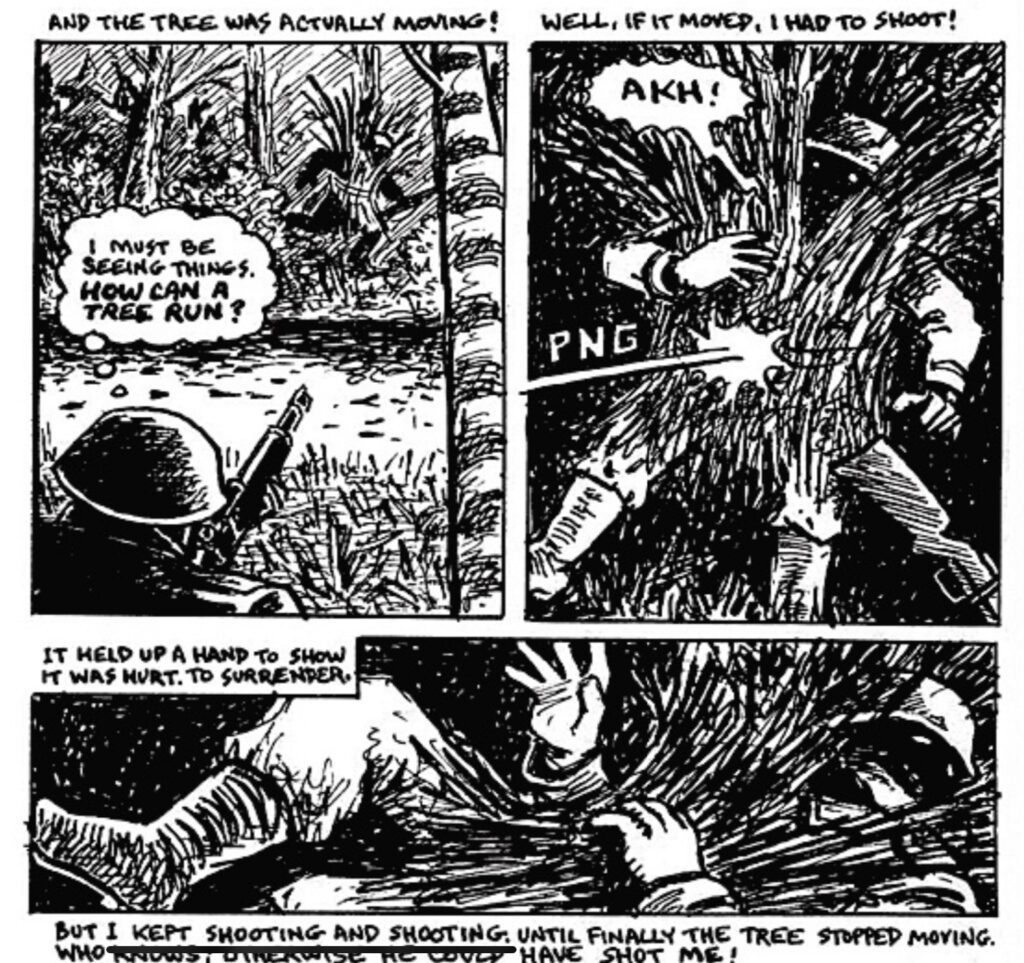
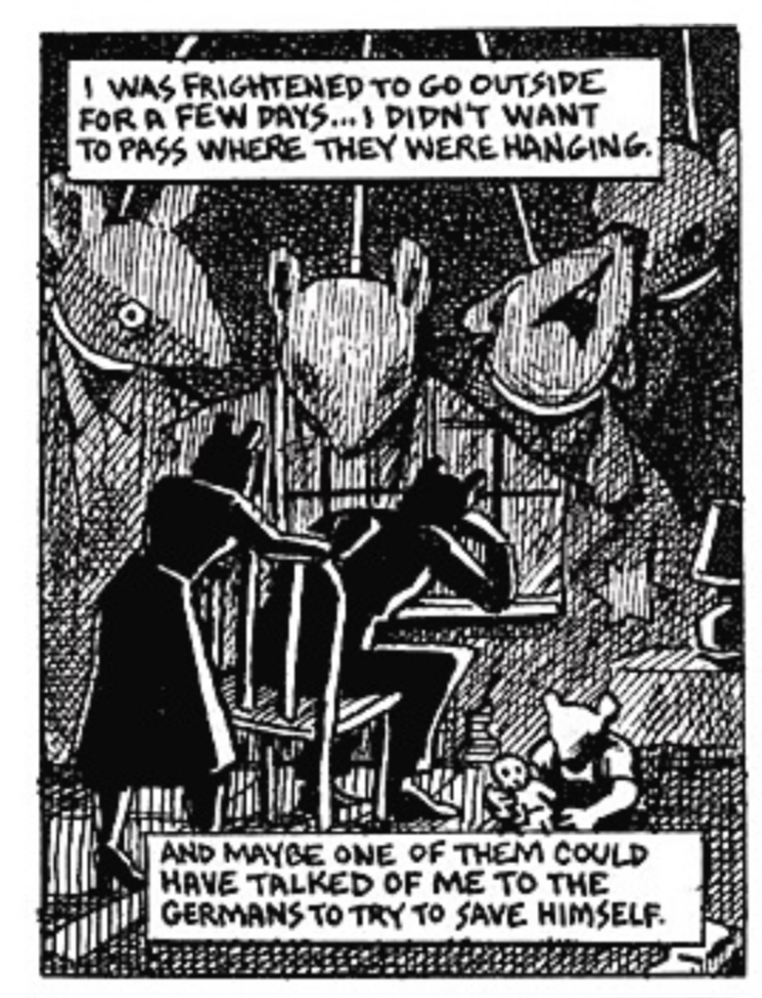
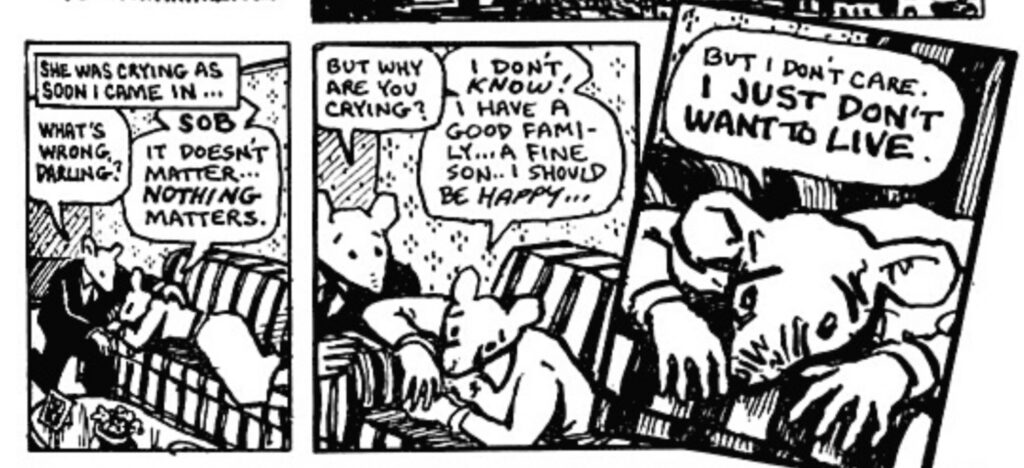
The primary feature that promoted my experience was the art. I had never read a graphic novel about someone’s personal experience of the Holocaust before this one, that alone made this experience unique. The visual aspect of it left nothing to the imagination, everything was drawn out for the reader. Unlike in just written novels where what’s happening is sometimes left up to the reader’s imagination. I was able to visual experience this retelling alongside its narration which, like I previously stated, amplified that feeling of connection. One panel that stands out to me is when Vladek, Art’s father, pretends not to be Jewish so a polish officer can sneak him onto a train. I found the visual aspect of Vladek with a mask on was a wonderful way to show this and was just one of the many panels that attributed to my experience. All of the illustrated symbolism throughout this book aided in the feeling of connection, like how the Jewish people in this graphic novel were drawn as mice. It shows the dehumanization their community faced during the Holocaust. There are also choices as simple as line work that can affect the reader’s emotions and experiences throughout this story. Not only can a simple line show the complex emotions a character is feeling even with such a simple art style, smooth or jagged lines can change the tone of the scene. Overall, the visual elements shaped my experience and deepened that feeling of connection.
Narrative Technologies Promoting My Experience
I found that the best technology on WonderCat to be an Empathy Generator. I speak a lot about the art and how it really made that feeling of connection stronger, I think the art can also be described as an emphatic generator. I’m aware there is no narrative technology about art but considering how important the art was to me and my experience I had to find a technology that I think went hand-in-hand with it. That’s why I chose the term empathy generator as the technology that promoted my experience. The art was the thing that made me feel true remorse for the characters because as the reader I got to visually experience what Vladek had experienced rather than just imagined it. His story is very emotional on its own but the visual aid helped. That’s why I believe empathy generator is the right term to use. The art was meant to help the reader sympathize with the characters in this graphic novel, all of the artistic choices were deliberately made to emotionally impact the reader and help them experience even just a fraction of the horrors that Vladek and others in his story experienced. I too found myself sympathizing and feeling remorse for the people who had experienced this. I believe that was exactly Spiegelman’s goal with his art, to make it an empathy generator.
Sources
Experiences – WonderCat. https://wonder-cat.org/experiences/ Accessed 21 Feb. 2026.
Technologies – WonderCat. https://wonder-cat.org/technologies/ Accessed 21 Feb. 2026.
Spiegelman, Art. 1986. Maus I: My Father Bleeds History. Pantheon Books
Featured Image
Cover of Maus I: My Father Bleeds History, Cover art by Art Spiegelman, All Rights Reserved.