My Experience
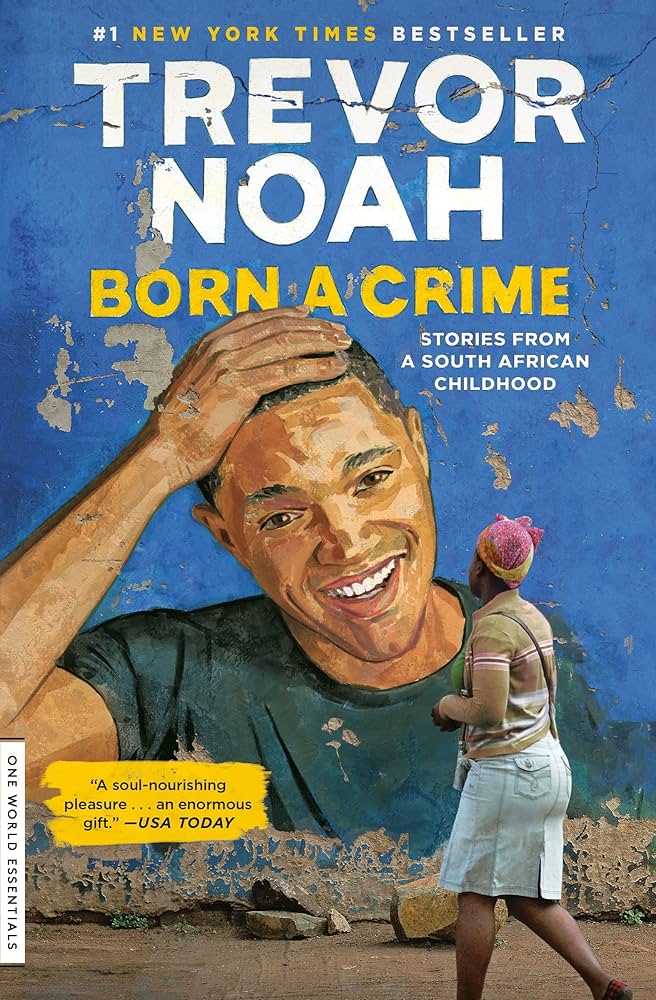
I chose Born A Crime by Trevor Noah because I’ve been wanting to read it ever since it was first published in 2016. As a history major, I’ve been educated on apartheid a few different times, and throughout textbooks. I’ve always found it to be an interesting concept, especially considering how recent it was. Now that I was finally given the opportunity to read it, I was given the opportunity to learn more about that system on a deeper and more personal level. As I have currently gotten through more than half of the book, I’ve already realized how different this experience has felt rather than reading it from a textbook. I’ve also found my new love for memoirs. I felt placed inside of Trevor Noah’s childhood. I was learning about apartheid and feeling connected to it. As I was reading I felt like I was visually plunged into South Africa during this time. I was learning about this era in such a new, fascinating, and personal way. I realized that although I knew about apartheid, I never read a personal account of how it affected everyday life, education, and religion. It made me rethink my understanding of history to be much less broad, general, and textbook.
Classifying My Experience
The first describable experience I had was immersion. As I continued to read along, the more I could literally visualize myself in the environment being described by the author. I felt the emotions like humor and danger as they were occurring. This and the culture and detail being described made the setting feel alive and familiar, it did not feel distant or imaginary. The second experience I had is relearning. I thought I had already learned and understood enough about apartheid, but this book has forced me to realize learning is never done. I always read about apartheid and it’s political aspects, after reading I now know that apartheid was not just surface level segregation like I thought it to be. It was a system that affected language, religion, and general identity. With the immersive feeling and the comedic style of writing, I can easily detach from the heaviness of the trauma. The concept of immersion, no matter the level felt, and relearning history through a personal experience is an experience that I’m sure is very common in memoirs.
The Features Prompting My Experience
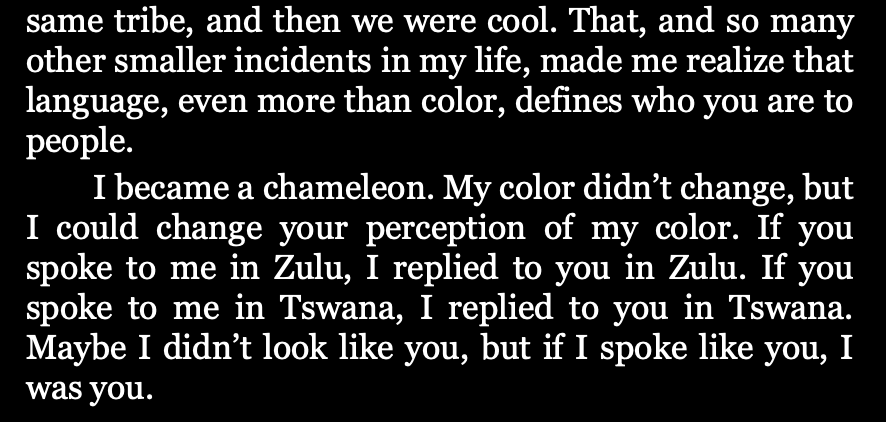
First, the structure of the book itself. Each chapter starts with a short historical explanation of apartheid laws and cultural context, before Noah’s personal story continues. For example, in the first chapter Noah explains that under apartheid, interracial relationships were illegal, which is why he describes himself as “born a crime.” This shows the historical and cultural context that then transitions into his personal account. The humor in his writing is also essential to my experience. Even when describing the severity of the poverty and danger he often faced, he adds comedy. The balance between humor and seriousness, deepened my sense of immersion. The portrayal of his mother also stood out to me. He puts emphasis on how his mother navigated and showed resistance to apartheid in her own way. Her choices on where to live, raise him, and educate him show their navigation and survival through an oppressive system, making it feel like a less distant, and real world. For example, in Chapter 4 Noah writes about her prioritization on language and how it became essential to his survival. I never thought of resistance to look like this. When I think of resistance I generally think of protests and rallying, but in this case, it’s in the form of learning and survival.
Determining The Narrative Technology
The main narrative technology I recognized is parable. Each chapter tells it’s own story where a problem is presented, and it ends with takeaways. Instead of just preaching about how hard life was under apartheid, Noah shows us through his personal stories. The chapter starts with historical context, and then tells a story. I get a sense of background and understanding, and then I get to feel attached to and placed in it. When it came to the relearning I experienced, I would best describe this technology as shame reducer. For any reader who was not previously versed in apartheid and it’s history in South Africa, it can almost build shame and guilt to read the traumatic childhood of Trevor Noah. But instead, Noah’s tone is not judgmental. His writing allows us to learn about his life and why his mother initially made the choices she made, and takes away the pity and defensiveness one may feel upon reading. Instead, pity is replaced with humor and empathy. It gives me emotional comfort and helps further my immersive experience.
Featured Image
Cover for Born A Crime. New York: Spiel & Grau. All Rights Reserved.