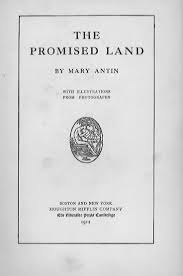
The first immigrant book that I’ve ever started reading was an autobiography of Mary Antin by the name of “The Promised Land,” a book that surpising enough i was simply enjoying it. Though I will admit that there some times where I did want to stop reading because, and i mean no disrespect towards the author and the one who recommended the book, but I was at times kinda boring, and I was thinking about trying to find maybe a fairy tale that use elements of the immigrantions wrap in their story, but i chose to stay with the book and im glad that i choose to stay with it because i really love the book, espically when you keep on reading. But for a bit of context, this is basically the autobiography of the author Mary Antin as she is coming from what is now Belarus, and she is coming to the United States and trying to adapt to it the American culture
EXPERIENCE
after reading the book i had some sort of a unique experience from reading it. the first one was actually boerdom. As I previously stated before in the intro, there were multiple times where I would find it utterly boring to the point where i would stop reading altogether. The reason for this is due to the style. this style is new to me, and because of that it was really hard it continue on with out trying to stop and try to get another book (but in doing so i have to make an entire new post and i’m not want to do that espsecally when i was so far in the book). i think what makes it so boring was the lack of story. what i mean by this is it felt less then a story from a book and more of the memory that someone that is telling you. wether a friend or a partner. another experience that i felt was sympathy, now let cook there was a quote in the story that made me go and feel sympathy for her. in the beginning of the book more specifically pg 22 she says
“It was not easy to live, with such bitter competition as the congestion of population made inevitable. There were ten times as many stores as there should have been, ten times as many tailors, cobblers, barbers, tinsmiths.” pg22. Chapter 1.
The technology that she was using here is called an empathy generator (which allows the audience to experience the true remorse of a character). Here, she would speak about some of the challenges she has faced when she came to the United States. One example of her troubles is working. Considering how hard the competition is here in New York (especially during that time, while immigration was at it’s highest), there have been some challenges for people who are newer to America, especially when it comes to finding a job. She also uses the same technology for the identification experience. Later on in the same passage, she speaks on a similar situation that she speaks about. later on she says
“Artisans had the right to reside outside the Pale, on fulfillment of certain conditions. This sounded easy to me, when I was a little girl, till I realized how it worked. There was a capmaker who had duly qualified, by passing an examination and paying for his trade papers, to live in a certain city” pg22, chapter 1
now even though she is speaking about a specific type of job, this is an experience that most people during the time of the author and our modern time would understand and recognize in their everyday life.