What is This Story
The novel Bread Givers by Anzia Yezierska is a story about the youngest daughter of an Orthodox Jewish rabbi. Their family moved to America in hopes to achieve the American Dream, but their expectations were not met in the way they expected. Coming from wealth and luxury in Russia to poverty in America, their family tries to work their way back up. This story has an interesting depiction of how religion and faith can impact immigration and not always in the best way.
My Experience
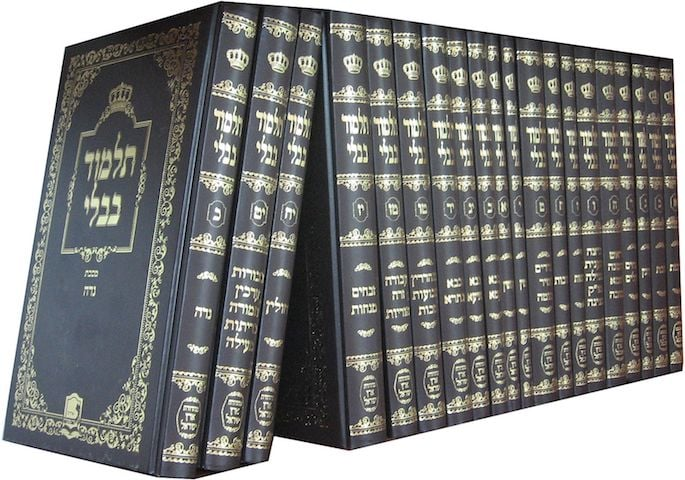
Very early on in this novel the pattern of religion outweighing earthly belongings is present. Sara, the youngest daughter explains that when they moved to America they were forced to leave behind items such as their brass pots, pans, and even the featherbeds her great grandmother gave her mother as a wedding present. These items were not left behind due to the difficulty of travel but for the fact that her father wouldn’t let them bring it. The father being an Orthodox Jewish rabbi insisted that his family carries his books instead, his books on religion and faith. His reasoning being that he believed America was perfect.
“‘Woman!’ Father said, laughing into her eyes. ‘ What will you need old feather beds? Don’t you know it is always summer in America? And in the new golden country, where milk and honey flows free in the streets, you’ll have new golden dishes to cook in, and not weigh yourself down with your old pots and pans. But my books, my holy books always were, and always will be, the light of the world. You’ll see yet how all America will come to my feet to learn.'” (page 6)
This quote on its own gave me the feeling of like a palm to the face. I felt like I just wanted to shake my head and yell “what are you doing?!”. The father just had no concept that they were completely starting over again, he just cared about what he had. Before this scene it is also noted that the father always received the best parts of the families food and items so he became ignorant to how they lived. This is where I believe that the concept of storyworld begins to come into this Novel, because the father has this magical image in his head to what the world has to offer for him. The use of using “Woman” to describe the mother when the father spoke also is like a storyworld to me as a reader in a modern time because it is not normalized to refer to a woman in such a way. The mother just accepts that is how she is to be referred to, but in today’s society all hell would break loose if a man started calling his girlfriend or wife woman.
Classifying My Experience
This palm to the face feeling I would classify as a new experience. Nothing on the experience glossary exactly fit what I experience here. I would describe palm to the face as an feeling of not understanding what a character is saying because it is just that out there. I would describe this almost as the opposite of empathy in a way. Empathy being described as “The feeling of understanding another person’s actions. You may not condone the actions or identify with the person, but you accept that their actions weren’t wrong” in our experience glassary.
Looking deeper into what I was feeling in that moment I started to think that maybe it was confusion that I was feeling, but now I think maybe I was perplexed. Confusion was described in the experiences glassary as “The feeling of being bewildered or unclear.” and I don’t think that fully fit how I felt in that moment. Perplexed is described in the merriam-webster as filled with uncertainty : puzzled” and I feel that puzzled is a good description. For me it did not make much sense to where he got this idea that America was the magical land, and I feel that his ideas were so out there that I was just puzzled over what he was saying.
Determining the Narrative Technology
With the way I felt reading this scene I think that the narrative technology used was hamartia. Hamartia is defined as “A situation in which a character is not guilty of a moral crime, but has instead made “a mistake of perception, like a misheard word or a moment of blurred vision” (Fletcher 67)” in the narrative technology glossary. I feel that this technology explains this situation perfectly. The father moraly did nothing wrong, he just believed that America held bigger and better things for them. The father was wong in his judgement and could be seen to have had “blurred vision” on what America was like. The blurred vision that the father had in that situation is what caused me as a reader to feel perplexed to what he was saying. Moraly he wasn’t wrong because he believed that there was better for his family, but in reality he was wrong of his perception of America.
This lapse in judgement caused the father’s family to come to America with nothing and have trouble working their way up. This family left Russia with wealth came to America with only holy text, no earthly belongings, and in poverty. The fathers ideas of America were not true in the end and this family had to learn this the hard way.
Featured Image
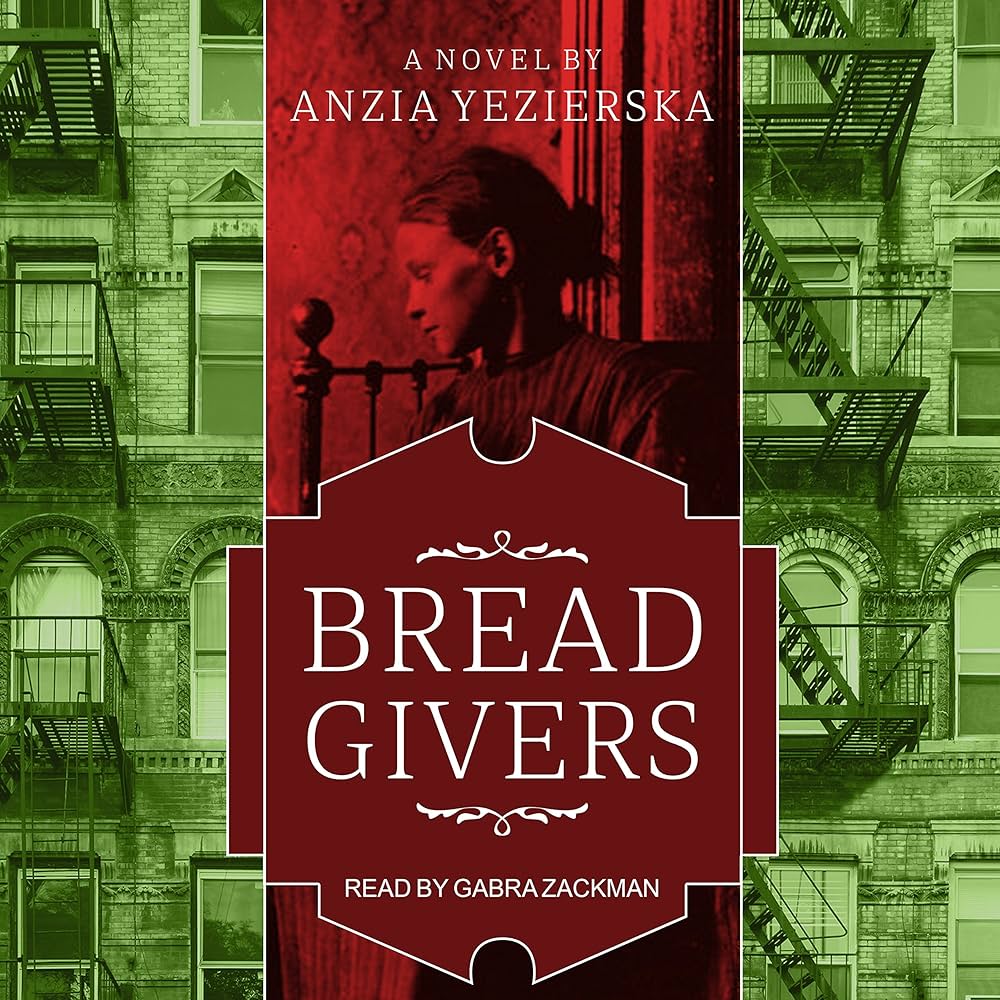
Cover to the audiobook of Bread Givers read by Gabra Zackman. All rights reserved.