Introduction
Unterzakhn by Leela Corman has given me a truly unique experience as a reader. I haven’t read a graphic novel in a little while, so it was challenging to pick out the techniques that are used in visual storytelling. However, I think I did good for myself. I learned a lot along the way in terms of how graphic novels communicate their narratives and what I noticed about my reading habits while discovering them.
Unterzakhn is about two twin girls growing up in New York City’s lower East side in the 1910s. The story follows Fanya, who grows up working for an obstetrician helping perform abortions and spread education about family planning and contraceptives. Her sister Esther becomes a burlesque dancer and assistant to the head of a brothel. The pair’s differences lead to lots of tension in their relationship as they get older.
This book covers a lot of difficult subjects such as discrimination, grooming, sexual assault, war, death, and more. I felt a lot for Esther and Fanya, especially because their struggles were so realistic and tragic. And as characters, they face both tumultuous conflict in their own relationship and externally.
My Process
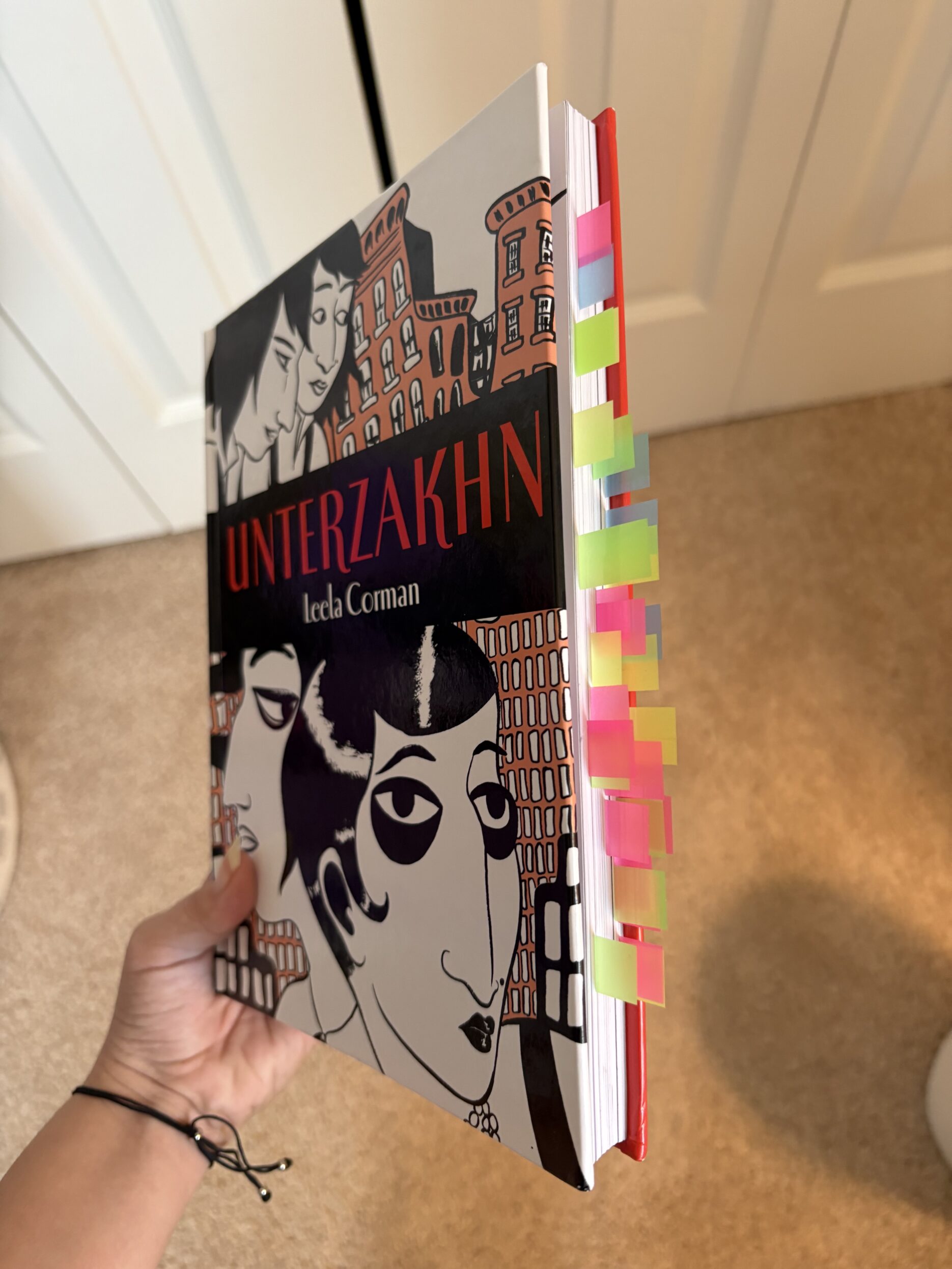
To be as conscious of my reading as I could, I tried to be diligent about the way I approached this book. I annotated my physical copy with colored tags, and this was also something I haven’t done in a long time. There’s something nostalgic and charming about a clearly well-loved book with tabs overflowing from the edge of its pages. They are also helpful to track my thoughts. I created a system for myself — I used green flags for when thought was prompted, yellow for when I could identify specific techniques, pink for when I felt strong emotion, and blue for information I either wanted a reminder to remember or that I thought was pivotal to the story. You can refer to this system to understand where I was at certain points in the novel in other images I share. Not only do I have these simple annotations to refer to, but I can actually see the progress of how my mind worked as I read this novel. If I didn’t create this physical chronology, I would have forgotten half of what I identified and felt during my reading.
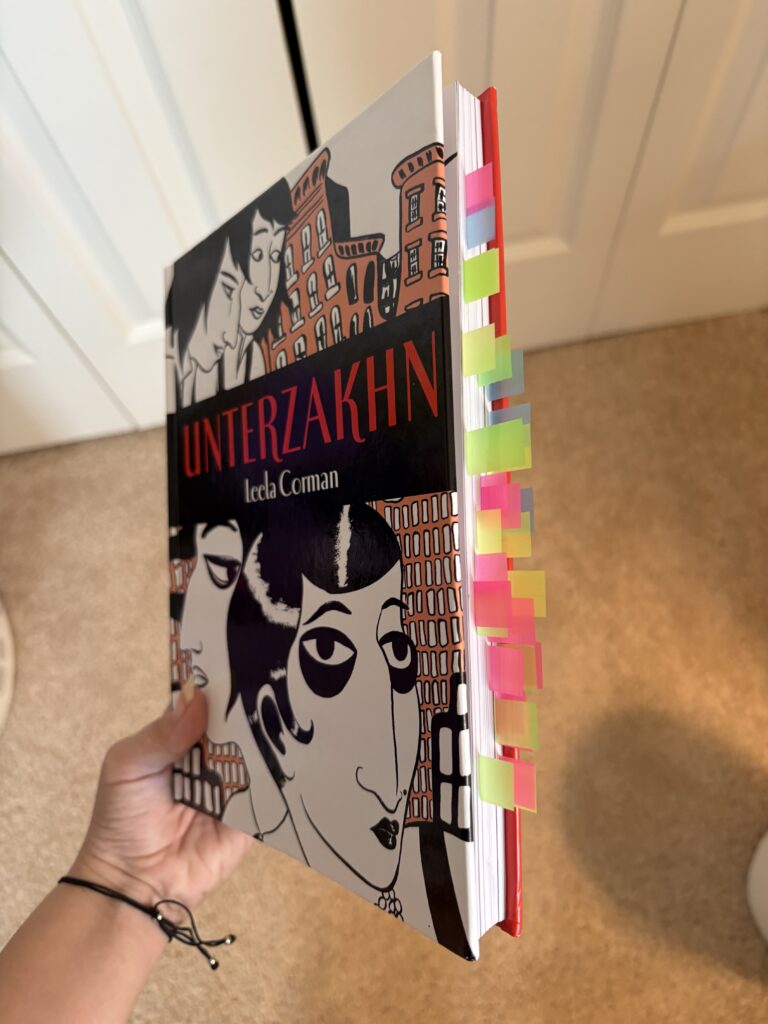
As you can see from the photo, I started off with a lot of thoughts when I was putting things together in the beginning and as I got invested I felt more emotion. I also was able to better pick out techniques as I read, getting familiar with the patterns I saw in Corman’s style. The few blue tabs at the end solidify my understanding of this novel and putting every piece together.
My Experience
Something big is that I decided to limit myself from getting outside knowledge about the contents of this book. This is probably the biggest part of my experience with Unterzakhn because it made me deeply think about the events of this book. Going that route really surprised me. Unterzakhn starts off with the sisters as children living in a community of other hardened immigrants. The two come across many things that children shouldn’t be exposed to. A small but very important part of that is in language. I realized that even in their native language, Esther and Fanya don’t recognize certain curse words yet because they are still innocent little girls. If I decided to translate a few words, that would deprive me from what the author was trying to get the reader to experience — the perspective of these children.
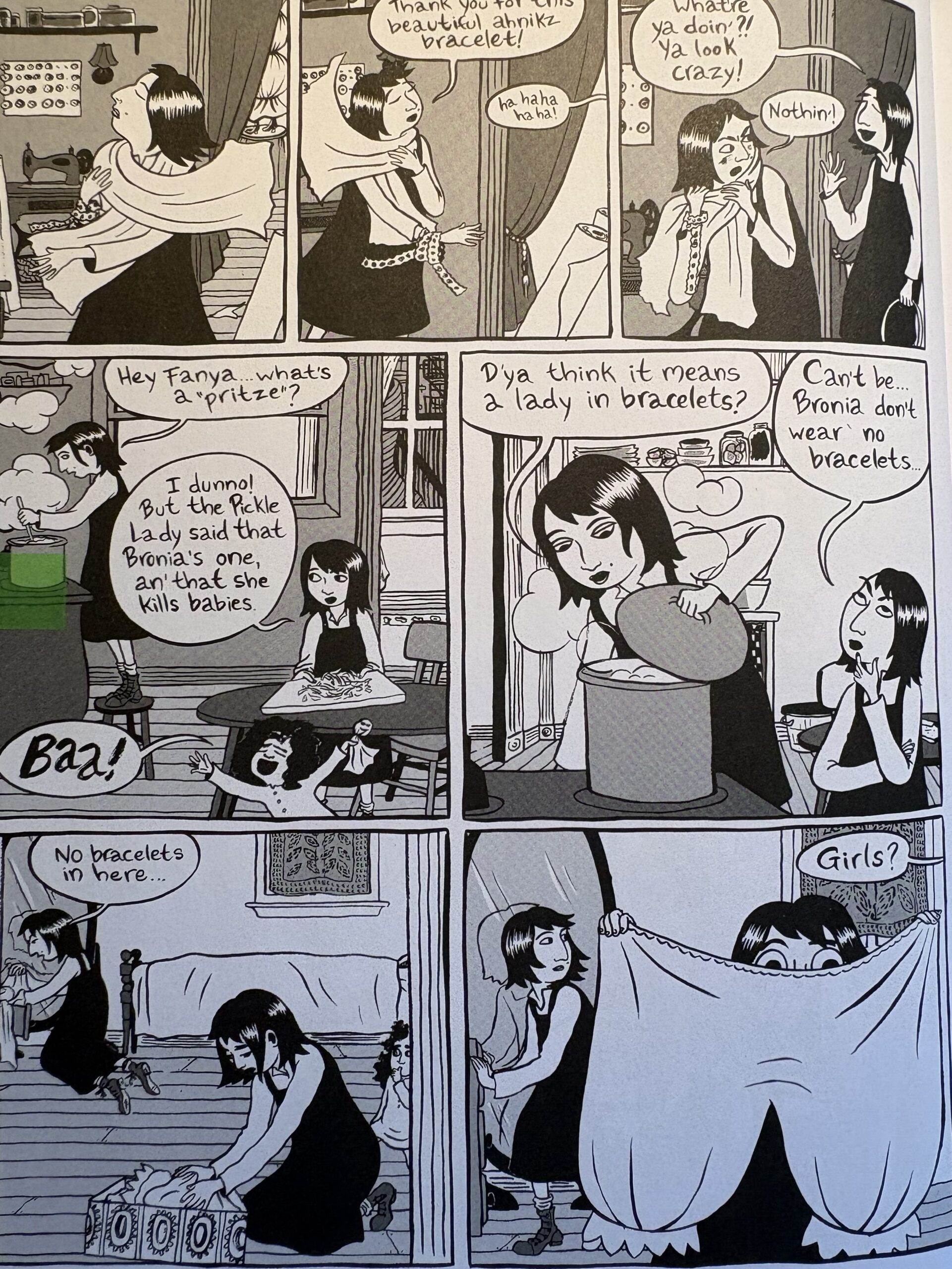
This made me feel like I was growing up with the girls. Though, of course I come from the perspective of an adult who isn’t going through these things. I felt a lot of empathy for these characters, because I could see many things that were dangerous for them that they weren’t protected from. Seeing the way that continued through their teen and adult years only made me feel for them more. I grew angry in seeing the adults in their life let them slip through their fingers, or purposefully putting them in dangerous situations. I could pick out exactly where some things went wrong and how the girls would be different in adulthood if certain things didn’t happen.
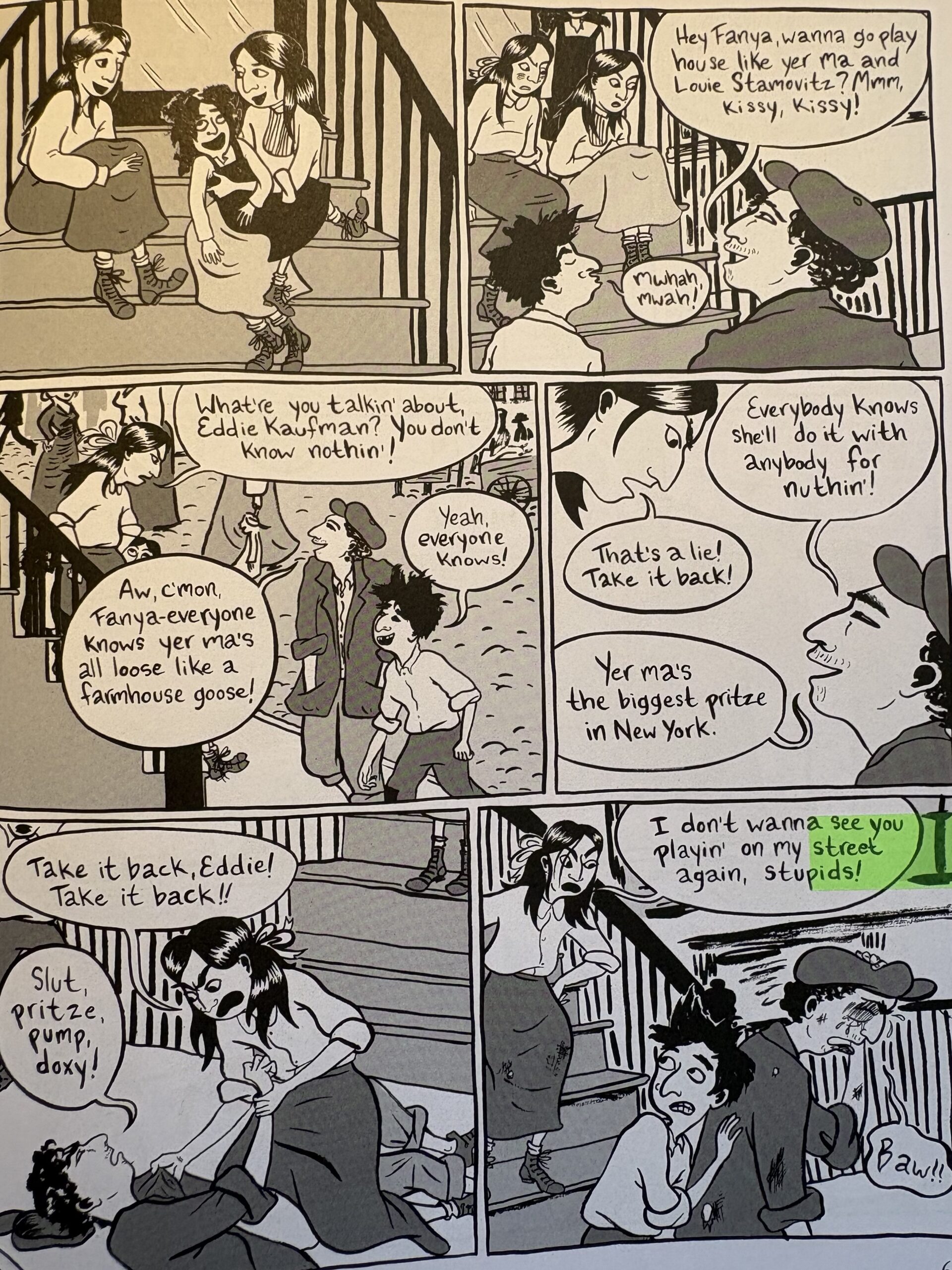
Even though like any characters, Fanya and Esther have their flaws, I could understand exactly why they are the way they are. Fanya grew up as an apprentice to Bronia, who helped women with the complications of both abortion and birth. Mixed with the limited education on sex, Fanya is taught to be strictly celibate. On the contrary, Esther has learned exactly what to say to men and has lost faith with the world. A lot of this came with feelings of distress, as the characters oppose each other often.
Techniques
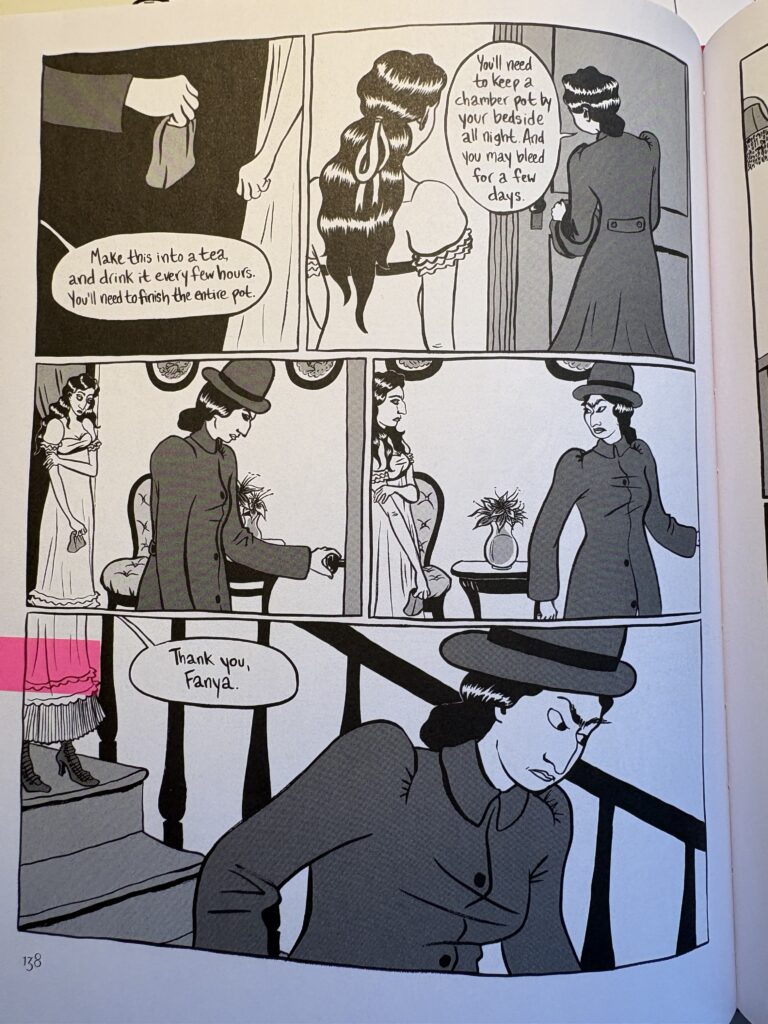
I had to think outside the box with techniques because graphic novels do it so differently. I paid extra attention to the visual sensory input I was getting. Most panels can feel almost overwhelming, because there are many values in grey scale and lots of content in the speech bubbles. However, during tense and important moments, Corman makes use of blank space. On this page, the panels are larger, emptier, have less colors and text. I could tangibly feel the tension when Fanya looked back at Esther. This fits the scene, where the sisters have been apart for a while and Esther has become pregnant. Fanya has been taught not to work with prostitutes to uphold Bronia’s reputation, but she helps Esther anyways. Many other points in the novel involve this open space, occasionally with a black fill or silhouette as shown in the first panel of this page. The completely blacked out panels or characters signify a literal dark moment. It’s a massive disruption to the visual flow of the novel, and made me read with extra consideration.
Something I noticed about this book is that the protagonists don’t seem to go through traditional character development. Often, character development is set up through the character’s starting traits and desires being challenged, and the character changes in a meaningful way. Esther and Fanya do change, but these arcs are kind of a predictable descent from the way they grew up. While Fanya is the one who “betrays” her established lifestyle the most, the novel does not portray that as mental or physical freedom, but as even more of a burden. What I found surprising was the constant looming of tragedy.
I think that in any other story, these women would either vehemently try to escape their lifestyle or attempt to come to terms with it. However, Esther and Fanya stay relatively in the same position that they have since they were very young. However, that isn’t to say that they don’t change at all. For example, Esther’s contract is eventually bought out by an old man named Meyer, who endows Esther with wealth and a nice house. Esther still performs and gains high social status from her dancing and acting. Fanya decides to leave Bronia when she realizes the conditions she upholds to how she treats patients are unfair. Fanya also ends up pregnant, with it being Esther’s turn to help her out.
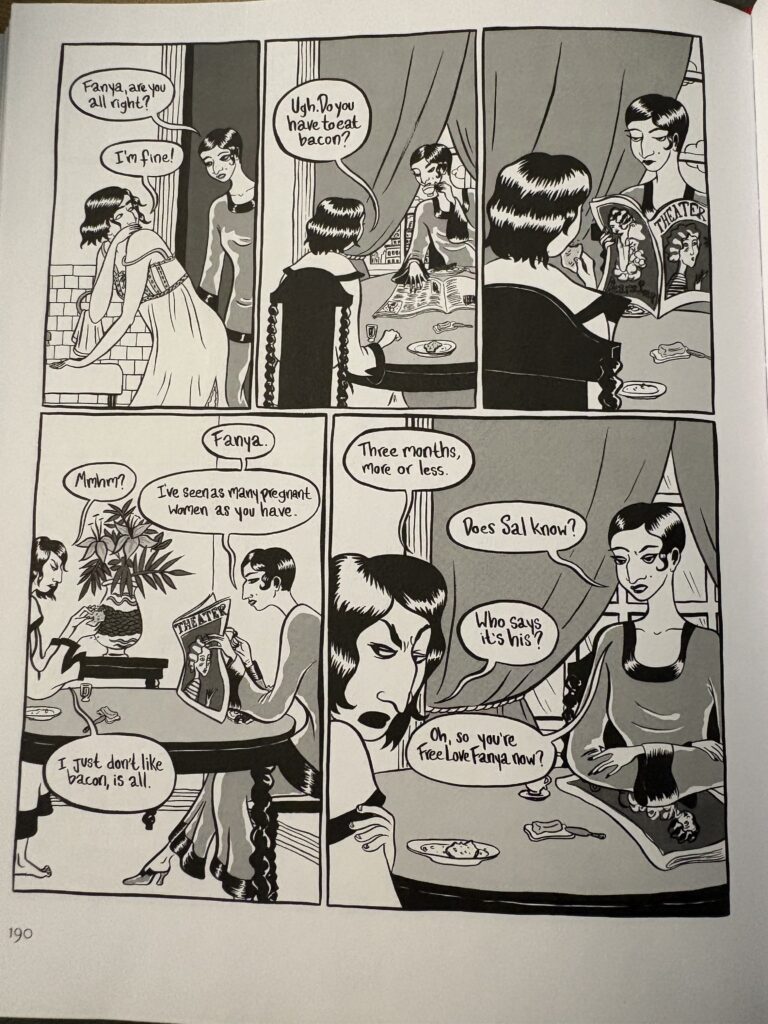
What makes this character arc different is that it’s subtle. There is no call for hope at the end, nor do these characters exactly change for the “better.” Esther might be in a more financially stable situation, with success from her work, but she is not truly happy without family and love. Even though she is living the dream she had since she was a little girl, that dream was heavily manipulated by the grooming of the industry. Even though this is what Esther wants, it probably isn’t what she needs.
This story instead focuses on these characters facing harsh reality. This is in line with literary realism, the mode of writing which attempts to closely follow the mundanity of reality. Unterzakhn does not follow a regular story structure which is usually required for a “satisfying” read. Instead, it reads like a series of events that realistically chronicle someone’s life. This places emphasis on where it’s needed: the cruelty of the world for these women in the 1910s.
According to Laura Getty’s article on realism,
“Realism tended to point out society’s problems . . . but offered observations, rather than suggested changes,” (Getty).
This is exactly what Unterzakhn does. Instead of having Fanya and Esther escape their professions or form aversions to them, they instead show the readers what the harsh consequences are while tolerating them for themselves.
At the same time, I think the author is trying hard to remind us that these probably should not have been these characters’ desires in the first place as they were brought on by the girls’ rough childhood. There’s something weird about that — being painfully aware that these women could have had very different outcomes if it wasn’t for how they were treated as kids. This is the message of Unterzakhn, that many immigrants who grew up without educations at this time took every opportunity they could get which would lead down dark paths.
Works Cited
Corman, Leela. Unterzakhn. Penguin Random House, April 3, 2012.
Getty, Laura. Realism. Northern Virginia Community College. https://pressbooks.nvcc.edu/eng255/part/realism/
Featured Image
A photo with my personal annotated copy of Unterzakhn.