
Who was Vladimir Lenin?
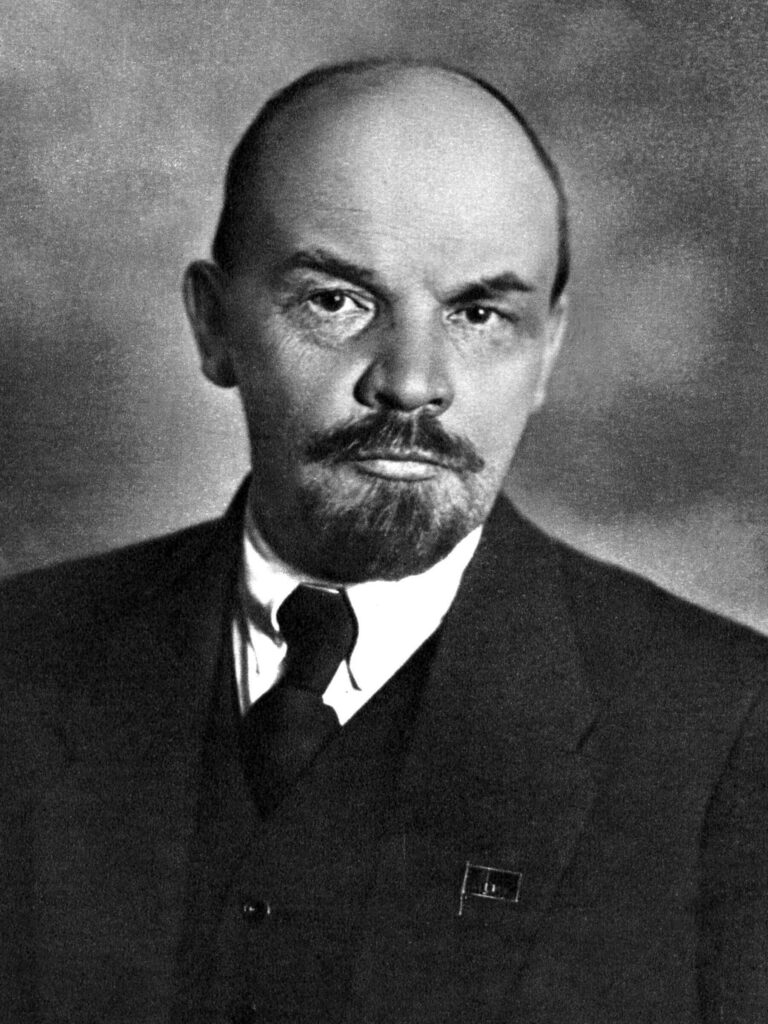
Vladimir Ilich Ulyanov or Vladimir Lenin was born on April 22nd, 1870 in Ulyanovsk Russia. Lenin was born into a middle class well educated family that would be targeted by the Tsar’s government. The oppression of his family by the Tsar’s government, the execution of his older brother in 1887 for plotting to kill Tsar Alexander III, and being expelled from the Kazan Imperial School for taking part in a “illegal student protest”, all radicalized Lenin and would lead him to start reading the writings of Karl Marx and Friedrich Engels and becoming a communist. This would lead to him being exiled in Siberia for participating in Marxists activities, but would soon move to Germany and Switzerland to meet up with fellow exiled Marxists and would officially start to go by the name “Lenin”. Around this time Lenin would travel around all of Europe attending Marxists conferences, and would meet the likes of Leon Trotsky and Joseph Stalin and would around this time would form the Bolshevik Party and wait for opportunity to overthrow Tsar Nicholas and his government which would eventually come with the start of World War 1.
World War 1, Russian Revolution, and the Civil War
The Russian Empire would be dragged into World War 1 due to their alliance with Serbia. During World War 1, Russia experienced humiliating defeats to the Germans and Central powers due to Germany being much more modernized and industrialized compared to outdated Russian military. Vladimir Lenin was still in exile at this point and contrary to most Russian Communists and socialists, wanted a Russian defeat because he believed that it could help ignite the Communist revolution he had been waiting for so desperately and that opportunity would soon come. Russia would come under the control of the Provisional government after the February revolution, but despite the people’s opposition and calls for peace, the government would continue their involvement in the war. The central powers didn’t want because they wanted the fighting to end on the eastern front so they could focus on the western front, so the Germans extended an offer to Vladimir Lenin. The Germans would help transport Vladimir Lenin and other communist exiles back to Russia to further destabilize the already weak and unpopular provisional government and get them to withdraw from the war. This would lead to the October revolution that most people know today, and would establish the worlds first communist government. This would lead to a civil war between Lenin and his communist government and the white army, a coalition of monarchists, capitalists, and other loosely aligned groups that wanted to oust the Bolsheviks from power. The Bolsheviks would eventually win the civil war and in 1922, would officially establish the Union of Soviet Socialists Republics, or the USSR for short and would Vladimir Lenin would become it’s first head of state. Unfortunately for Lenin, his leadership would not last long though, and on January 21st 1924, he would pass away after experiencing many health complications and he would not be able to see the Communist Utopia he fought and waited for so long become the global superpower it became.
Vladimir Lenin’s Mausoleum
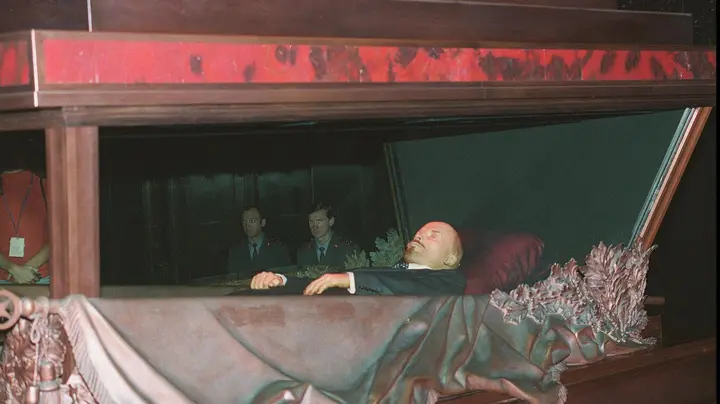
After his death, Vladimirs Lenin body would be preserved put on display in a Mausoleum in Red Square where it remains to this day. Thousands came to mourn and pay respects to Lenin when the Mausoleum was first opened to the public and helped immortalize Vladimir Lenin as a leader of the communist revolution and that the communist revolution was permanent, not just in USSR, but the whole world.
Who Built the Mausoleum?
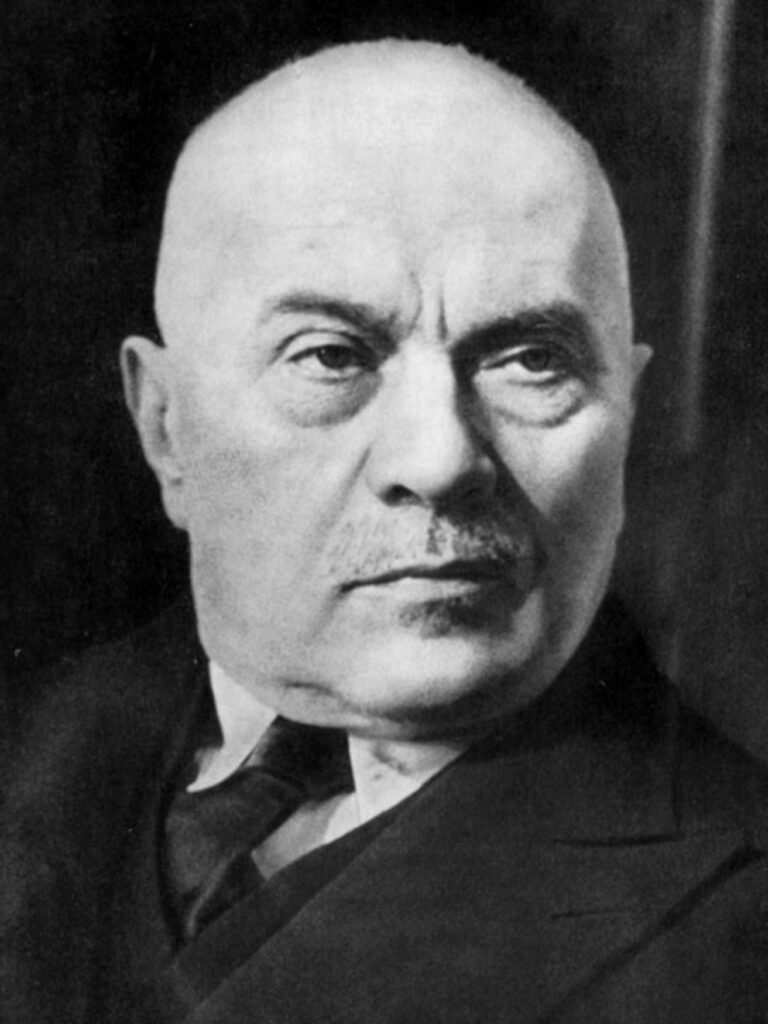
The mausoleum was constructed by Alexey Shchusev and his disciples. Shchusev was a Russian architect that worked for the both the Monarchist and Soviet governments and was one of the earliest architects of Stalinist era architectures but was able to successfully adopt 2 other different styles including the german style Art Nouveau and Constructivism. Before the October revolution, he helped designed and build railway stations like the Kazansky railway terminal Van Meck family. During and after the October revolution, Shchusev would show support for the new government and would be given the contract for the construction of the Mausoleum where Lenin would be laid to rest. Shchusev would receive many awards for his works including the Stalin Award and the Order of Lenin award. Schusevs career would face accusations of Plagiarism and exploitation by his disciples, even claiming he falsely took credit for the design and model of the Vladimir Lenin’s Mausoleum. On top of all that, Shchusev would not be sparred of Stalin’s purges, and was temporarily expelled from Architects union because of his connections to the Tsar government. Despite these accusations and temporary expulsion, Shchusev is still a highly respected figure in the Russian Architects and after his death on May 24th 1949, he was posthumously awarded for his work.
Design of the Mausoleum
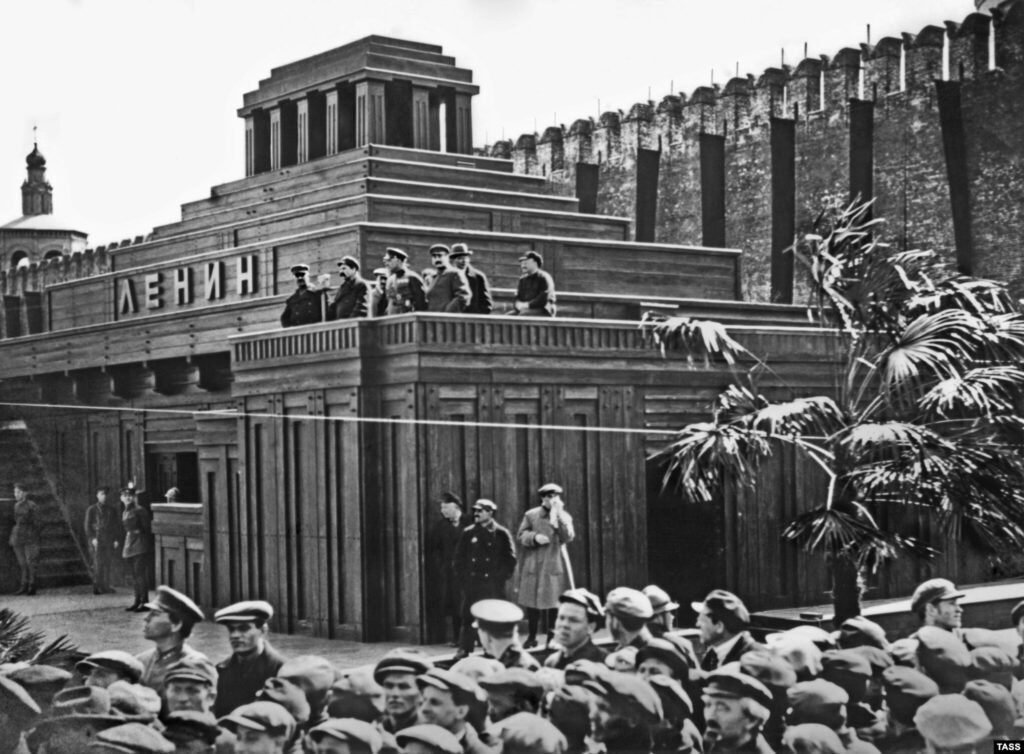
When first displayed, Vladimir Lenin’s body was preserved in a Wooden structure for his state sponsored funeral because the government was originally planning on permanently preserving his body. When the Stalin ordered to have his body preserved permanently in a monument right next to the Kremlin itself and Alexey Shchusev was assigned to the project, they choose the a pyramid like structure made of black and red granite with marble as well. Lenin’s body itself is displayed in a glass sarcophagus with lights to help him a more lifelike appearance. It is around 78 feet wide and 40 feet tall. It was made bigger so it would be easier to preserve his body over a longer period of time, and also because for a very short time, Joseph Stalin’s body was displayed next to Lenin to create the same message of Stalin as an immortalized figure within the Communist movement, but was removed after his death during Nikita Khrushchev’s process of De-stalinization. The Mausoleum was also designed so that leaders of the Soviet Union could have speeches, for example on Victory Day in Russia, while the Military has it’s parade, all soviet leaders would hold speeches on top of the Mausoleum to commemorate the Soviet Union’s victory over Nazi Germany in World War 2.
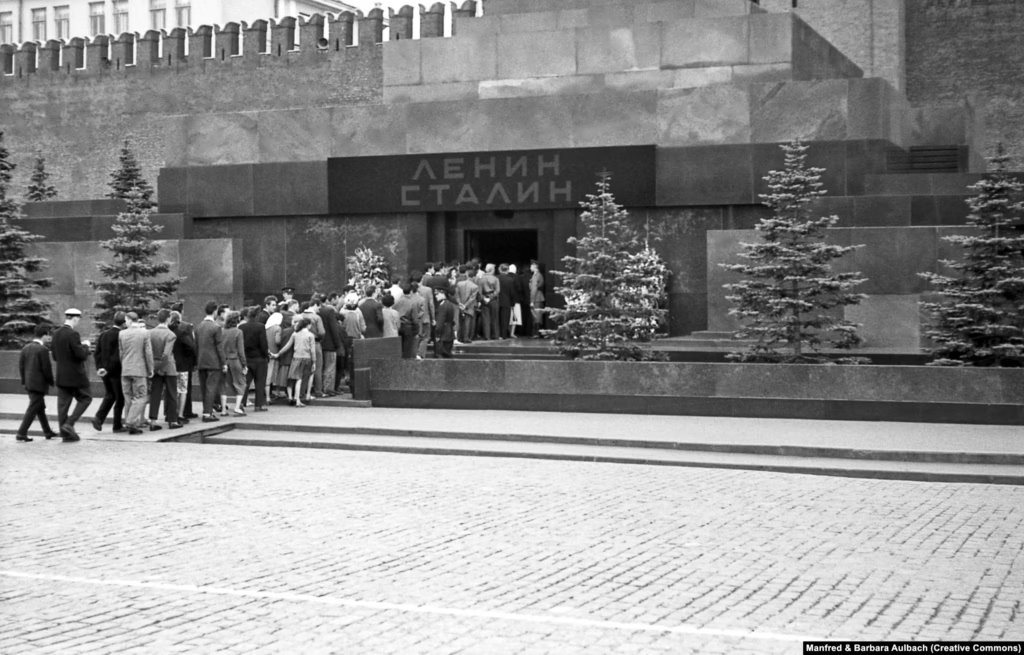
The Message of the Mausoleum, and how people feel about the Mausoleum.
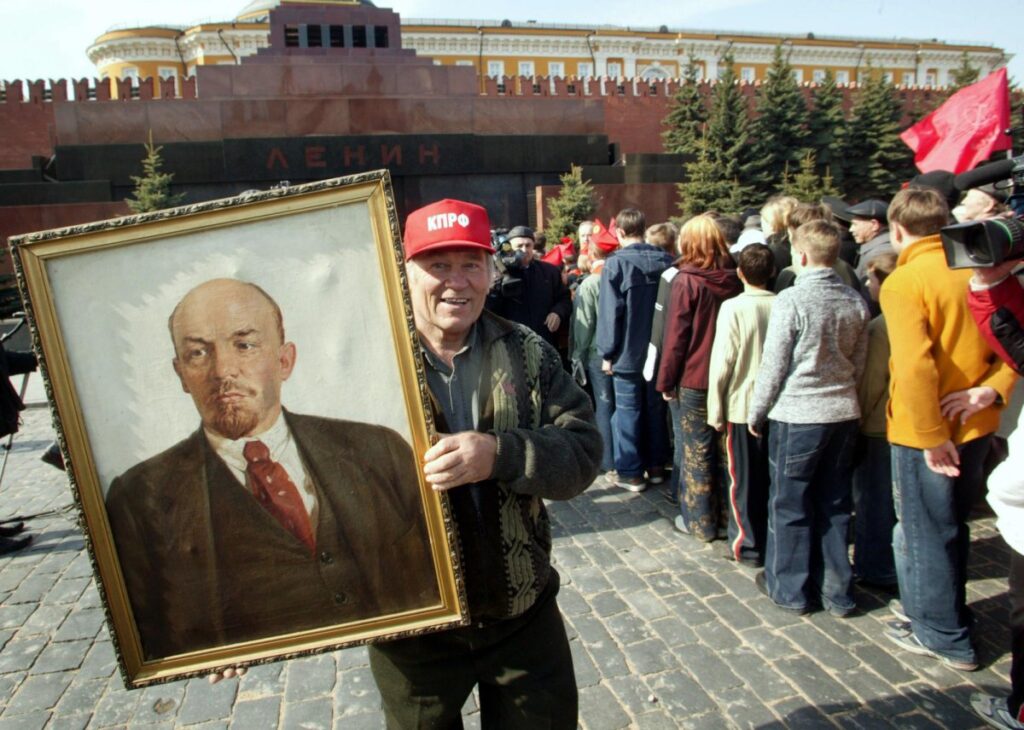
The Mausoleum had two purposes. One was to immortalize Lenin as leader and symbol communism worldwide and the second reason was for propaganda to help create to this facade about the bond Lenin and Stalin had as-well as an area for Soviet leaders or important government officials to watch and give speeches at military parades. When Mausoleum was first constructed, it was estimated that 100,000 people visited the body of the Communist leader to mourn him, but not everyone was supportive of the displaying of his body. Vladimir Lenin’s right hand man and who was originally Lenin’s successor Leon Trotsky, thought that the mausoleum went against Marxist teachings and was similar to the Russian Orthodox Church, one of the Bolsheviks main rivals, displaying holy relics. It also important to acknowledge that Vladimir Lenin himself was also against Monuments and didn’t want to have any made for him. Vladimir Lenin’s wife, Nadezhda Krupskaya was also opposed the Mausoleums creation and the preservation of his body because she believed he would have wanted to be buried more modestly and would rather have schools and other social institutions built in his honor and would protest it by never visiting the Mausoleum. Trotsky’s, Krupskaya, and many other people’s concerns were ignored due to Stalin’s influence and growing power within the party. Today, an estimated 2.5 million people visit Lenin’s grave every year. A lot of Russians feel mostly in different about because they just see Lenin’s mausoleum as a relic of the past, but people also don’t want to remove his body because of history and a lot Russians still admire and respect his influence on Russia and feel a connection to Lenin. The debate about removing Lenin’s body came to an immediate stop after Russian president Vladimir Putin stated he did not want to see the monument removed. In a speech in 2019, Vladimir Putin would state “I believe it should be left as it is, at least for as long as there are those, and there are quite a few people, who link their lives, their fates as well as certain achievements … of the Soviet era with that,”. So as long as Putin says it’s staying, then it’s not going to be removed any time soon.
Concluding Statement
While Communism in Russia ended almost 34 years ago, Vladimir Lenin’s mausoleum has proven that it’s still serving one of it’s many purposes, to immortalize Vladimir Lenin and the political movement he created. Whether his Mausoleum will remain in place in the next coming decades is a question only time will answer but for now, Vladimir Lenin’s mausoleum will remain one of Russia’s most famous and historic monuments in the countries history and communists, socialists, and followers of Lenin still come to visit his Mausoleum to this day.
References
“A century after Lenin’s death, the USSR’s founder seems to be an afterthought in modern Russia” Associated Press
“Lenin’s Mausoleum” The Expat
“Vladimir Lenin” History.com
https://www.history.com/articles/vladimir-lenin
“Russian Revolution” History.com
https://www.history.com/articles/russian-revolution#Russian-Civil-War
“Lenin Mausoleum” Britannica
https://www.britannica.com/topic/Red-Square
“Alexey Shchusev” Architectuul
https://architectuul.com/architect/alexey-shchusev
“Alexet Shchusev”
https://architecture-history.org/architects/architects/SHCHUSEV/biography.html
“About the Lenin Mausoleum” Mausoleums.com
“Set In Stone: How Lenin’s Mausoleum Was Built And Rebuilt, 100 Years Ago” Radio Free Europe
https://www.rferl.org/a/lenin-mausoleum-construction-1924-centenary-moscow-soviet/32763493.html
“Architect: Alexey Shchusev” Pantheon
https://pantheon.world/profile/person/Alexey_Shchusev
“Lenin’s Body” Macalester College
“Why Lenin’s Corpse Lives On In Putin’s Russia” The Wilson Center
“Embalming Lenin: Why Was the Soviet Founder Permanently Preserved?” The Collector
https://www.thecollector.com/embalming-lenin-why-soviet-founder-preserved
“Russia: 100 Years on from Revolution” BBC News

