
Background
The Franklin D Roosevelt Memorial in Washington D.C. honors the 32nd president of the United States. The Memorial sits along the Tidal basin and covers more than Seven acres which would make it one of the largest memorials in the city. Roosevelt was born in 1882 and came from a wealthy family. In the early 1900s he was diagnosed with polio which left him unable to walk. Even though he has this disability, he stayed very much involved in politics, which got him elected in 1993 for president. Roosevelt led the country thought two of the most important events to humankind, one being the Great Depression and the other being World War II. A fun Fact about this president is he was elected 4 time and was the only one to be elected that may times. He served this out till his death in 1945.In the coming years the was a memorial that was dividing into four outdoor rooms. These four-rooms represented one Roosevelt presidential terms. It is said that as visitors walk from the different rooms, they move through the important events that shaped his presidency and the country.
The Memorial Design
The memorial was designed by a landscape architect named Laurence Ahlprin and was later opened to the public in 1997. It was said that this architect did not want any ordinary statue, he wanted to make something that was created a path that would really understand what it stood for and what it can represent. The Memorial has granite all, trees, waterfalls, different statues and famous quotes that make the statues meaningful. He wanted this space to feel like the story of FDR and how his life made a difference in this country.
The memorial has also included features that are easy to accuse from people with disabilities. This was reflected since Roosevelts own experience living with paralysis. Later they added a statue of Roosevelts in a wheelchair to recognize that he had a disability and making this visible to the public shows that anything is possible no matter what condition you’re in or what defeats you may have. It also encourages inclusion and understanding, reminding visitors that strong leadership can come from people of all abilities.
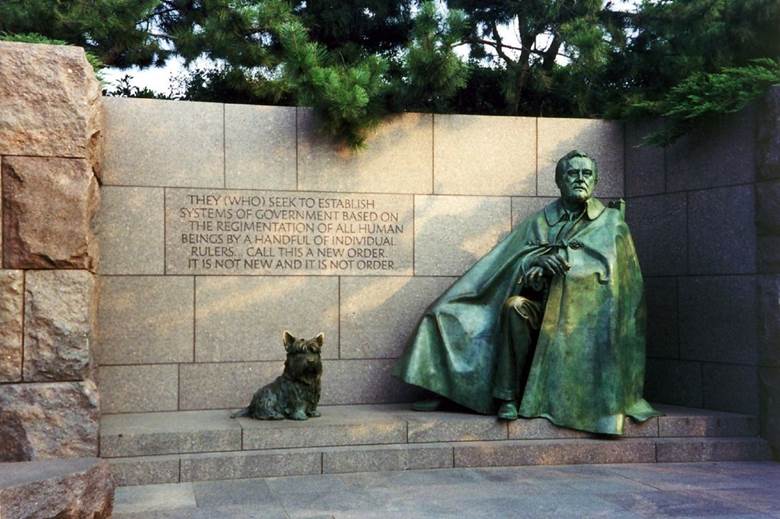
Franklin Delano Roosevelt Memorial, Washington, D.C., wallyg, CC BY-NC-ND 2.0
The Four Rooms: The Great Depression, The New Deals, World War II, Legacy
Room 1
The first rooms mainly force on the problems Roosevelt faced when he become the presidents. The Frat depression has caused many people to their job loved ones and lots of money. Here are some key elements that were used in creating this room.
- A sculpture of men waiting in a breadline
- A family listing to the radio
- Simple waterfalls showing fear
- A quote from the president:” The only thing we have to fear is fear itself”.
This room shows how hard life was and how Roosevelt tried to give people hope and tell them life is worth living, and not to lose faith.
Room 2
The second room shows how Roosevelt tried to fix the country with programs called the new deal. This deal would provide new jobs, supported workers and the perfection of the people may in banks. Here are some key elements that were used in this second room.
- A much bigger waterfalls that how’s the energy and rebuilding of the country
- A statue of the everyday Americans
- A man lasting to one of Roosevelts “fireside Chats”
- Quotes about fairness, equal rights and right to opportunity
This room is supposed to feel more active and hopeful because this was the state of which we were rebuilding our country.
Room 3
The third room focuses on the United States entering World War II. This room really shows how much lose and dramatic time this was. Here are some key elements about the third room.
- A loud waterfall showing that chaos of the war
- A well Known statues of Roosevelts and he dog Fala
- The words “I hate war” carved into stone
- Quotes that talked about the sacrifice and the four freedoms (speech, worship, want, and fear)
This room is to remind people to challenge themselves and lose the time of the wars and what was lost.
Room 4
The fourth room is calmer and quieter. It represents Roosevelts final month his death and the future of the people and country and world. Here are some key elements that go along with the room.
- A gentle quite waterfall
- A statue of Eleanor Roosevelt who became the first U.S. delegate to the United States nations and counted FDR work
- A timeline of FDR life on the steps leading out the memorial
- The memorial is supposed to make the person feel like it’s create a calm feeling
The final space helps visitor reflect on Roosevelts leadership and his impact on the world. and his impact on the world.
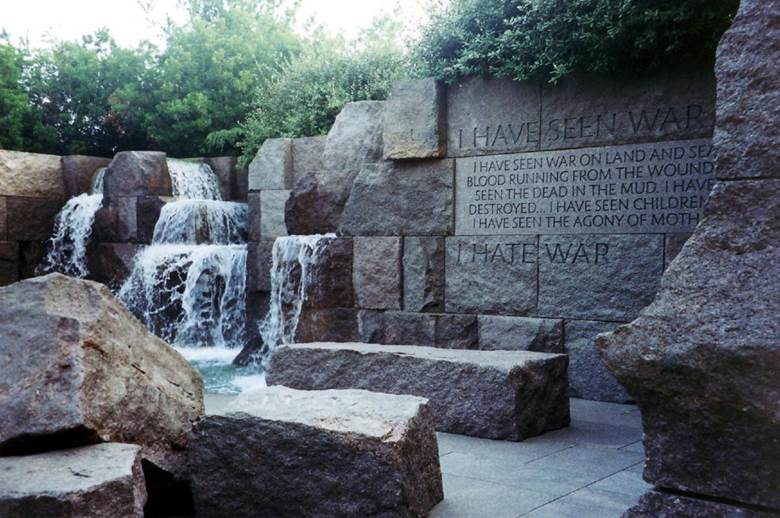
https://www.flickr.com/photos/wallyg/136353425 ,CC BY-NC-ND 2.0
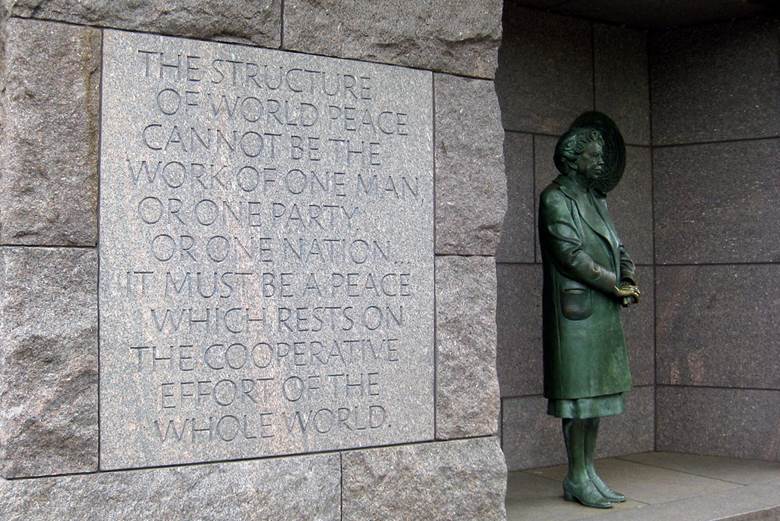
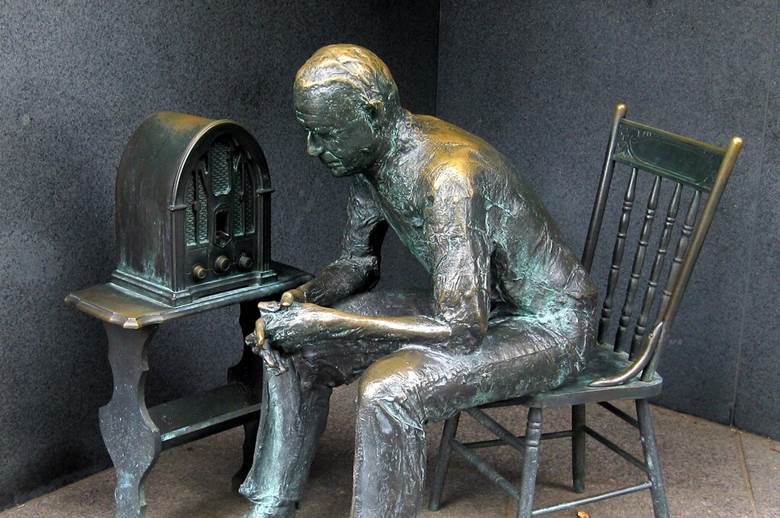
https://www.flickr.com/photos/wallyg/3661074695,CC BY-NC-ND 2.0
Why Memorial and mounts are important
1.Remember important people and events:
- They keep history alive, so we don’t forget what happened.
- This keep honor those who shaped the nation
2.Learn in a visual Hands on way:
- Walking the memorial teaches visitors about the great depression, the new deal, World War II, and the legacy he left behind.
- Seeing history in person makes it easier to understand
3.Think and reflect:
- Quiet areas, sculptures, and quotes help people feel connected to the past.
- Visitors can pause and think about how history affects today
- Understand our values:
- The memorial highlight’s themes like democracy, equality and courage.
- These values are still important in society today
- Wheelchair statues, for example, encourage discussion about disability and representation.
- It helps people talk about inclusion and acceptance.
4.Unity:
- They bring people together to share history and remembrance.
5.Preserve history:
- Memorials protect important stories for future generations.
6.Respect:
- Visiting the memorial helps people sow respect and gratitude for the past and what was sacrifices and respect what we have today.
7.Inspiration:
- They remind that people that change and progress are possible eve in hard time can still make a difference in humanity.
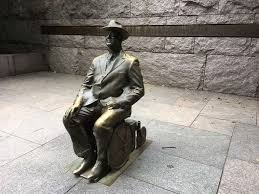
https://picryl.com/media/franklin-d-roosevelt-memorial-93441d ,CC BY-NC-ND 2.0
Summary
The Franklin D Roosevelt memorial is a large, detailed tribute to president who led their country through it’s toughest years. The Four rooms help visitors walk through and understand how all four rooms were a very hard and troublesome time. The Memorial tells the story of a leader who brought hope and strength to American during a time where there was little strength hope, kindness or anything that would provide a silver lining. As visitors walk through the memorial, they learn about the struggles of the Great Depression and World War II. The memorial shows how Roosevelt gave people hope and strength when the country needed it most.
Works Cited
- “FDR Biography.” FDR Presidential Library & Museum, www.fdrlibrary.org/fdr-biography. Accessed 11 Dec. 2025.
- https://www.fdrlibrary.org/fdr-biography
- “National Mall and Memorial Parks: Franklin Delano Roosevelt Memorial.” National Park Planner, 5 Nov. 2025, npplan.com/parks-by-state/washington-d-c-national-parks/national-mall-and-memorial-parks-park-at-a-glance/national-mall-and-memorial-parks-franklin-delano-roosevelt-memorial/. Accessed 12 Dec. 2025.
- https://npplan.com/parks-by-state/washington-d-c-national-parks/national-mall-and-memorial-parks-park-at-a-glance/national-mall-and-memorial-parks-franklin-delano-roosevelt-memorial/
- “Franklin Delano Roosevelt Memorial.” Coldspring, 9 June 2023, coldspringusa.com/case_study/franklin-delano-roosevelt-memorial/. Accessed 12 Dec. 2025.
- https://coldspringusa.com/case_study/franklin-delano-roosevelt-memorial/
- Nielsen, Kim E. “Memorializing FDR.” OAH Magazine of History, vol. 27, no. 1, 2013, pp. 23–26. JSTOR, http://www.jstor.org/stable/23489630. Accessed 12 Dec. 2025.
- https://www.jstor.org/stable/23489630?searchText=FDR+memorial&searchUri=%2Faction%2FdoBasicSearch%3FQuery%3DFDR%2Bmemorial%26so%3Drel&ab_segments=0%2Fspellcheck_basic_search%2Fcontrol&refreqid=fastly-default%3A763ac4d14a77b98fb917b808e2417649&seq=1
- Aidala, Thomas. “THE FDR MEMORIAL: Halprin Redefines the Monumental Landscape.” Landscape Architecture, vol. 69, no. 1, 1979, pp. 42–52. JSTOR, http://www.jstor.org/stable/44666899. Accessed 12 Dec. 2025.
- https://www.jstor.org/stable/44666899?searchText=FDR+memorial&searchUri=%2Faction%2FdoBasicSearch%3FQuery%3DFDR%2Bmemorial%26so%3Drel&ab_segments=0%2Fspellcheck_basic_search%2Fcontrol&refreqid=fastly-default%3Ada2b94f52dd8c74f56a959eddd2742db&seq=11
- “Address at Chautauqua, N.Y.” Address at Chautauqua, N.Y. | The American Presidency Project, 14 Aug. 1936, www.presidency.ucsb.edu/documents/address-chautauqua-ny. Accessed 16 Dec. 2025.
- “President Franklin Delano Roosevelt and the New Deal: Great Depression and World War II, 1929-1945: U.S. History Primary Source Timeline: Classroom Materials at the Library of Congress: Library of Congress.” The Library of Congress, www.loc.gov/classroom-materials/united-states-history-primary-source-timeline/great-depression-and-world-war-ii-1929-1945/franklin-delano-roosevelt-and-the-new-deal/. Accessed 16 Dec. 2025.


