
Historical Background
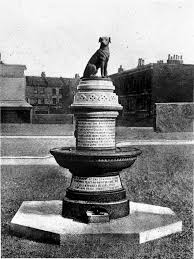
Notably known as the Brown Dog Affair, due to the complexity of this controversial statue, the original Brown Dog Statue was constructed in 1906 and proudly held its position until its removal in 1910. The small, brown terrier was given no name due to it not having an owner, which without the human-animal relationship of trust and loyalty; the dog was simply a research subject to be experimented on. The terrier was placed in the hands of multiple vivisection doctors at the University of College London and underwent two procedures over two months, violating the The Cruelty to Animals Act 1876.
Vivisection is the practice of performing surgical procedures and dissection on live subjects for the purpose of medical research. In essence, The Cruelty to Animals Act 1876 states:
- A person cannot perform an experiment on a living animal intending to inflict pain.
- The experiment must be performed by a qualified individual with a proper license.
- The subject must be under the influence of an anesthetic during the entire procedure.
- Pain is likely to continue after the procedure, so the animal must be properly killed before it can recover from the anesthetic administered.
Medical students, Leisa Schartau and Louise af Hageby were present during one of the lectures where the vivisections occurred. In their book The Shambles of Science, they claimed that the terrier had wounds from previous experimentation, was not properly anesthetized during the procedure, and wasn’t put down by a licensed individual. Following these accusations were countless accounts of violence and riots from London’s medical students towards the monument that brought recognition to these crimes.
Experimentation
Surgical procedures began on this terrier in December of 1902 by Professor Starling at the UCL and continued into February 1903. At this time, the dog was reopened as a result of the first procedure and was then handed over to Dr. Bayliss. Experiments were conducted on nerve responses and the salvia glands utilizing the pancreas, including having the paws and testicles crushed. In the book mentioned above, The Shambles of Science, authors Hageby and Schartau write that;
…the brown dog already had a wound from a previous experiment. They argued that the brown dog had not been properly anesthetized while his neck was cut open to expose the saliva glands to show that the pressure at which saliva was secreted was greater than blood pressure. Finally, they alleged, the dog was killed by a knife through its heart by an unlicensed research student. They also stated in a section headed “Fun” that students had laughed and joked during the experiment
-Hilda Kean
The Original Statue
The original statue was an 18” tall bronze terrier sculpted by Joseph Whitehead within a 7’ 6” tall marble fountain that stood on a plinth. The stance of the sculpted dog was tall instead of cowering down, intended to symbolize pride and dignity. Not only was the purpose of the statue to commemorate the unnecessary death of the brown dog, but to censure the vivisection scientist for the lack of human qualities and compassion towards a living creature.
Symbolism was also created by the location being in Latchmere Recreation Grounds, Battersea, near the grounds of the UCL campus. Near this area was the Battersea Dogs Home for stray dogs and cats, established in 1860, and less than half a mile away stood the Brown Animal Sanatory Institute that conducted experiments on animals. This area being prominently a focal point for animals was also a thriving location for human politics, being that the local council was run by socialists and feminists who were advocators for the brown dog.
Inscription
In Memory of the Brown Terrier Dog Done to Death in the Laboratories of University College in February 1903, after having endured Vivisection extending over more than two months and having been handed from one Vivisector to another till Death came to his Release. Also in Memory of the 232 dogs vivisected at the same place during the year 1902. Men and Women of England, how long shall these things be?
Attack
The construction of the monument caused an uproar amongst medical students in London and at the University College London, who vouched that the vivisection procedures towards the brown dog did not violate the Cruelty to Animals Act 1876. As a result, the bronze statue was physically attacked by medical students from UCL in November 1907 and March 2008. During this attack, the students created models of the terrier and marched around the area with the model on skewers. Riots broke out causing the local council to establish security to protect the statue. With the cost to protect the statue becoming to high and the election of a new, Conservative, council, the statue was removed.
With great attempts, a defense committee was created on behalf of preventing the statue’s removal. Speeches were given at Trafalgar Square and Hyde Park to supporters in masks resembling the terrier. With the opponent being too powerful, the statue was removed in March 1910 and placed in the hands of a blacksmith, who destroyed it to prevent it from being reinstated.
The statue that challenged assumptions about society’s humanity, that com- memorated the dogs “done to death” in laboratories, and that presented us with uncomfortable stories of cruelty, did not survive.
– Hilda Kean
The Replacement
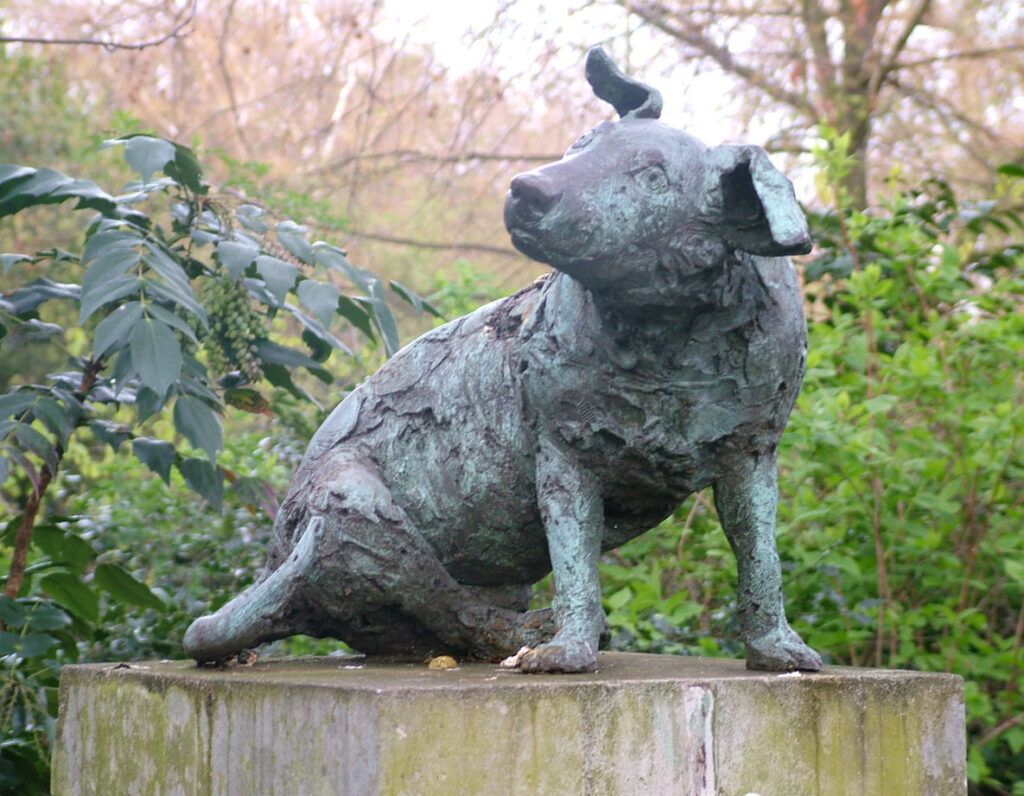
Word spread, which fueled the advocators and activists of the National Anti-Vivisection Society and British Union for the Abolition of Vivisection. Here, members and campaigners raised money to create a replacement statue. The replacement statue was constructed and unveiled in December 1985 in a new location, Battersea Park, which was run by the GLC Arts and Recreation Committee in Battersea Park. The inscription and plinth were kept the same; however, the change in physical appearance was necessary. The new sculptor was created by Nicola Hicks and was based on her dog, Brock. The altered appearance included a completely different dog, from a terrier to now a beagle, and the pose was changed. Instead of standing tall to inflict strength and pride, the new dog was position to look confused by having it’s head cocked to the side, depicting the lost human-dog bond when the human presence is absent. The purpose for this was to make the monument less controversial and “easier” for the viewer to look at as well as not sparking riots due to separating it from its original anti-vivisection message.
Modern Day
The Brown Dog Statue prominently stands to this day; however, it does not provoke riots and violence. Instead, the statue is used as a symbol for the Animal Rights Movement, the Anti-vivisection Movement, and an artifact used by advocators in efforts to change and eliminate animal testing in the future.
References
- Galloway, John. “Dogged by Controversy.” Nature, vol. 394, no. 6694, Aug. 1998, pp. 635–36. EBSCOhost, https://doi.org/10.1038/29220.
- The Cruelty to Animals Act 1876. 39 & 40 Vict. c. 77. United Kingdom Parliament, 1876.
- Kean, Hilda. “An Exploration of the Sculptures of Greyfriars Bobby, Edinburgh, Scotland, and the Brown Dog, Battersea, South London, England.” Society & Animals, vol. 11, no. 4, Dec. 2003, pp. 353–73. EBSCOhost, https://doi.org/10.1163/156853003322796082.
- Aminoff, Michael J. “Antivivisectionist Claims and Clamor.” Victor Horsley: The World’s First Neurosurgeon and His Conscience. Cambridge: Cambridge University Press, 2022. 128–136. Print.
- Alyssa Chen Walker. “Bringing the Laboratory Dog Home.” Humanimalia, vol. 4, no. 2, Feb. 2013. EBSCOhost, https://doi.org/10.52537/humanimalia.9995.
- “The Brown Dog.” The British Medical Journal, vol. 1, no. 2455, Jan. 1908, pp. 165–66. EBSCOhost, research.ebsco.com/linkprocessor/plink?id=e7260686-4b93-3d11-b7c9-44562dc14f9c.
- Garlick, Ben. “Not All Dogs Go to Heaven, Some Go to Battersea: Sharing Suffering and the ‘Brown Dog Affair.’” Social & Cultural Geography, vol. 16, no. 7, Nov. 2015, pp. 798–820. EBSCOhost, https://doi.org/10.1080/14649365.2015.1016096.
- Bates, Alan W. H.. “Boycotted Hospital: The National Anti-Vivisection Hospital, London, 1903–1935.” Journal of Animal Ethics 6 (2016): 177 – 187.
- Brant, Linda. “Monuments of Compassion.” The Journal of Public Space (2020): n. pag.
- “BRONZE DOG CAUSES TROUBLE.” The Marble Booster, Volume 1, Number 13, June 10, 1911, www.coloradohistoricnewspapers.org/?a=d&d=MRB19110610-01.2.22&srpos=1&e=——-en-20–1–img-txIN%7CtxCO%7CtxTA-%22Brown+Dog+Statue%22——-0——. Accessed 1911.
- “Brown Dog – Battersea Park – 2008-04-09” by Tagishsimon is licensed under CC BY-SA 4.0.
- “Statue of brown dog – 2014-10-09” by Welcome Library, London is licensed under CC BY 4.0

