
Case Study
Background and Purpose of the Monument
When one considers the word “monument,” they tend to conjure up images of statues of important individuals such as presidents, military leaders, or other powerful individuals. In the United States of America, many of these were erected as a reflection of power that was achieved or of national pride, often through the point of view of power held by the persons in power. Nevertheless, history is more than the record of great individuals—it is also the history of ordinary people. Slavery is a good example of this. The lives of millions upon millions of individuals who experienced and overcame the difficult times of American slavery have been removed from society’s collective memory.
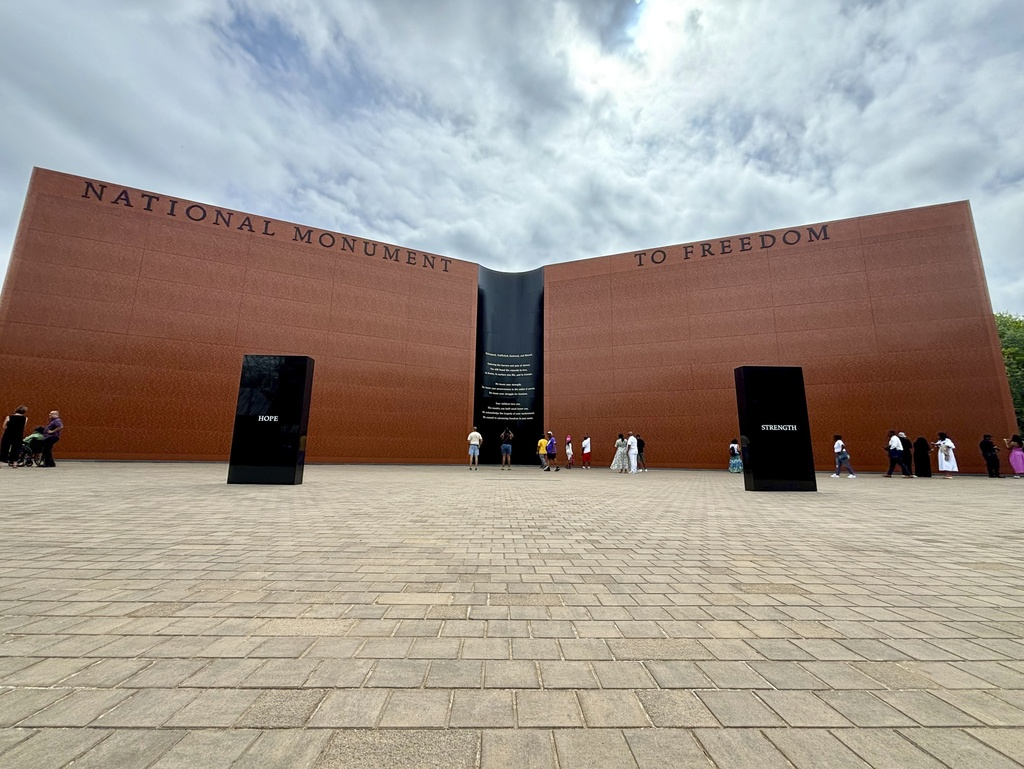
The Monument to Freedom at the National level in Montgomery (Alabama) is different from other memorials which only glorify a particular person or a single event. It is actually dedicated to the African-American ancestors of the past who suffered during the era of slavery and in the aftermath of the Civil War were emancipated. Together with the several other statues in the Freedom Monument Sculpture Park, this monument forms part of the works by the Equal Justice Initiative that was finished in 2024.
It is a somber and reflection-filled environment. Visitors filter through the area slowly, stopping to read the engraved names. Such intentional movement alters the way history is engaged with. Freedom in this context is almost tangible—it is personal and real. This Case Study addresses the questions about the person or the entity that is honored by the monument, the reasons for its construction, the message that is shared by it, the reaction of the people to it at that time, and its importance now.
Who Is Remembered and the Meaning of Names
The National Monument of Freedom is in recognition of over four million African-American slaves who were held before 1865. These people were treated as property for centuries without compensation, denied their rights, or their freedom to live their own lives.
It caused the disunity of many families. Children were separated from their mothers, and men were separated from their wives. Not all slaves were documented. Even their names were changed or erased; therefore, history was lost.
More than 122,000 last names were engraved into this monument, representing many people through their last names. Some of the names were taken voluntarily, while others were taken from their former slave masters. Of course, many people were never accounted for, but they are remembered through this monument too. It does not seek to narrate their histories but the enormity of it all.
Slavery came to an end with ratification the Thirteenth Amendment to Constitution following the end of the Civil War. While freedom for everyone was a reality through the law, life was not without challenges that were characterized by elements of racism, poverty, and violence. While freedom was not instantaneous or accompanied by security or equality, freedom for the slaves meant freedom of mobility, reunification, and recognition for the slaves.
One of the defining aspects of this monument is that it is linked to the 1870 US Census, which is the first census to record African-Americans as free people with names. This is indeed the first time that many of these people featured in federal records.
More than 122,000 last names were engraved into this monument, representing many people through their last names. Some of the names were taken voluntarily, while others were taken from their former slave masters. Of course, many people were never accounted for, but they are remembered through this monument too. It does not seek to narrate their histories but the enormity of it all.
The Significance of Name and Identity Name is one of
Names also contribute significantly to the design of the monument. In the era of slavery, names were often given or renamed by slave owners, causing people to lose their identity by being referred to by only their given names or nicknames.
Name selection took on importance after emancipation. While for some, it was a means of reconnection with their family, for others, names were a representation of hope, power, or history. It was common for names to remain the same. This was due to their importance.
“The repetition of names draws attention to the enormity of the slave trade, not one story, but millions of lives.”
Life After Emancipation and Social Conditions
Social Reformer: Dr. Mary
Emancipation meant that freedom did not necessarily mean that their lives would be easier. Some of the newly freed slaves were left with limited resources, no land, or security. This was in a society that still discriminated against them. Some were reduced to sharecroppers or laborers, who were low-paying jobs that often left them deeper in debt. Racial legislation and the power of intimidation, especially in the South, made their lives very dangerous. Yet they were still not regarded as equals despite being freed.
It is crucial understanding this background in order to appreciate this monument. This monument commemorates more than the end of slavery but is also a reflection of the difficult transition that ensued. The list of names taken from the 1870 Census is one that denotes the beginning of this difficult transition.
Creation of the Monument and Its Location
Who Built the Monument and Why? Why Then?
This memorial is the work of the Equal Justice Initiative (EJI), an organization formed by Bryan Stevenson. EJI is concerned with matters of racial justice, historical education, and social inequalities in America. One of the major objectives of EJI is helping people understand the influence of historical injustices on the current state of affairs.
Historically, public statues have represented powerful men who were either pro-slavery or pro-segregation, while the victims of such systems were often left out of memory.
EJI aimed to end this inequality. Indeed, “The National Monument to Freedom” stands as a tribute to people whose history had long been left out of the narrative. This was no celebration of victory or dominance. It was a recognition of hard truth.
It was set up in the year 2024 when the talks about historical memory and public monuments were getting louder. People were asking a lot of questions about the history of the ones that are told and the history of the ones that are being erased. EJI recognized that this represented an opportunity for the addition of a more accurate history to the public record.
Most of the times, Montgomery, Alabama, was a main culprit of the horrible practice of slavery, which is against the human rights. Gradually, it became one of the biggest trading places of slaves within the South. Not so long ago it was the place for major events such as the Montgomery Bus Boycott.
By situating the monument in Montgomery, EJI can trace the yoke of slavery, segregation, and civil rights all together. These different historical eras are not something that the company presents as divisions; rather, they are like a complex mesh that connects one another.
Having the setting be grounded in a real-world setting helps make history feel topical, or relevant, as opposed to historical or abstract.
Message and Design of the Monument
“The National Monument to Freedom makes one important point: slaves were human beings whose lives were of value.” Furthermore, it is important to understand that the historical fact that Africans were being
The memorial is made of stone with a long wall that is filled with last names of the victims. Visitors walk through the wall at a slow pace while involved in a quiet reflection experience. This encourages reflection.
Names represent the power of the monument. “The repetition of names draws attention to the enormity of the slave trade—not one story, but millions of lives.” This stone structure also stands for endurance through memory.
Public Response, Education, and Lasting Significance
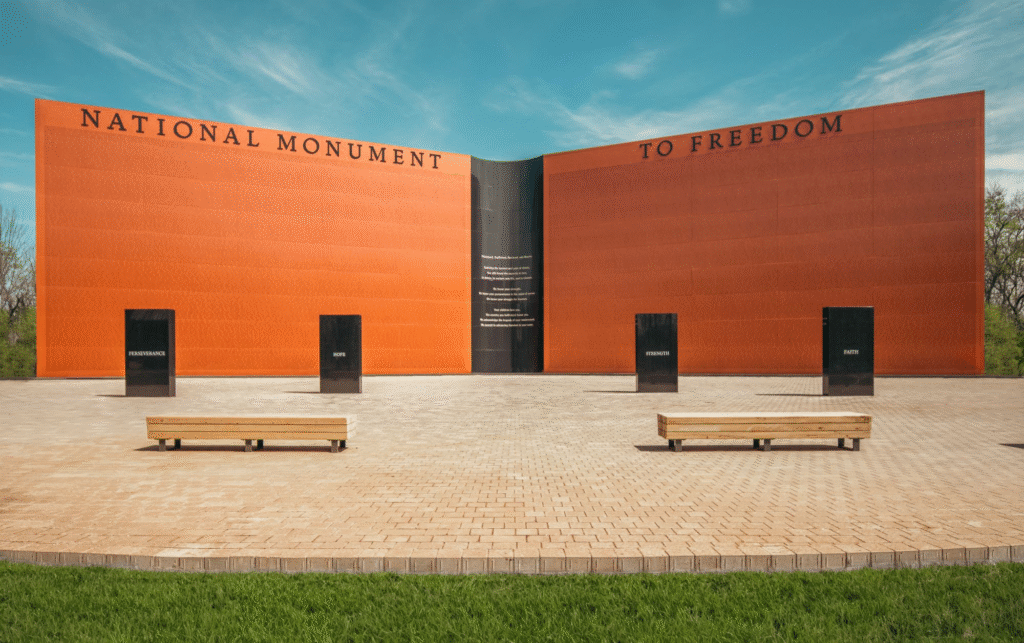
Aside from serving as a means of remembering, the memorial also educates. Some of the visitors who come to the memorial lack information about either slavery or the Reconstruction era. It is through experience that the memorial educates. “Where do these names come from?” “Why do some names appear more than once?” “Why do some names not appear at all?” These questions prompt curiosity, learning, and understanding. Teachers prepare students for the site for this same reason. It encourages discussion and allows people to relate to history on a more emotional as well as intellectual plane.
It is no wonder that the monument aroused a mix of emotions among people who saw it for the first time in 2024. There were people who were overwhelmed with sorrow, others with pride, or a feeling of unity with the monument. Of course, people looked for their own surname among the Educators, and historians appreciated the resource for the respect it showed in its presentation. Educators found this resource humanized the issue of slavery for students. Some recognized that public works of art about the issue of slavery could be difficult. Also However, its a consensus among scholars that difficult issues must be faced to learn about them. Avoiding difficult issues doesn’t make them to go away. In Overall, the public response was positive.
At present, the National Monument of Freedom is a place for educational and reflection purposes. It is visited by school children, families, and researchers. Contrary to other historical monuments that faced protests or destruction, this monument was widely accepted. It is viewed as an example of how history should be commemorated. Public understanding of the issue of slavery is improving. There is more recognition of its presence in the nation. Discussing real history, rather than myth, is what this monument does. This monument continues to be relevant until today because it links the past and the present. Issues like racism and inequality were there in the past – for example, through slavery – and they are still happening now. This monument makes history less distant and shows that it was made by regular people, who it places at the core. This is important since history does not just happen in textbooks but is experienced by communities. Moreover, the monument questions the ways of commemorating. It does not celebrate power but focuses on remembering and unity in humanity.
Sources
Primary Sources
- 1870 U.S. Census – National Archives
- 13th Amendment to the U.S. Constitution
- National Monument to Freedom – Equal Justice Initiative (EJI)
- EJI Report: Slavery in America
Secondary Sources
- Blight, David W. — Race and Reunion: The Civil War in American Memory
- Savage, Kirk — “The Politics of Memory in Public Monuments”
- Equal Justice Initiative – Reports and Publications
Muhammed Turkmen

