
Who is Susan B. Anthony, Sojourner Truth, and Elizabeth Cady Stanton ?
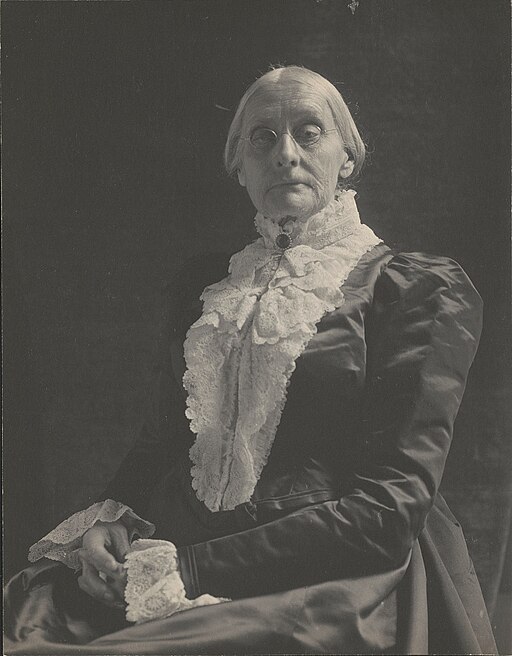
Susan B. Anthony was born in “Adams’ Massachusetts on February 15, 1820 as the second of eight children”(Harper 606). Anthony’s family moved to Rochester, New York when she was six years old, and they stayed there on their farm after the destruction of cotton-manufactorers. Anthony was a successful teacher up until her thirteenth year where she decided to go back to her family’s farm and work. Anthony was taught by her parents that women deserve an education and she fully carried that into her adult hood, especially when she joined Mrs. Stanton’s cooperation and formed a State Women’s Temperance Society with Stanton. Throughout her life Anthony will fight for the rights of women especially when it comes to voting. This will be known as the suffrage movement which many participated in by joining in on protest, conventions, and petitions. Susan B. Antony will pass away at the age of 86 on March 13, 1906.
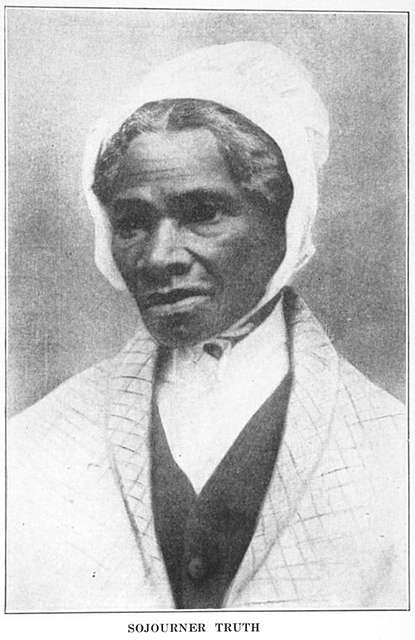
Sojourner Truth, who was originally named Isabella, was born around the years “1797 and 1800 in Ulster County, New York, and was the daughter of James and Betsy who were slaves of Colonel Ardinburgh”(Truth). Truth was the youngest out of 10 or 12 siblings, but only met 6 before they all were sold. Throughout her life Truth suffered a lot of tragedies, like “her parents dying when she was young, her being sold from her family to owners that didn’t speak Dutch, the only language Truth knew, and having her son be sold illegally”. Truth will be freed in 1828 by emancipation in her state, from then on she will go to work for the rights of Black Americans and write a biography of her life. Although Truth went through tragedies not any people can say they can go through, she still survived and made a name for herself during and well after her time. Sojourner Truth will pass away on November 26, 1883 and is estimated to have passed around the ages of 83 – 86.
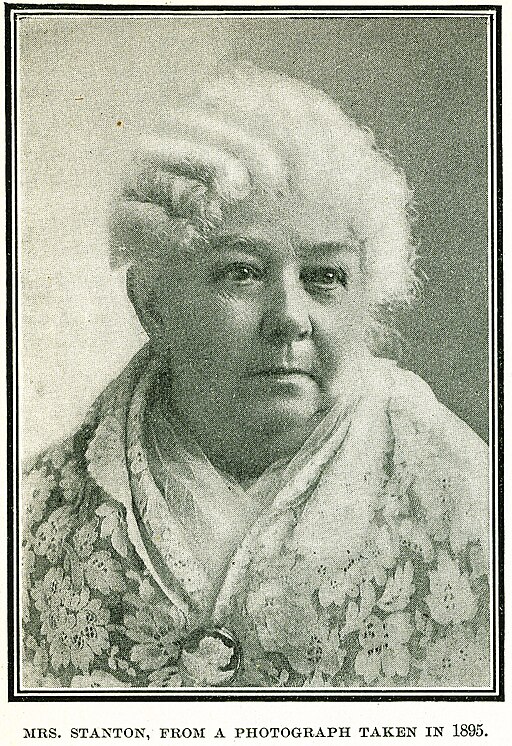
Elizabeth Cady Stanton was born in “Johnstown, New York on November 12, 1815”(Harper 730). Stanton was known for her rebellious side as a child, “she rebelled being a girl after hearing her neighbors say “what a pity its another girl” about a new baby sister, she rebelled against the restrictive clothes girls had to wear, and she even rebelled against the Calvinist teachings although coming from a presbyterian household”(Harper 730). This rebellion would carry throughout Stanton’s adulthood as she would attend many conventions, protest, and write new ideas for women’s rights. This rebellion was an inspiration to women in her time and well after that, as Stanton would be one of the many women recognized for their work during the suffragist movement. Elizabeth Cady Stanton will pass away at the age of 86 on October 26, 1902.
Who built their monument and why ?
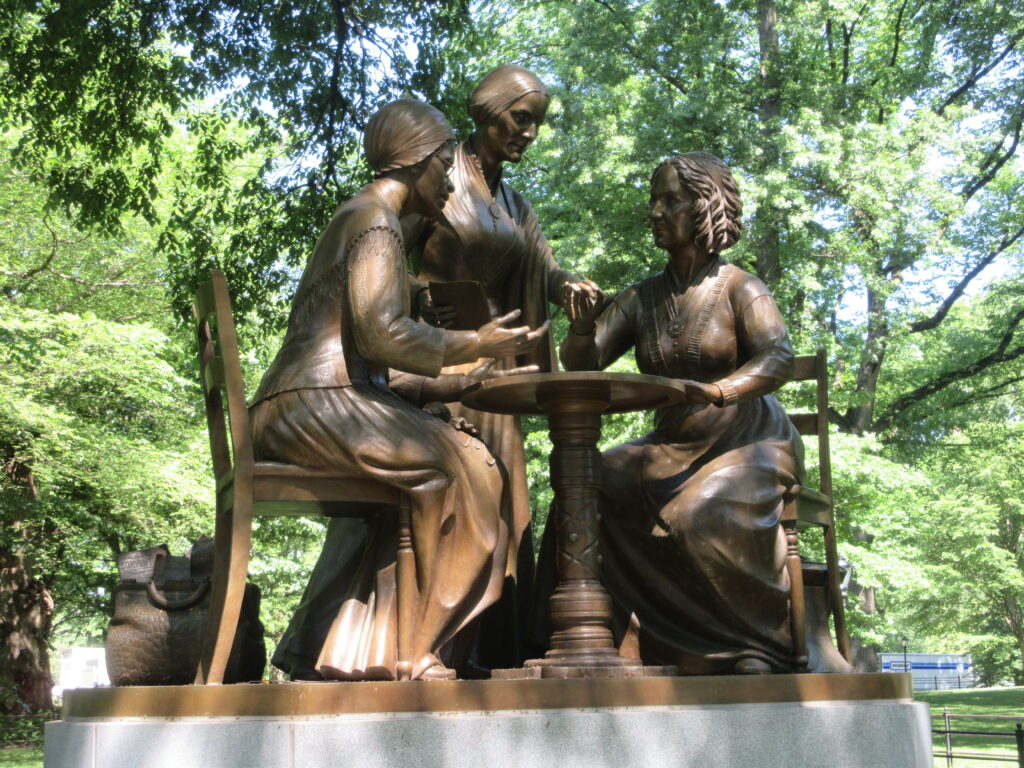
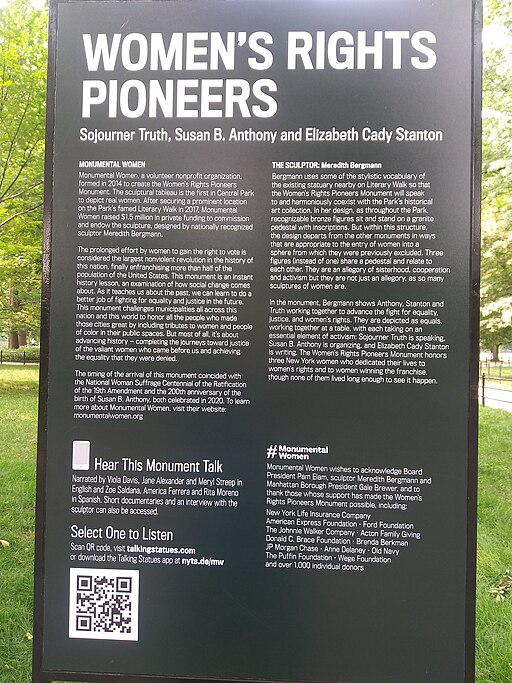
Susan B. Anthony, Sojourner Truth, and Elizabeth Cady Stanton were all influential women during the suffragist movement and this is why they have a monument dedicated to them in Central Park, New York. Suffragists are women who advocate for voting rights using peaceful methods, like lobbying and protests. The name of their monument is the Women’s Rights Pioneer Monument and it was created and sculpted by Meredith Bergmann. Bergmann wanted to create a piece of art dedicated to women since Central park had no previous statues dedicated to real women. She wanted to commemorate the hard work of those women during the suffragette era, and how they pushed for the ratification of the 19th Amendment. The 19th Amendment gave women the right to vote and Bergmann wanted to make sure that the monument was to be unveiled on the 100th anniversary of the ratification for this amendment. This monument was unveiled to the public on August 26, 2020 around the same time as the 19th amendment, which was ratified on August 18, 1920. Interestingly, the three women this monument honors, Susan B. Anthony, Sojourner Truth, and Elizabeth Cady Stanton, all passed before the ratification of the 19th amendment. In the end Meredith said “My hope is that all people, especially girls and boys, will be inspired by this scene of women of different races, different religious backgrounds and different economic status working together to change the world”.
Message behind Women’s Rights Pioneer Monument
The monument presents Sojourner Truth on the left, speaking, Susan B. Anthony in the middle ,organizing all of their work, and Elizabeth Cady Stanton on the right, writing things down that Sojourner is saying, and they are all on a pedestal together working around a table. This is a very modern monument that showcased a narrative style, where a story is taking place as the women work, and it was created in a diverse material, bronze, which is seen in many modern monuments. Meredith Bergmann created this monument to send a message about all the work these women did which is important for little girls today. She wanted to make sure that these women got the respect they deserved and that her message was clear through her at work. Meredith herself said that
“Within this structure, my design also departs from the other monuments in ways that are appropriate to the entry of women into a sphere from which they were previously excluded. Three figures (instead of one) share a pedestal and relate to each other. They are not dreaming, but working. They are an allegory of sisterhood, cooperation and activism but they are not just an allegory, as so many sculptures of women are.”
The inscription of this monument talks about how the suffragist movement was the most influential non-violent revolution in American history, and how this monument truly represents the hard work these women put in for rights they didn’t have. The true message is about how much women have advanced throughout history and how Susan B. Anthony, Sojourner Truth, and Elizabeth Cady Stanton have etched their footprints in American history as inspiration for women past, present, and future.
Initial Opinion about the Monument
Even though the message behind the monument was to commemorate these three women and to send inspiration to women in the future, this message wasn’t initially perceived by the public. Many people believed that this monument was disrespectful, and that is because they knew what the original design looked like. The original design was of just Susan B. Anthony and Elizabeth Cady Stanton sitting together holding a list of names, specifically women suffragists, and this design made people feel that it was white-washing history. A lot of people felt that this first design was putting black suffragists on a lower pedestal than these two white suffragists with one author writing that the sculpture represented a “lily-white version of history”. There were also a lot of opinions against the monument because Susan B. Anthony and Elizabeth Cady Stanton weren’t just fighting for the voting rights of women, they were also fighting against the voting rights of black men with Anthony once saying
“[I will] cut off this right arm of mine before I will ever work for or demand the ballot for the negro and not the woman,”.
All of these reasons made people, especially black people, upset with the monument and they either wanted for the design to be changed or for the idea to be scrapped all together. After listening to these opinions, the creator of the monument decided to change the design and add in Sojourner Truth, but the damage was already done and many people still believe that just because Truth was added into the design it doesn’t erase all of the problematic actions Anthony and Stanton had done in the past.
Present views on the monument
In contrast to the initial views of the Women’s Rights Pioneer Monument, the present views have been much more grateful for the statue and its meaning. Overall the monument’s controversial past hasn’t been brought up in the past two years, and many people appreciate the author for putting up a statue that memorializes an important time in American history. There was a recent event that highlighted the monument and it was showcased in the New York State Museum exhibit for “objects and artworks that highlight the contributions of women”. Many people find this monument to be very inspirational and truly inspiring with one author writing
“With even just a quick glance through the history of women’s suffrage, it’s clear that there are many influential women who deserve to be commemorated through statues in Central Park alongside Elizabeth Cady Stanton, Susan B. Anthony and Sojourner Truth. These trailblazers raged for the rights of women, and women like them should have their stories told throughout Central Park just as the stories of prominent male figures are — because the only thing more powerful than rage is a voice”.
In the end this monument is considered to be very influential and inspiring for people around the world, but especially women. Although this monument had many controversies when it first came out it wasn’t taken down due to this. The monument was instead redesigned and many people appreciate that the author added in a black suffragist to help showcase how much work they put in. The monument stands tall in Central Park, New York for all to see, enjoy, and learn about the hard work these three women achieved.
Works Cited
- Harper, Ida Husted. “Susan B. Anthony: The Woman and Her Work.” The North American Review, vol. 182, no. 593, 1906, pp. 604–16. JSTOR, http://www.jstor.org/stable/25105555. Accessed 15 Dec. 2025.
- Harper, Ida Husted. “Suffrage and a Woman’s Centenary.” The North American Review, vol. 202, no. 720, 1915, pp. 730–35. JSTOR, http://www.jstor.org/stable/25108649. Accessed 15 Dec. 2025.
- Gilbert, O., & Truth, S. (2025, December 1). The narrative of sojourner truth. The Project Gutenberg eBook of The Narrative of Sojourner Truth, by Olive Gilbert and Sojourner Truth. https://www.gutenberg.org/cache/epub/1674/pg1674-images.html
- Moehling, Carolyn M., and Melissa A. Thomasson. “Votes for Women: An Economic Perspective on Women’s Enfranchisement.” The Journal of Economic Perspectives, vol. 34, no. 2, 2020, pp. 3–23. JSTOR, https://www.jstor.org/stable/26913182. Accessed 15 Dec. 2025.
- Evening Journal. (Wilmington, DE) 18 Aug. 1920, p. 1. Retrieved from the Library of Congress, www.loc.gov/item/sn85042354/1920-08-18/ed-1/.
- Bergmann, M. (n.d.). Sculptor’s page ” monumental women. Monumental Women. https://monumentalwomen.org/sculptors-page/
- Gullace, Nicoletta F. “Afterword: A Tale of Two Centennials: Suffrage, Suffragettes and the Limits of Political Participation in Britain and America.” The Politics of Women’s Suffrage: Local, National and International Dimensions, edited by Alexandra Hughes-Johnson and Lyndsey Jenkins, University of London Press, 2021, pp. 353–74. JSTOR, http://www.jstor.org/stable/j.ctv2321krx.21. Accessed 15 Dec. 2025.
- McGreevy, N. (2020, August 26). Why the first monument of real women in central park matters—and why it’s controversial. Smithsonian Magazine . https://www.smithsonianmag.com/smart-news/monument-controversy-women-pioneer-central-park-180975662/
- Katz, B. (2019, March 25). Women’s Rights Monument in N.Y.C. approved amid accusations of whitewashing | smithsonian. Smithsonian magazine. https://www.smithsonianmag.com/smart-news/nyc-approves-womens-rights-monument-amid-accusations-whitewashing-180971774/
- Staples, B. (2019). Opinion | A whitewashed monument to women’s suffrage (published 2019). The New York Times. https://www.nytimes.com/2019/05/14/opinion/central-park-suffrage-monument-racism.html
- Locascio, Angela. “Celebrating Women’s Suffrage in Central Park.” The Observer, 1 Mar. 2023, fordhamobserver.com/71388/opinions/celebrating-womens-suffrage-in-central-park/.


_Anthony,_1820-1906.jpg)

