
By: Owen Hotaling
Who Was Kusunoki Masashige?
Kusunoki Masashige was born in 1294 into a small samurai family that was loyal to the emperor in the Kawachi Province which is now modern day Osaka. He was well educated for a samurai at such a young age in military strategy and Confucius’s ideas of loyalty and duty. He grew up in a time when the Emperor was trying to overthrow the Shogunate. Unlike many other samurai he didn’t inherit any great power or status. At a young age he was heavily influenced by the ideas that a warriors duty was complete loyalty no matter what even at the cost of their life.
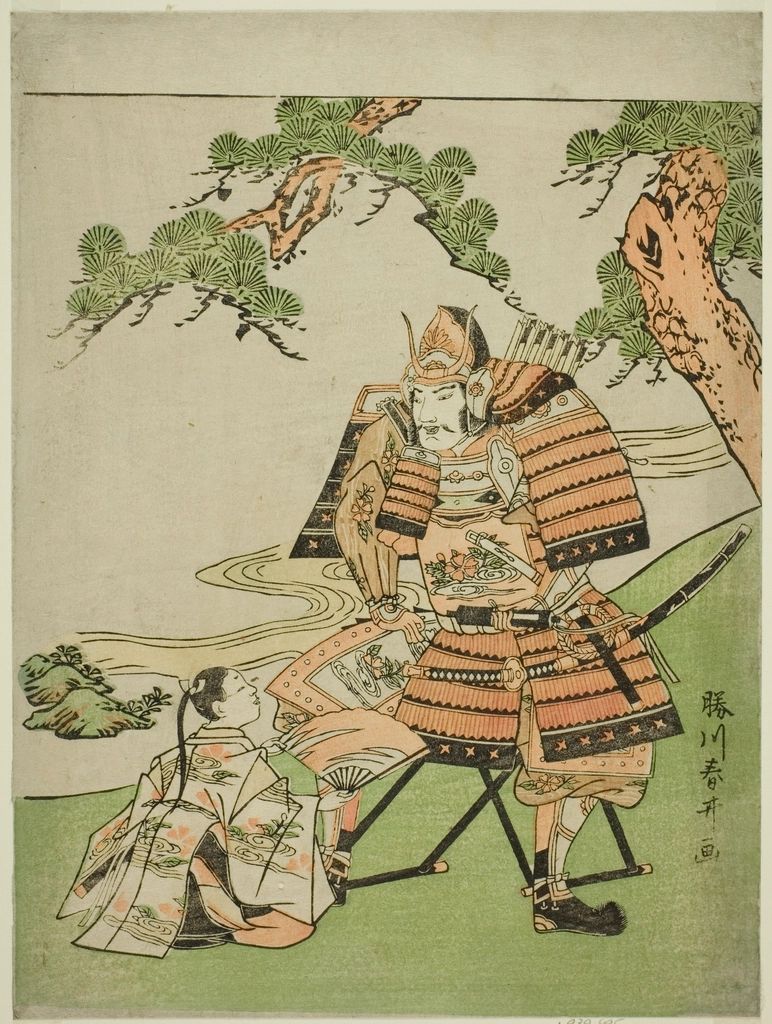
He was one of the emperors Go-Daigo biggest supporters, even when most warriors opposed the emperor. He became famous during the Genkō War in 1331–1333, when the emperor Go-Daigo tried overthrowing the shogunate. He used guerrilla warfare like ambushes, the mountains and retreats. A notable battle that helped grow his fame and influence was the battle at Mount Chihaya, where his small army had defeated the shogunate’s large army. He eventually became known for outsmarting his enemies rather than using brute force. After the fall of the shogunate he helped support the Kenmu Restoration that briefly restored imperial rule. Following that was his most famous battle, the battle of Minatogawa in 1336 in which he knew he couldn’t win the battle, he believed the order was a mistake and suggested a different strategy, but the emperor insisted, he still listened to the Emperor’s order anyways and fought brilliantly. Rather than being captured he ended up committing seppuku in the battle. His death became a symbol of honor, loyalty and self sacrifice forever within Japanese culture.
He’s remembered not for his victories but for his unwavering loyalty, bravery and for fighting for what he believed in no matter the odds. He fought and was loyal to the Emperor when no one else was. And in the end he became one of the most decorated and celebrated examples of the ideal samurai in all of Japanese history.
What’s the History Behind the Monument?

Kōtarō Takamura and artists associated with the Tokyo Fine Arts School worked together to build the large bronze equestrian statue memorializing Kusunoki. With help from the Sumitomo Group that had provided the Bronze. The statue was built during the Meji era when Japan was trying to strengthen its national identity and its authority against foreign powers following the Meji Restoration. They started choosing historical figures that embodied Japan’s values and ideals. In Kōtarō’s case he wanted to symbolize Loyalty to the Emperor, obedience and patriotism to the new modern nation.
What’s the Message Behind the Monument?
The statute depicts Kusunoki Masashige on a strong course with a determined look and ready for battle. His armor and weapons make him look brave, calm under pressure, noble, and mighty. He’s Facing the Imperial Palace portraying him as if he was protecting and guarding it to tis day. Which shows his loyalty and dedication to the emperor. On the right side of the monument his famous last wish was inscribed:
“Would that I had seven lives to give for my emperor!”
His wish expresses that his loyalty and duty to his emperor mattered more to him than his own life. It also shows what true honor really is. Its total commitment no matter the odds and even in the face of death. Lastly it’s meant to teach a lesson and show everyone that true loyalty isn’t limited or conditional its endless and forever.
How is the Monument Viewed?
When the monument was put up in the 1900’s the Japanese government used Kusunoki Masashige to promote complete loyalty to the emperor and their national unity. Many people applauded the monument as it was honoring a famous hero from the past that represented all the virtues and ideas that Japan wanted to stand for like, self sacrifice and patriotic loyalty. Eventually Japan started using Masashige more and more in education and even propaganda to encourage self sacrifice and obedience. After World War II, the monument was views more critically by Historians. Historians thought that Kusunoki Masashige’s image was being used to justify nationalism and militarism throughout Japan. Today many people see the statue as a historical landmark rather than a symbol. It isn’t any controversy with this monument however many people question is monuments that portray unwavering loyalty should still be used.
Works Cited
The Editors of Encyclopædia Britannica. “Kusunoki Masashige.” Encyclopædia Britannica, Encyclopædia Britannica, Inc.
britannica.com/biography/Kusunoki-Masashige. Accessed 14 Dec. 2025.
Dai Nankō [Biography PDF]. Zenwort Archive.
bohnerbiographie.zenwort.de/bw_daten/DaiNanko-150dpi.pdf. Accessed 14 Dec. 2025.
Gods and Heroes of Old Japan. Page 123. Archive.org.
dn790008.ca.archive.org/0/items/godsheroesofoldj00past/godsheroesofoldj00past.pdf. Accessed 14 Dec. 2025.
“Kusunoki and the Taiheiki.” University of Texas at Austin, Medieval Japan Resources.
laits.utexas.edu/~mr56267/HIST_341K/Medieval_pages/Kusunoki_and_Taiheiki.html. Accessed 14 Dec. 2025.
“Kusunoki Masashige—Loyal to the End.” Stories from the Museum Floor, 13 July 2018.
storiesfromthemuseumfloor.wordpress.com/2018/07/13/kusunoki-masashige-loyal-to-the-end/. Accessed 14 Dec. 2025.
“Kusunoki Masashige Statue.” Ministry of Land, Infrastructure, Transport and Tourism (Japan). Government PDF.
mlit.go.jp/tagengo-db/common/001563550.pdf. Accessed 14 Dec. 2025.
Morris, Ivan. The Nobility of Failure: Tragic Heroes in the History of Japan. Archive.org.
archive.org/details/nobilityoffailur00morr/page/127. Accessed 14 Dec. 2025.
“Statue of Kusunoki Masashige.” Ministry of the Environment (Japan), Kokyo Gaien National Garden.
env.go.jp/garden/kokyogaien/english/statue_of_kusunoki_masashige.html. Accessed 14 Dec. 2025.
“Statue of Kusunoki Masashige.” Sumitomo Group, Sumitomo Group Public Affairs Committee.
sumitomo.gr.jp/english/history/related/kusunoki/. Accessed 14 Dec. 2025.

