Describing my experience
“Over time, you’d lose contact with the origins of your trauma, dissociate the roots of its cause, and forget. But one day, all the hurt and anger would burst forth, like fire from a dragon’s belly.”
I want to start this post with a quote because, even though this book was outside my usual interests, it truly reminded me how important it is to heal our inner selves. I often find it difficult to read books that discuss trauma and emotions, but this one definitely helped me understand why revisiting those experiences is so essential for growth.
Reading this book was an experience. I haven’t been having the best few weeks, and picking a book with a plot that felt so negative probably wasn’t the best idea. Stepping out of my comfort zone was already nerve-wracking, but I was still excited to try something new. This book really threw me off, it was unsettling and caught me off guard. My roommate read it too and liked it, but we have pretty different tastes when it comes to books and movies, so I guess I shouldn’t be too surprised. I just have to say, that even though I didn’t enjoy reading this book, I was still totally hooked. I kept turning the pages because I just had to know what would happen next. Even when it freaked me out, my curiosity won, and I couldn’t stop reading.
Classification and features of my experience
I think the biggest feeling this book gave me was confusion. It was kind of hard to understand the reasoning behind the plot, and in a way, it made me feel a little stupid because I couldn’t quite figure out what was actually going on. I’m naturally anxious, so not having a sense of control over what could happen next really added to that feeling. But at the same time, I still enjoyed it.
The story is about Alicia, who kills her husband by shooting him in the face five times. At first, that felt really extreme to me, like, why would you kill someone you love? If you’ve read my previous posts, you can probably tell I’m a hopeless romantic, so that was definitely not the best way for a book to start for me.
I think distress was another big feeling I had while reading this book. At first, I kept wondering why Alicia would do this and found myself judging her choices. But the more I got to know her throughout the story, the more I started to doubt that she was actually the one who killed her husband.
I struggled to understand Alicia’s true feelings at the beginning. At times, she seemed to genuinely love her husband, but other times, she would say things that sent mixed signals, like this:
“Augusto’s is our local Italian restaurant, just down the road. It’s nothing special, but it’s our home away from home, and we’ve spent many happy evenings there. We went around eight o’clock. The air-conditioning wasn’t working, so we sat by the open window in the hot, still, humid air and drank chilled dry white wine. I felt quite drunk by the end, and we laughed a lot, at nothing, really. We kissed outside the restaurant and had sex when we came home. Thankfully, Gabriel has come around to the portable fan, at least when we’re in bed. I positioned it in front of us, and we lay in the cool breeze, wrapped in each other’s arms. He stroked my hair and kissed me. “I love you,” he whispered. I didn’t say anything; I didn’t need to. He knows how I feel.”
In a way, I think I identified with Alicia. Even though this book wasn’t about romance, she was a lover at heart, while everyone else tried to paint her as the villain. She was so emotionally traumatized that she stopped speaking, and in some way, I could feel her pain. I tend to be a quiet person too, not because I don’t have things to say, but because I worry about what people might think if I actually say them.
Narrative Technology
This book had one of the biggest plot twists I’ve ever read. The whole time, I thought Alicia killed her husband (I also feel like the author wanted me to believe that), but in the end, it turns out she didn’t.
“I quickly told them everything that I had read in Alicia’s diary: that Christian had been treating Alicia privately before Gabriel’s murder; that she was one of several private patients he saw unofficially, and not only had he not come forward to testify at the trial, he had pretended not to know Alicia when she was admitted to the Grove. “No wonder he was so against any attempt to get her talking again,” I said. “If she did speak, she would be in a position to expose him.”
Alicia gets sent to a psychiatric hospital, and she doesn’t say a single word the entire time. Everyone assumes she’s just refusing to talk to avoid giving any details about what really happened. That’s when she meets Theo, a therapist who seems like he really wants to help her. But then, Theo is actually the one who killed her husband, Gabriel. I did NOT see that coming.
The police figured it out by reading Theo’s diary, where he basically confessed to everything. Honestly, I was shocked. I actually felt bad for Theo throughout the book because he seemed so invested in Alicia’s trauma and really wanted to help her. So finding out he was the killer? Yeah, that was the last thing I expected.
While reading the book, I felt a lot of suspense, like every part was revealing something new, and I never really knew where the story was going. It kept me guessing the whole time, which made it really exciting. At some points, though, it also stressed me out a little because there were so many metaphors throughout the book, this lead me to the conclusion that Stretch was also involve in the narrative of this book. While they were trying to figure out who the killer was, there were also a lot of deeper meanings about healing and dealing with the past to become a better version of yourself in the future.It felt like the book wasn’t just about solving a mystery but also about personal growth and understanding how the past shapes who you are.
Works Cited
Michaelides, A. (2019). The Silent Patient. Celadon Books.
Feature image
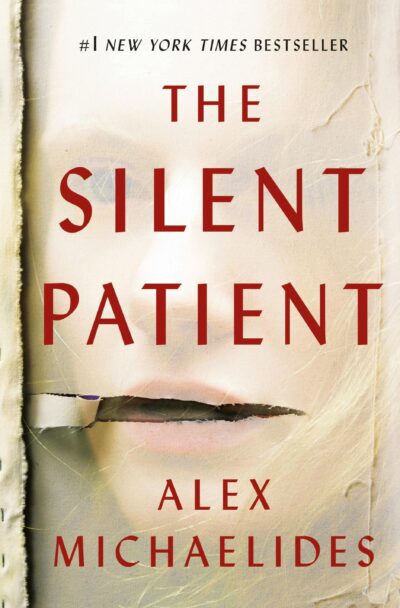
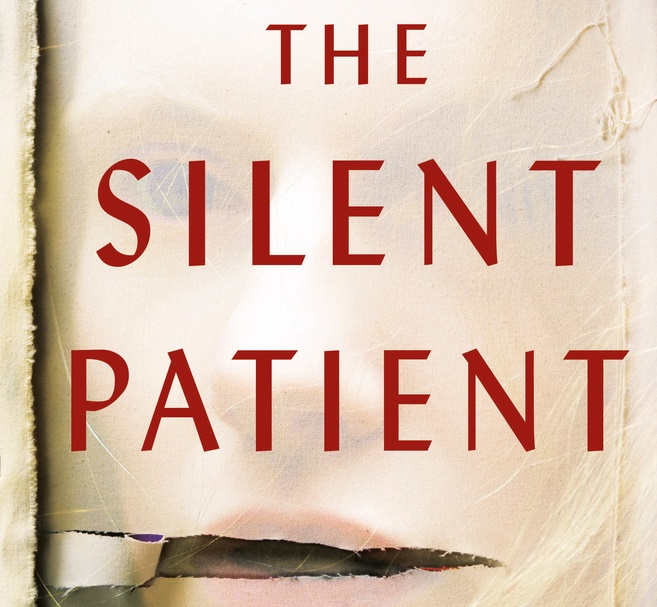
Cover from The Silent Patient. Celadon Books. All rights reserved.