My Experience
I chose to read Behold the Dreamers because I wanted to continue reading immigration stories that represents cultures more closely related to, although not the exact same as, my own. I also wanted to read about something outside of the Caribbean and aspects of South African apartheid, which I previously explored. It also seemed like the most interesting read to break my habit of reading memoirs with, this time I have actually chosen a novel. I have gotten through the first twenty chapters of the book, but the first ten are the more prominent chapters because they establish the book’s New York storyworld. Almost immediately I once again felt immersed into the main characters Jende and Neni’s lives. From Jende’s exciting new chauffeur job, his immigration status making him nervous, and Neni’s dream of becoming a pharmacist, I immediately felt these emotions along with them. Because of this, as I read I found myself desperately wanting to see them succeed. I’ve been feeling either hope or nervousness, or somewhere in between.
Classifying My Experience
The strongest experience I had was empathy. Empathy is the feeling of understanding another person’s actions, even if you do not condone the person’s actions. I felt empathy the most, for the uncertainty they almost always faced, and for the obvious compromises. For example, Jende decides to continue working for Clark even though his immigration status is up in the air. I could feel the pressure along with him, and use empathy to justify his choice as more necessary than dangerous. The second experience I had was wonder. Wonder is an uplifting emotional experience of discovery. The wonder I felt though, was not necessarily a prevalent and magical moment. It is more of a proud state of admiration for their everlasting hope and perseverance. It gave me a new perspective on how important hope can be in the midst of struggle. Their strong belief in the “American Dream” despite all of their financial and immigration issues emphasized this for me. For example, Jende’s dream of success in America is evident when he expresses that people like him do not just simply visit.
“No, people like him did not visit America. They got there and stayed there until they could return home as conquerors-as green card-or American passport-bearing conquerors with pockets full of dollars and photos of a happy life” (Mbue, 19).
This wonder only heightened my empathy, making me think how hard it must be to build a better life when stability is not guaranteed. Reading this made me feel empathy for the pressures he’s carrying, while also creating wonder at the hope he clearly has for himself and his family. I have a sense of respect for the characters and the experiences I had reading their story.
The Features Prompting My Experience
The first feature contributing to my experience was the third person narration. It allowed for a better emotional connection to the story. It made me feel as though I was not just observing their lives from a distance, but that I was placed inside of certain scenes. The detail makes their lives feel real rather than story-like. For example, Jende’s job interview with Clark stood out. As I was reading and the scene was being set, I could feel the tension. Jende’s future was literally on the line in this scene. The uncertainty in this scene generates empathy. Another feature is the difference between the Jonga family and the Edwards family. As the story moves along we begin to see that wealth, does not mean perfection. This complicates the “American Dream” ideal and deepens my sense of wonder. Also highlighted, but maybe overlooked, is the small displays of perseverance the Jonga’s show. Neni is in school while maintaining motherhood, a budget, and hope for a brighter future. Lastly, the presence of immigration status that is constantly there. It is not always the main focus, but is still a relevant issue that creates tension. The uncertainty around Jende’s asylum case makes me feel nervous with almost every action he takes.
Determining The Narrative Technology
The two specific and most obvious technologies that stood out were the empathy generator and parable. Instead of just being told how Jende and Neni are feeling, we are placed into an emotional world that allows us to experience how they’re feeling, whether they recognize the emotion or not. We aren’t just reading about what it means to struggle, instead we are shown how it feels. This being the empathy generator, allowing readers to feel the true remorse of a character. The second technology I recognized was parable, a simple story illustrating a moral or religious lesson. For example, the difference between the Jonga’s and Edwards. The lesson demonstrating that material success does not equal emotional success, as observed by the Edwards. Also that strength and perseverance can also be their own forms of success that aren’t often viewed as success. These technologies help reinforce my experiences of empathy and wonder.
Opposing Perspective
I have come to a conclusion that although I feel quite strongly about my experiences thus far, I have a new one that comes into play that is completely opposing. I would describe it as a sense of frustration simply because I know better than the characters in the story. I know what they don’t, which is also prompting superiority. I know that what they think the “American Dream” to be, is very much different from the reality they will face. Not just because as an American I know this dream not to be true, but also because I know the “impending doom” of their storyline. I also felt the most frustration when they thought of the Edwards family to be such model citizens. Although I found myself very interested and invested in this book, I did at times kiss my teeth and close out my ebook for the day. Note that though, I can be irritated very easily at times, but I did still enjoy the book enough to keep reading.
Featured Image
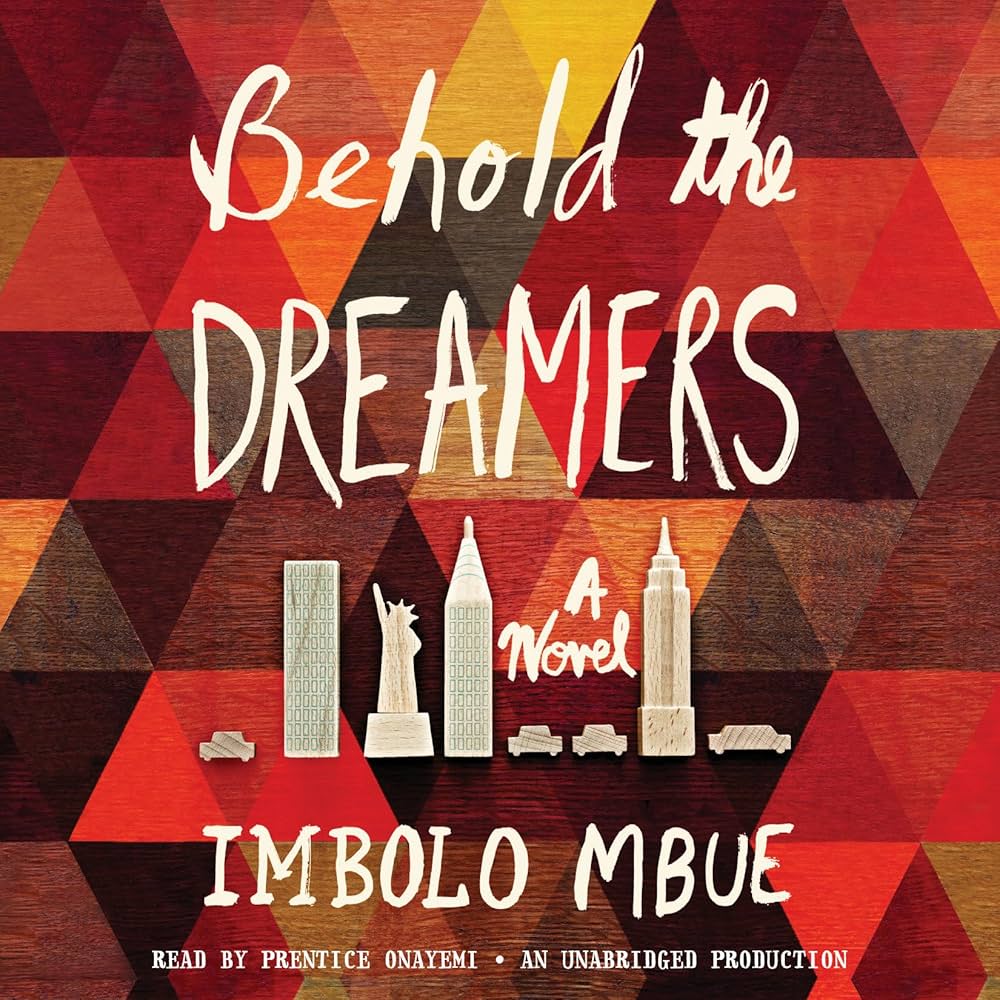
Cover for Behold the Dreamers. Fourth Estate. All Rights Reserved.