What is this story
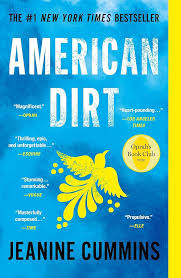
Set in the late 2010’s, the novel American Dirt by Jeanine Cummins eight year old Luca and his mother Lydia immigrate from Acapulco, Mexico to flea cartel violence. After Luca and his mother barely escape a cartel attack at a family party, an attack that killed sixteen of their family members, the realization that the cartel knows they are alive sets in. This is the start to the realization that they need to get out of Mexico. Lydia begins to grab what she can as quickly as she can and prepares to flea with her son towards the United States while the chaos of the crime scene continues.
My Experience
This story has hit me hard because this is just a kid and his mother trying to survive. Everyone they loved was just murdered in front of their eyes by a cartel. Even worse they have to manage their grief, fear, and trauma because they are still being hunted by the cartel. The feeling I get from this story is almost like I’m looking over my shoulder, but in the case I feel that I am looking around every characters shoulder to make sure they are safe.
“Even though they’re expecting the room service delivery, the knock at the door, when it comes, startles them both. They are jittery from grief, and there’s a thinness in the air that amplifies overy sound.” (page 40)
The anxiety that both Lydia and Luca have in this scene and the whole story transfers over to my emotions in a way. Every sound or person that seemed out of place, I started to question who they were and why they were there. Even in situations that they didn’t question a specific person I would think that something was about to happen. They sat on a bus later in the story, and my first thought was what if someone on the bus is looking for them.
“She wants to stretch up on her bare toes and look out the peephole to make sure, but how can she? How can she, when all she can imagine is seeing the dark tunnel of a gun barrel on the other side and then immediately seeing nothing at all ever again? But what if that is the fate that awaits her, she tells herself, then no, at least she won’t unlock the door and invite it in. She holds her breath as she reaches out silently and plants her hands on either side of the peephole. A young man outside pushes a cart laden with silver trays.” (page 40)
Bringing fate into this I feel is a part of the grief that Lydia is feeling, similar to a what is the point of life feeling. I feel that even though Lydia looks past her grief and stays strong for Luca, it still gives me some anxiety. I feel that Lydia is staying strong, but she can also be a loose cannon if it all becomes too much. I am on their side for them to run, but I am worried that Lydia will not be able to handle the grief, stress, fear, and responsibility that this journey has for her and Luca.

With all that fear and anxiety Luca and Lydia felt, this is what was behind the door. The person bringing up the food they ordered. Something does happen with this that causes them to run, but it had nothing to do with the man bringing up their food.
Classifying my experience
I would classify the way I felt from this experience as distress. Distress is described in the experience glassary as “Anxiety or mental suffering that you have not chosen”. I never chose to have this anxiety from this story, but I care so much for Lydia and Luca’s characters, that I begin to have anxiety for them. This distress goes back to the feeling of looking over every characters shoulders.
With the feeling of looking over every characters shoulders, I think that it could also be argued that I felt some immersion. Immersion is described in the experience glossary as “Absorbing or engrossing involvement in a story. You might feel as though you’ve been swallowed by the story.” and I feel that I am looking out over these characters. This looking out feeling kind of goes with the “swallowed by the story” part of the definition.
Determining the Narrative Technology
I believe that the narrative technology used in this scene and much of this story is similar to a soliloquy. A soliloquy is described in the technology glossary as “A narration technology that allows spectators or readers to hear or read the inner conflict of an individual character.” and it also tends to be in third person. Because of the say this story is narrated I wouldn’t say that this was exactly a soliloquy, but I feel that it is similar in a way. The narrator helps show what Lydia was thinking in that moment, and that is what made me get some anxiety on if Lydia would be strong enough to push through all her emotions. I feel that the little moment where Lydia’s thoughts of doubt, or giving up plays a large role in the distress I felt throughout this novel.
After discussion in class I still feel that soliloquy fits this experience, but I do also now have a continued suspicion that the narration had an effect on how I felt in this scene. I think that the free indirect discourse played a role in this scene. Free indirect discourse is described as “A narrator who can ventriloquize a character (often ironically), speaking as them instead of conveying what they actually said with direct quotation.” in the narrative technology glossary. This seems fitting because when Lydia speaks to herself before she opens the door, the words almost seemed rehearsed, or like something you would see in a play. The idea that it was similar to a play was mentioned in class and I completely agreed with that. In the part that narrates Lydia’s thoughts it seemed poetic in a way with how it said “at least she won’t unlock the door and invite it in.” because they say “it” like the thing behind the door is a wild animal, but in reality it is just her fears. The way the narrator narrated her thoughts made it seem almost too thought out, so that the reader would feel distress similar to what I had felt.
Featured Image
Cover to American Dirt by Jeanine Cummings. All rights reserved.