Once again I chose my book for this post from internet recommendations. I saw the description of this one on Goodreads and thought it sounded really interesting. The past few books I’ve read felt so mundane that I was looking for something with an engaging plot. The back of the book describes the main character, Antonia, coping with the sudden death of her husband when a pregnant undocumented teenager shows up on her doorstep. I don’t think it can get more interesting than that, so I’m giving it a go.
Experience
Unbeknownst to me, this book is set in rural Vermont. I grew up in rural Vermont and know most of the state like the back of my hand. Because of this, I’m feeling both Connection and Dissociation. When the setting is first introduced, it’s in the context of extreme snowfall. Immediately I laughed to myself because I totally connected to this. As the book goes on a little bit more, the description of Vermont does not accurately reflect the state. It left me wondering why the author, Julia Alvarez, chose to set it in Vermont. The best way I can describe it is it seems like someone who spent a day visiting the state and then based the entire novel off of their impression without fact checking any of it. I could tell she had been to Vermont, but it was very clear she wasn’t writing from the experience of being a Vermonter. Upon a quick Wikipedia read through, I was right in that she spent a year attending Middlebury College, a rural liberal arts college in Vermont.
I like consuming stories set in Vermont because it’s such a special place to me, and it provides such a sense of joy when others get to demonstrate that experience to me. I say all the time it feels like another world up there, so I really do feel connected to the setting of the book because to me, Vermont is so unique. In that same vein, because it’s not an entirely accurate depiction, I do find myself stepping outside of the book quite often. Every time the book mentions Vermont, it feels like some cliche description that’s trying to be relatable but misses the mark.
Features Prompting my Experience
“It’s beautiful here, Tilly brags. Why do you think it’s called Heartland? They have an ongoing rivalry. Vermont or Illinois. Who gets spring first, who had the worst snowfalls?”
Alvarez, 8
As it was first introduced, I thought this was a funny way to set a place. Most people know Vermont is notorious for snow, and it’s something that I know all too well. I’m sure I’ve had this exact conversation with something from a different northern state.
“He’s in the living room, Antonia says, stepping to one side for Roger to come in, casting a look at his dirty boots. She considers asking him to remove them, as seems to have missed the hint of shoes lined up below the mudroom pegs. But she might as well ask him to take off his clothes. No way is this old Vermonter’s going to walk around in stocking feet indoors”
Alvarez, 20
Moments like this are where she loses me a little bit. It’s not that it’s an inaccurate stereotype, but Vermont is continuously mentioned in moments like these just throws me off. Instead of this being a characteristic of her neighbor specifically, it’s like she’s always saying “Haha, Vermont, am I right?” but it doesn’t feel relatable because it feels like someone referencing something they’ve viewed from the outside rather than something they experienced on the inside.
“Soon after his arrival early this year, Mario cut his hand on a saw he didn’t know how to use. Lots of blood and Roger afraid to take him to the hospital, where the ER might call the ICE office. Instead, Roger called her. Didn’t he know about Sam’s death? I’m no doctor, she reminded her neighbor.
Not for the cut. To talk to him, calm him down, Roger explained. Small town. Everyone knows Dr. Sawyer’s wife is Spanish”
Alvarez, 13
“Last time there were rumors of raids on Vermont farms, Roger dismissed his workers. Mario and José are recent hires. Antonia has no idea where their predecessors went. Now that she has stopped volunteering, she’s no longer in on the migrant gossip loop. Maybe Roger’s former workers went to another patrón in Vermont? To Canada? Maybe back to Mexico?”
Alvarez, 35
This plot element is where I really find myself disconnected from this world. There certainly is an immigrant population in Vermont, but the amount of Hispanic characters in the book do not reflect the 99% White population Vermont is home to. We certainly do have people of several different descents, but this book is specifically set in a rural town. Any diversity you may find typically exists in our one city. The mention of ICE threw me off because we do have an ICE presence, that has horrifically grown recently, but in the past they mostly worked up north in relation to Canada. I think one thing that works for the book is the fear of ICE because when they are present, it’s daunting due to their typical lack of presence. However, the book paints ICE raids as common, and until recently that was not true, especially on rural farms who are more likely to employ underage kids or fundamentalist religious groups under the table instead of undocumented migrants. In my experience, Antonia’s neighbor re-hiring Mexican immigrants for years doesn’t fit into the world that Alvarez has tried to set the book in.
Narrative Technology
When thinking about a narrative technology to explain my experience, I’d like to propose a new term. We have parody in the glossary, defined as “A narration technology of exaggerated imitation”, but I would like to propose Parody of Setting, which I would define as “a narration technology of exaggerated imitation applied to an existing place”. While I don’t think it’s intentional, I do think there is an exaggerated imitation of Vermont in this story. Both in the way of overly feeding into the conceptions Alvarez made about Vermont from a brief time, and fitting a narrative into a place where it may not fit.
I’d like to reiterate that immigration does have a place in Vermont, and there is power in telling those stories because rural stories are often overlooked. However, I think the over fictionalization of Vermont is doing a disservice to the power in the story. Granted, I do understand my niche perspective in this concept.
The best way I can connect it is by relating it to Gilmore Girls, in that they chose a fake Connecticut town to create a parody of setting. Afterlife to me is like doing that, but instead of naming the Connecticut town Stars Hollow, they chose to base it in West Haven, and so only those who have been to West Haven will know they’re exaggerating what the town is like. I wish that Alvarez had created her own Stars Hollow for this book so that I could fully immerse in the fiction of it instead of thinking about the inaccuracies depicted of my real life home.
Final Thoughts
I read an article just a few days ago about a struggling maple farm that relies on the employment of migrants. The farm is just a few towns away from mine. The comments on the Facebook link to the article mostly entailed comments like “as long as they’re legal…”. It made me realize that this book did not reflect my experience growing up in Vermont, and maybe wasn’t even relatable when it was written 6 years ago during Biden’s presidency, but it is more relatable now. I think some elements of the depiction of Vermont were accurate, and the Facebook comments reinforced the “liberal republican” views that many Vermonters I know hold. However, I stand by my take that the parodic elements of my home took me out the book. I think Julia Alvarez has an important take on rural immigration, but I think her take on Vermont lacked the nuance I was looking for that comes from my 20 years of experience living in the place she’d describing.
As I move forward, I would be immensely interested in reading some of her other works that have different settings. I’m left feeling curious about her descriptions of places she may know better vs. places she may have never been, and how she addresses those places differently based on what she experienced. I do think my understanding of the novel was a niche one, but I’m sure this an experience people have had outside of a Julia Alvarez book. For me, it was a first, and it taught me something about perspective in a way that I haven’t been so acutely aware of before now. I came to not mind her take on Vermont so much, but for me it was a reminder that I was in a fictional novel and not a world I could walk in with the characters.
Works Cited
Alvarez, Julia. Afterlife. Algonquin Books, 2020
Experiences – WonderCat. https://wonder-cat.org/experiences/. Accessed 22 Mar. 2026.
“Julia Alvarez.” Wikipedia, The Free Encyclopedia, Wikimedia Foundation, https://en.wikipedia.org/wiki/Julia_Alvarez. Accessed 22 Mar. 2026.
Technologies – WonderCat. https://www.dropbox.com/scl/fi/ubdvm0fpx6rvs6ha9fwtz/Technologies-WonderCat.pdf?rlkey=3un6lgc0m84iftwbz0bv0ipuc&e=1&dl=0. Accessed 22 Mar. 2026.
Featured Image
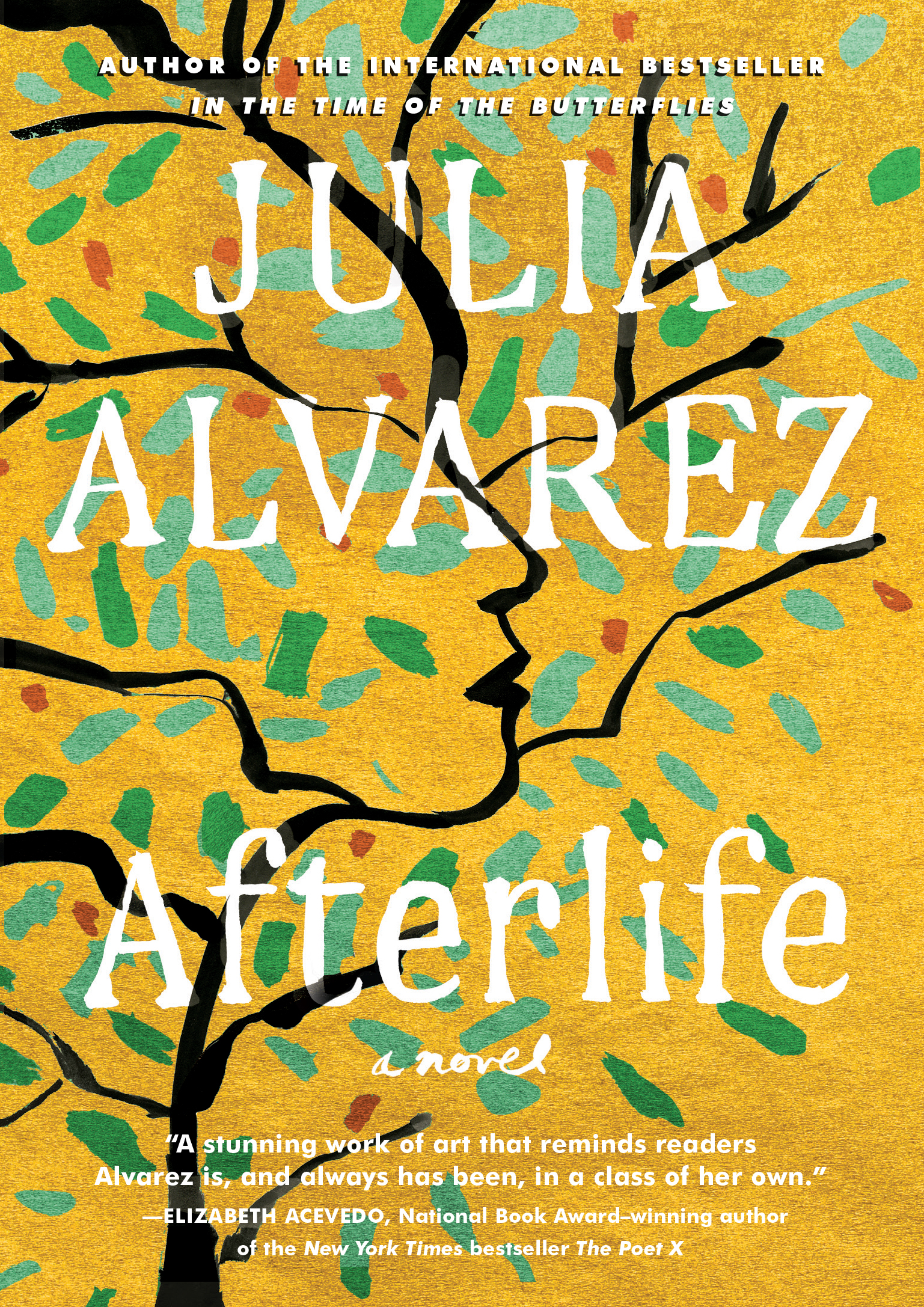
Cover Art. Afterlife by Julia Alvarez. Algonquin Books. All Rights Reserved.