My Book of Choice
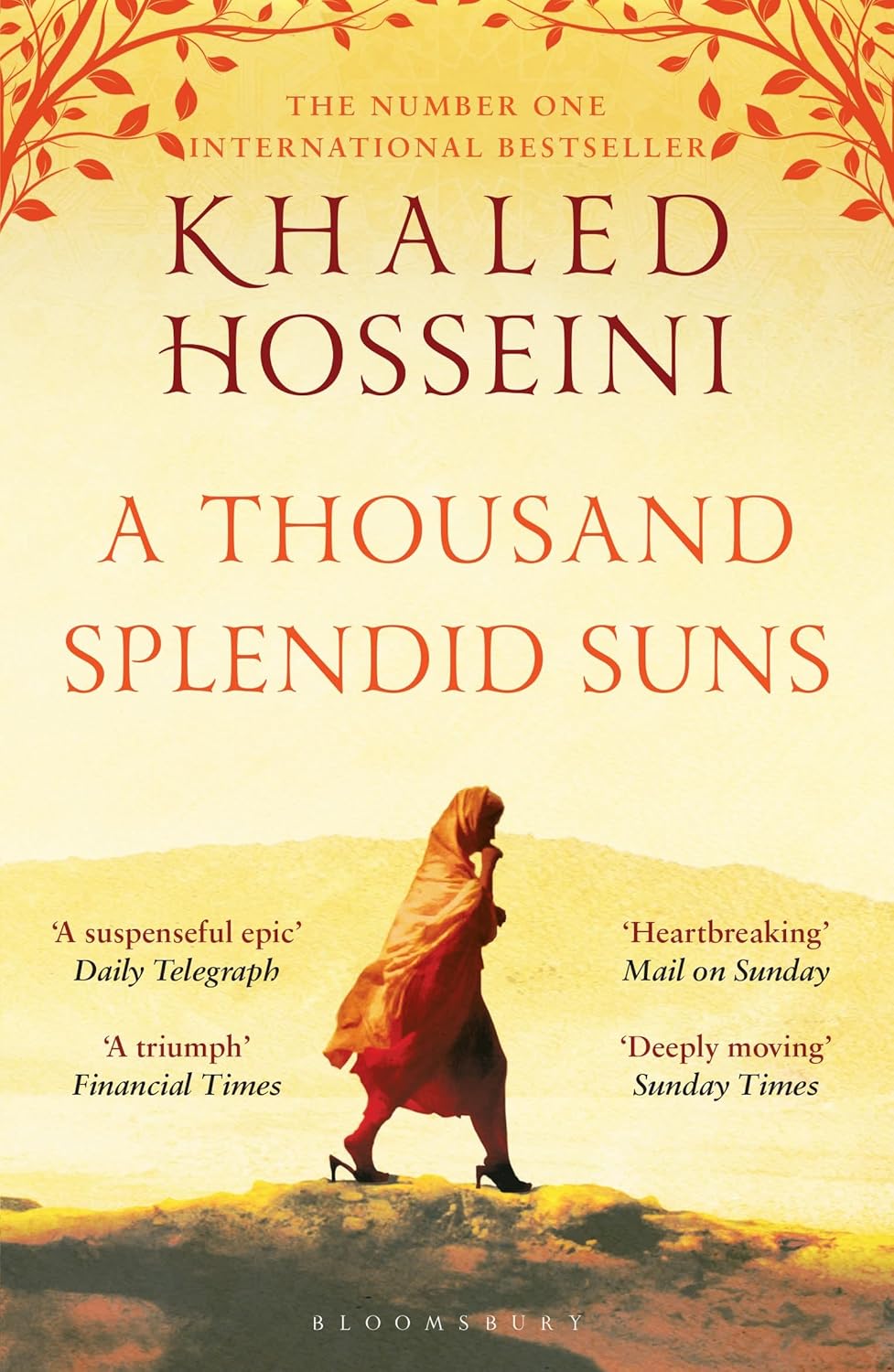
Back in the summer, I bought a copy of A Thousand Splendid Suns, and it has been sitting on my shelf ever since. So, I decided to finally pick it up, especially since we are focusing on immigration and character. This story essentially illuminates how women find strength through oppression, friendship, and war. The two main characters, Mariam and Laila, are testament to all of this.
My Experience
From the start, I think there are a lot of powerful things that stuck out to me but overall I had a strong feeling of frustration, especially with this one quote given by Mariam’s Mother, Nana:
“A man’s heart is a wretched, wretched thing, Mariam. It isn’t like a mother’s womb. It won’t bleed, it won’t stretch to make room for you. I’m the only one who loves you. I’m all you have in this world, Mariam, and when I’m gone you’ll have nothing. You’ll have nothing. You are nothing!”
While in some sense I believe this to be true, predominantly the first half. I still feel frustrated because the repetition used to portray Mariam as “nothing” is actually sad. She has no autonomy and is forced to accept these words, which only make the situation she is in difficult to change. The quotes also set up Mariam as someone who accepts this treatment because it’s normalized and overall she’s dehumanized.
Features and Technologies
While this story is set in an oppressive society, there are melancholic scenes that mask a possible alternate reality in which women could live in:
“And I also know that when this war is over, Afghanistan is going to need you as much as its men, maybe even more. Because a society has no chance of success if its women are uneducated.”
This is said by Laila’s father. How I see this is that the education of a woman is essential for a country’s survival. Laila’s father beliefs shows that women (in this case, Laila) ought to value education and their independence. This further explores how a country cannot become of value if it’s women aren’t educated and don’t have the same opportunities as men. Even in a oppressive state, in which the Taliban has taken over, women still remain a symbol on the What-if prospect. What if the Taliban allowed woman a chance to study and make something of their independence? What if they weren’t objectified? What if they were treated like humans?
I see this takes a toll on Laila as she continues to care about education even when it is deemed as dangerous in a woman’s life. This quote shapes Laila by essentially teaching her that education and knowledge only build a pathway for giving back to her country one day.
A technology I think bodes well would be the Empathy Generator, and this is shown by how Laila and Mariam’s remorse and inner thoughts are shown, which makes me, as a reader, understand their pain and struggle. Also, considering that they are both women with dreams, but set in a society that doesn’t allow for those dreams to come true, only makes me feel empathy.
“The other night, when he…Nobody’s ever stood up for me before,’ she said. Laila examined Mariam’s drooping cheeks, the eyelids that sagged in tired folds, the deep lines that framed her mouth—she saw these things as though she too were looking at someone for the first time. And, for the first time, it was not an adversary’s face Laila saw but a face of grievances unspoken, burdens gone unprotested, a destiny submitted to and endured.”
For this quote, I kind of feel like Hosseini develops a Pain Generator; while reading this, I could only feel like I was being immersed in this story and feeling the unspoken pain that Mariam has. The phrase: “a face of grievances unspoken, burdens gone unprotested” underscores Mariam’s life full of injustice. The description of Mariam and her “sagging eyelids” and “drooping cheeks” testify how she had weight of lifetime hardship on her. I feel for her as a reader and it made me emotional. The level of connection I have with Mariam in terms of grievances is beyond explanation and I do think that allowed me in some way to connect with her on a emotional level and really understand the concept of her character as a whole; sacrifice.
Additional Technology
Moreover, I believe that skepticism is shown throughout the story; it plays a key role in how both Mariam and Laila experience their world. Mariam, for example, is raised to believe those around her don’t care, and so she is molded not to trust anyone. Whereas Laila, hesitates to trust anyone after witnessing the death of her parents due to war. This skepticism shapes them as characters, which makes them self-protective. Hosseini creates tension by writing the struggles of women and fragility they carry in a oppressive society. Through this, skepticism is used to evoke empathy from readers like me, and understand the price women like Laila and Mariam have to pay in order to trust someone.
Featured Image
Cover for A Thousand Splendid Suns. Bloomsbury Publishing. All Rights Reserved.