
After introducing and explaining some elements of the project at hand, it is time to delve further into the topic. This can be done by researching the problem through different disciplines of different areas.
Starting off…
What Is the Current Update to My Last Post?
Of course, the problem is still important to me, just no actions have been taken. You can’t solve a problem like this overnight. That is why turning to foreign disciplines I am not familiar with is the goal with my research in solving this magnitude of a problem. Hopefully, it will help induce the breakthrough to progress my project into the next stage of development.
It is going to be hard, but I am willing to dive into this full speed ahead!
Recap Of the Problem:
Introduced and explained in my prior post…
The problem a vast community faces is what to do when it is time to “give up” what you love, moving into a new stage of life. Meaning, a sport, hobby, special interest, and so on, that gives you passion on a competitive level.
Deconstructed…
Burnout: Spending so much time and effort in something can be draining. It makes you want to stop something altogether, even if it brings you joy (just not in the particular moment). I suggested taking a break in my last post, but not a break that lasts forever.
Embarrassment: Sometimes the competitive atmosphere you once thrived in is not available anymore. All that is left is the option of “doing it for fun.” Sometimes that isn’t enough for individuals. Majorly, the judgment (which is sometimes is just created by yourself) from professional to nonprofessional can factor in and create this shame.
New Atmosphere: Having an unfamiliar environment can be intimidating and uncomfortable. It can be a struggle not having familiar individuals around you doing the same thing you have been doing for a long period of time.
Is It a Job? Or Is It for Fun? Spending more time pursuing a passion than being in school can be described as if it were a “full-time job.” Which, to some degree, individuals treated it as such. Extracurricular activities came first to most and were instilled in many that’s how it should be. The pressure was on.
Lastly…
Recommendations: In my first post I recommended a few things as possible (temporary) solutions.
- Joining clubs and or sports in college, recreational or competitive.
- Outside of college, taking classes or joining some sort of recreational league or team.
Another Problem(s) Has Arisen…
Has this always been a problem? Have people always felt this way? Why aren’t there people talking about this?
It is kind of a three-parter, but these are new questions I have. Understanding further, these questions need answering.
How will they be addressed…
Through disciplines!
Why Disciplines?
I need a way to figure out the problem at hand, but in a way that I can incorporate and learn from different approaches and views. This way, I can see the problem in a way I haven’t seen it before, hoping to lead myself into a new discovery in helping to solve this issue.
What Disciplines Have I Turned To?
Behavioral Psychology:
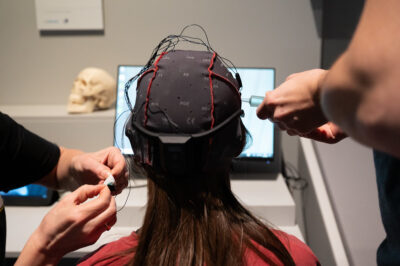
When researching different fields of psychology, I ultimately turned to behavioral. Thinking back, high school years are some of the most crucial developmental years in our lives.
Before diving in, what is behavioral psychology?
According to the American Psychological Association, behavioral psychology is “an approach to understanding psychological phenomena that focuses on observable aspects of behavior and makes use of behavior theory for explanation (American Psychological Association, 2018).
As mentioned, embarrassment seems to be a factor as to why someone might hold themselves back from rejoining an activity they once loved. Falling under this are the emotions of shame and guilt. As I was researching why this might be, I came across a Journal of Psychiatric Research. In this particular journal article, “Obsessive-compulsive disorder – A question of conscience? An fMRI study of behavioral and neurofunctional correlates of shame and guilt,” I gained some insight into this. Even though the journal focuses on OCD, I felt as though there is a relationship between this and the problem I am trying to find answers to. Despite the fact OCD has nothing to do with having an obsessive passion, it was worth the read.
In the journal, a specific passage stood out to me. It quotes an earlier article, where Eisenberg says, “In general, emotions like shame, embarrassment, and guilt are termed “self-conscious” because individual comprehension and evaluation of the self are important to generate these emotions” (Eisenberg, 2000). Thinking further into this, I feel these emotions one might feel when wanting to get back into an extracurricular activity are self-induced. No one knows you might be feeling these emotions that are holding you back. You, yourself are creating the shame and guilt, and even the embarrassment, that probably only exists in your own head. More than likely, majority are in the same boat, trying to find a way to pursue their passion again that once consumed a large portion of their young lives.
“Convergent findings suggest the involvement of frontal, temporal and limbic brain regions in processing embarrassment and guilt which were provided by lesion studies in patients and imagaing studies in healthy subjects” (Henning-Fast & Michl, 2015) So, certain parts of your brain are responsible for and activated when these types of emotions are being processed. The frontal lobe involves decision-making and social behavior, the temporal lobe is responsible for memory and emotion processing, and the limbic system involves emotion regulation and memory formation. So, when individuals experince feelings of embarrassment or guilt, these specific regions of the brain will be engaged, which indicates their importance when processing these emotions. This study and many others strengthens our understanding of the brain’s role in complex emotions.
My point being, younger people whose brains are still not fully developed may process these emotions differently, taking a bigger toll on them and affecting them in a way unlike grown adults. That is why these emotions can be especially overwhelming for kids of the college age.
Because the years leading up to adulthood are so formative, it is almost as if these emotions you feel at this new stage of life were brought on you beforehand. That if you don’t succeed in your passion, it would be shameful and looked down upon. The pressure put on individuals can be a lot, and lead to the guilt and embarrassment down the road.
“Recent clinical research suggests that the aetiology of OCD is rooted in maladaptive strategies of thought control (Amir et al., 1997) and in dysfunction of the neurotransmitter serotonin (e.g. Insel et al., 1985, Matsumoto et. al., 2010, Pigott and Seay, 1999).” I am not necessarily interested in the OCD mentioned, more so in neurotransmitter serotonin.
After some Google seraching… serotonin basically like a massager in your brain, regulating your mood and emotions. It plays a role in how intensely you feel these emotions, such as embarrassment and guilt. If you don’t have enough serotonin, you can feel these emotions much more. Serotonin keeps your body balanced, which makes it easier to handle situations of embarrassment and guilt. Basically serotonin is a mood stabilizer, keeping emotions from becoming too overwhelming.
As a young adult, your serotonin levels can fluctuate. There is the possibility that adolescents may have lowet levels of serotonin than adults. Of course, this is different for everyone. This can be a contributing factor to why these emotions are felt so strongly and why they are overwhelming when it comes to extracurricular activities.
My recommendation as a peer of this community who is still navigating this themselves, is you have to take that leap of faith and just do it. It sounds easier said than done. It is going to be hard, but if you really love what once brought you joy, you will probably love it even more knowing most are experiencing something of a similar sort. Having that relation to others is what people need and must realize.
As I continued to dig into the psychology of the problem at hand, I came across another field of psychology that struck my interest and wanted to include it as well.
Developmental Psychology:
According to the American Psychological Association, developmental psychology is “the branch of psychology that studies the changes-physical, mental, and behavioral occur from conception to old age and investigates the various biological, neurobiological, genetic, psychological, social, cultural, and environmental factors that affect development throughout the lifespan” (American Psychological Association, 2018).
I wanted to mention this type of psychology as well because I feel as though it can also be used to further our understanding of why individuals feel this way when it comes to extracurricular activities in a new chapter.
A recent article published in 2023, “Teenagers’ Mental Health,” incorporated developmental psychology into its reasoning. The teenage years leading up to college and life after high school can call for “cognitive advancement, increased social interactions, behavioral and emotional independence, abstract thought, idealism, and physical and sexual maturation” (Ladd, 2023). As I thought about this passage from the article, I couldn’t help but think teenagers have a lot on their plate at this time. I think it is hard to wrap your head around really just how hard it is being a teenager if you aren’t one. Adults often forget the hardships and obstacles this age range faces and how much pressure they put on themselves.
“The life of a teenager consists of a wide assortment of biological, psychological, and sociocultural factors that combine to form myriad opportunities and adjustments. Teenagers also face pressure as they formulate their academic and career goals and encounter familial expectations regarding performance and social expectations regarding conformity. however, teenagers effectively face these many challenges and adjustments with advancing developmental capacities that they bring to bear in their lives. Teenagers are not embroiled in Hall’s stormm and stress but rather enjoy lives filled by stimulating adventures and challenges” (Ladd, 2023).
I really took time to think about this. In my opinion (which I think is valid considering I am in my last year of being a teenager), from the ages of 13-18, you don’t really know who you are yet. Everyone just kind of follows what everyone else is doing. So… with that said, I think that is why teenagers stick to a passion for so long and come out of it not knowing what to do because it becomes their full-on idenitiy! They are left in a spot of wondering who they actually are. Of course, they still want to pursue their passion, but maybe this is a factoring cause of why it is so hard to get yourself to try again. “Adults should focus on making sure teenagers have the psychological and social resources they need to confront their challenges and grow from them” (Ladd, 2023). Support is crucial for teenagers and young adults. So much is being thrown at them at once.
Also…
“Teenagers also face pressure as they formulate their academic and career goals and encounter familial expectations regarding performance and social expectations regarding conformity” (Ladd, 2023).”
Ladd, G. T. (2023). Teenagers’ Mental Health. Shibboleth authentication request. https://research-ebsco-com.unh-proxy01.newhaven.edu/c/whreab/viewer/html/e5ekqn253b
With mental illness being more wildly talked about and accepted, it is important to note, “Teenagers have near-adult capacitites of reasoning, self-regulation, behavioral autonomy, and intellectual achievement, but only a narrow repertoire of skills to guide those capacities and few experiences to inform them. When teenagers experince mental problems, there is an associated disruption to normative development and an increased likelihood of persistence of the disorder into adulthood. When mental illness accompanies development, it can initiate a vicious cycle in which a disorder compromises development, then the compromised development makes a disorder more intractable, leading to further compromised development and worsening of the disorder” (Ladd, 2023). I like to think of a teenager or young adult’s emtions as a “vicious cycle”. Always up and down, navigating their way the best they can under all different circumstances. “Teenagers mental health problems involve real pain and suffering and have severe acute and long-term consequences if left untreated” (Ladd, 2023).
I know from personal experince young adults have a hard time reaching out for help where ever they need it. That is why it is so important to show and give support to them in all aspects of their lives, not just in the topic of extracurriculars.
Pressure:
I think I should add “pressure” to my list of elements when deconstructing the problem. All this change in developmental years and now with pressure added to the mix is a lot to experience all at once. Believe me, I’ve been there.
Having that added pressure throughout that time in your life from an extracurricular activity you are pursuing is more than likely going to get the best of you. I feel like my point of burnout goes in hand with pressure, as for some, the overwhelming feeling can get to be so much, they can’t do it anymore and their passion is crushed. With that said, another factor that steers people away or makes people nervous to try their passion again is the fear of having that pressure put on them again.
“Risk factors are those internal and external aspects of teenagers’ developmental context that weaken their capacity to effectively cope with challenges and stress. Risk factors, like protective ones, exist within individuals, their families, and their environment… disruptions can erode basic developmental resources such as self-efficacy and self-esteem, creating further disruption across other domains of development (Ladd, 2023).
So many details to process, but it’s a start.
Sociology:
The next discipline I want to touch on is sociology.
According to the American Sociological Association, “Sociology is the study of social life, social change, and the social causes and consequences of human behavior. Sociologists investigate the structure of groups, organizations, and societies and how people interact with these contexts” (American Sociological Association, n.d).
An interesting approach to the understanding of the competitive nature within passion.
Over time, sports have had an increasing importance according to the article “Sport and Measurement of Competition,” by Ruud H. Koning. With the growing participation in sports, there has also been an increase in competitive culture. After researching competitiveness in extracurriculars, I came across a great Sociology of Sport Journal, “Playing to Win: Raising Children in a Competitive Culture,” by Hilary Levey Friedman.
Friedman discusses how parents believe putting their children in extracurricular activities from a young age that involve a competitive atmosphere will help their children succeed in the future and gain the “necessary skills” they need. “Parents emphasize competition because they believe it is a crucial skill for admission into elite schools, a presumed gateway to high-paying jobs” (Allison, 2015). It is to be noted that Friedman is mainly talking about middle-class families. It is almost as if these activities are seen as the path to making it in life in the parent’s eyes.
“The historical origins and development of competitive activities for children, showing how these activities shifted from working class roots to become the preview of the middle class over the course of the 20th century” (Allison, 2015). Finding any history related to extracurriculars has been a challenge within my research. So I thought this would be interesting to include.
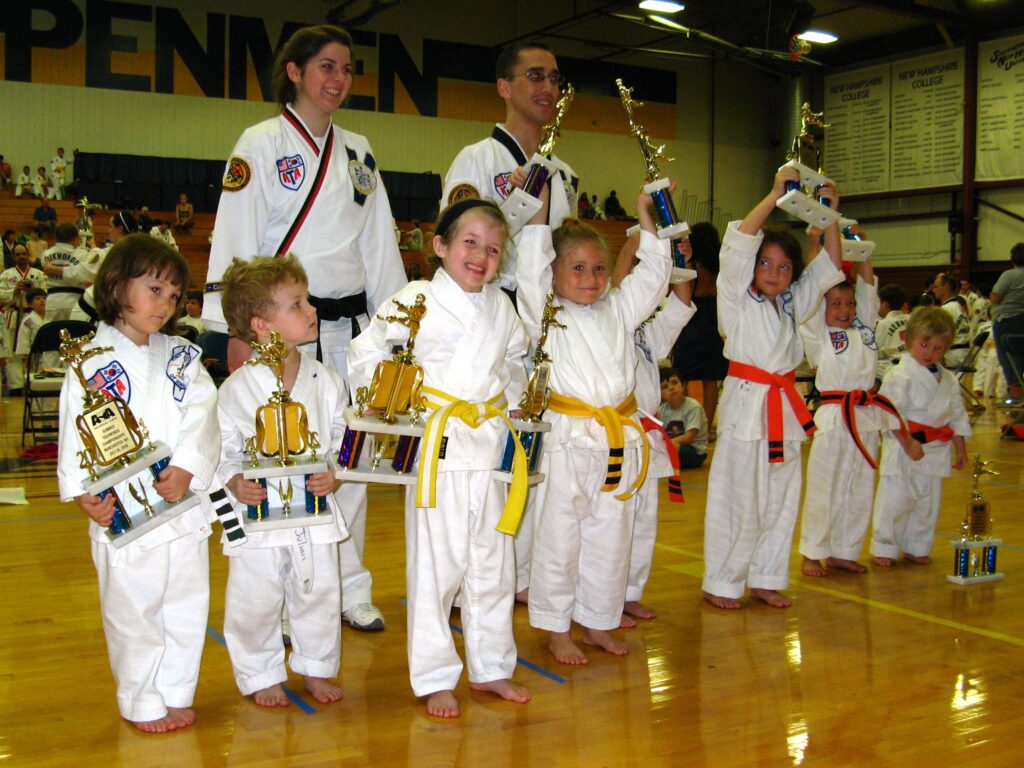
The main goal for most is to get your children into college. Similarly, Friedman explained how when interviewing children, they told her they enjoyed their activities to win trophies and ribbons. That got me thinking, is college the trophy in the end? Is that why extracurriculars are so important to individuals?
Friedman emphasizes, “the growing importance of prizes in U.S society” (Allison, 2015). The sense of winning and achievement is something people strive for. There is always the incentive at the end of the road that you want. I feel this falls back to the pressure I mentioned previously. Once out of high school, with many going to college, the “trophy” has been achieved. What else is there to work for?
This might be another reason correlating to why young adults contemplate continuing their passion even if they love it. There is nothing to win anymore. No final destination.
There is also much anxiety present in the parents and children. “Friedman argues that the rise of competitive childhood is related to parents’ perceptions of the competitive world their children will enter and the anxieties they possess about their children’s mobility. Visible and growing class inequality in the U.S. means that the reproduction of class position among middle-class families is not perceived as guaranteed, but as something that must be secured. In a world where an increasing proportion of the population earns a bachelor’s degree, for instance, not just college attendance but the status of the school attended becomes increasingly important to career achievement. In a highstakes, competitive context, children’s success is believed to be assured through the acquisition of the right credentials and the right capital” (Allison, 2015). I think the parents feelings are being overlooked. I can see the stress they put themselves through so their child can succeed. But, their stress is put on the children pushing them to the extremes.
“As Friedman shows, middle-class parents believe that competitive activities impart skills that will give a leg up in college admissions and career achievement. In addition, research demonstrates that may selective universities do take applicants’ extracurricular activities into account.”
Friedman, H. L. (2015). Playing to Win: Raising Children in a Competitive Culture . Shibboleth authentication request. https://research-ebsco-com.unh-proxy01.newhaven.edu/c/whreab/viewer/pdf/2pe5c4q4sv
Reflection on my thoughts and research:
I think I have found the breakthrough I needed to push my understanding of the problem. Having different disciplines as a resource for different perspectives and opinions has helped me tremendously.
Now…
How do we solve and dig even further into the problem?
Works Cited:
American Psychological Association. (2018a, April 19). Apa Dictionary of Psychology. American Psychological Association. https://dictionary.apa.org/developmental-psychology
American Psychological Association. (2018b, April 19). Apa Dictionary of Psychology. American Psychological Association. https://dictionary.apa.org/behavioral-psychology
Amir, N., Cashman, L., & Foa, E. B. (1997, August). Strategies of thought control in obsessive-compulsive disorder. Behaviour Research and Therapy. https://www.sciencedirect.com/science/article/abs/pii/S0005796797000302?via%3Dihub
Eisenberger, N. l, & Lieberman, M. D. (2004, June 17). Why rejection hurts: a common neural alarm system for physical and social pain. Shibboleth authentication request. https://www-sciencedirect-com.unh-proxy01.newhaven.edu/science/article/abs/pii/S1364661304001433
Friedman, H. L. (2015). Playing to Win: Raising Children in a Competitive Culture . Shibboleth authentication request. https://research-ebsco-com.unh-proxy01.newhaven.edu/c/whreab/viewer/pdf/2pe5c4q4sv
Hennig-Fast, K., Michl, P., Müller, J., Niedermeier, N., Coates, U., Müller, N., Engel, R. R., Möller, H.-J., Reiser, M., & Meindl , T. (2015, September). Obsessive-compulsive disorder – A question of conscience? An fMRI study of behavioural and neurofunctional correlates of shame and guilt. Shibboleth authentication request. https://www-sciencedirect-com.unh-proxy01.newhaven.edu/science/article/abs/pii/S0022395615001417?via%3Dihub
KONING, R. H. (2009). SPORT AND MEASUREMENT OF COMPETITION. Shibboleth authentication request. https://research-ebsco-com.unh-proxy01.newhaven.edu/c/whreab/viewer/pdf/2rnjyi76hn
Ladd, G. T. (2023). Teenagers’ Mental Health. Shibboleth authentication request. https://research-ebsco-com.unh-proxy01.newhaven.edu/c/whreab/viewer/html/e5ekqn253b
Matsumoto, R., Ichise , M., Ito, H., Ando, T., Takahashi, H., Ikoma, Y., Kosaka , J., Arakawa, R., Fujimura, Y., Ota, M., Takano , A., Fukui , K., Nakayama , K., & Suhara, T. (2010, January 1). Reduced serotonin transporter binding in the insular cortex in patients with obsessive–compulsive disorder: A [11C]DASB PET study. Shibboleth authentication request. https://www-sciencedirect-com.unh-proxy01.newhaven.edu/science/article/abs/pii/S105381190900857X
What is sociology?. American Sociological Association. (2022, November 21). https://www.asanet.org/about/what-is-sociology/
“2069 kids and trophies” by WoofBC is licensed under CC BY-NC-SA 2.0.
Featured Image
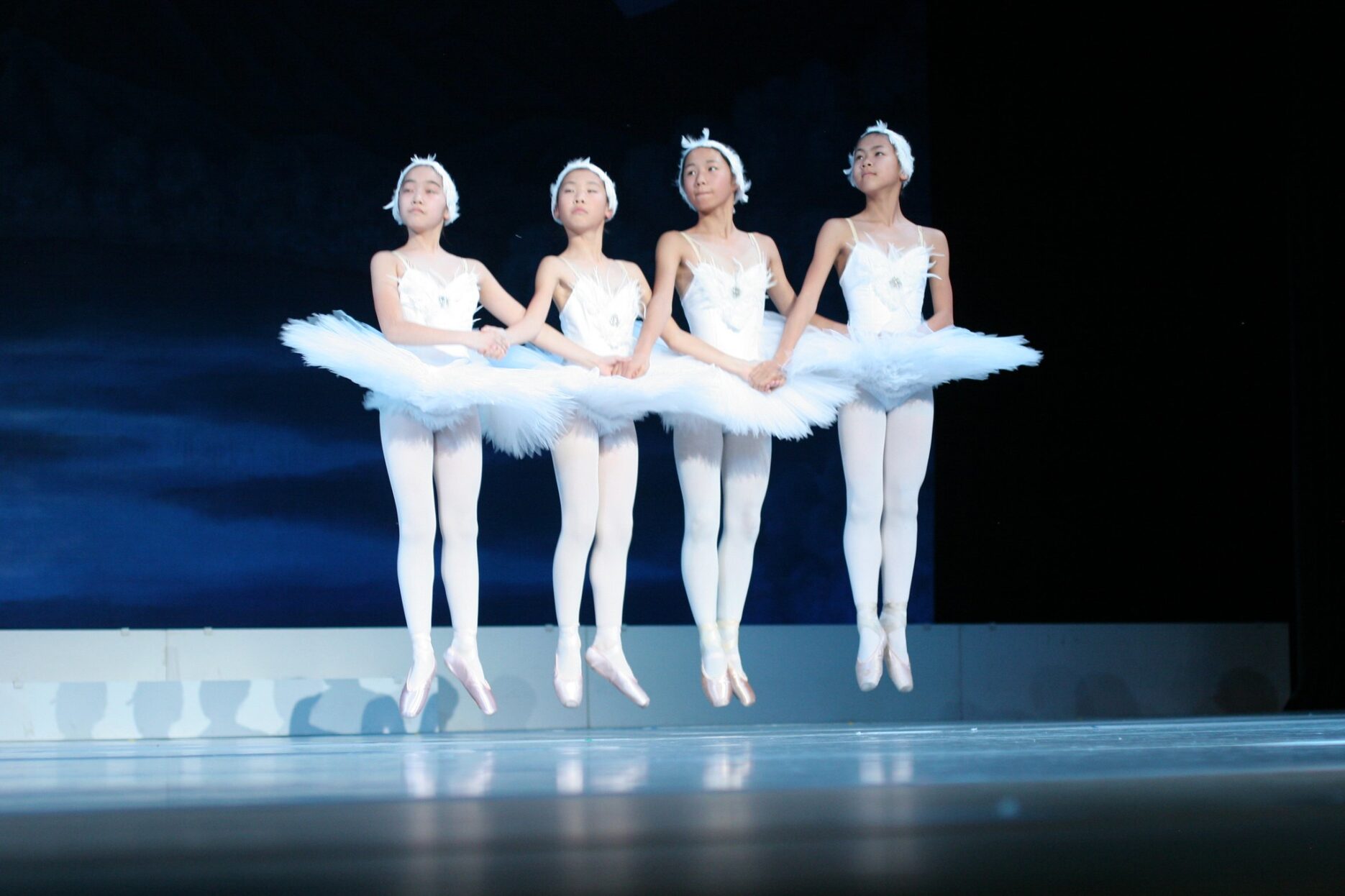
“dancing usuki5” by Bellevue Fine Art Repro (Scott) is licensed under CC BY-NC 2.0.