Truthfully, I read this book years ago – probably when it came out in 2020 – it had excellent reviews and was even an Oprah’s book club selection. Various notable authors praised the work and I had heard raving reviews from teachers and relatives. It certainly opened my eyes to the horrifying truth of the process of immigration, one that is especially relevant in this political climate. It wasn’t until I began researching the book that I realized how much discourse surrounded the novel. The author, Jeanine Cummins, who is a white woman wrote this book, and critics disapprove of the way in which Cummins framed both Mexico and the U.S. Some have phrased it as Mexico – Bad, U.S. – Good. This is obviously problematic. Many people rose heads to this, not sure if it was appropriate for a woman not associated with Mexican culture should be telling the tragic story of a mother and son immigrating from Mexico to the United States. The genre of research fiction is one that is being questioned in this context. Nevertheless the tale was impactful to me.
Defining Research Fiction: I first heard it in this video linked below. He uses it do distinguish books that are purely fiction from those who have been researched. I am not sure if he coined the term or if it had been used before. But research fiction begs the question: does research warrant the creating of a story (that is not yours) and doing it justice? That is what I as well as many other readers have been trying to decipher about American Dirt. I think it is important for authors to understand the repercussions of writing research fiction, as it relates to biases and public opinion. But I would not say that it is something that people should stop doing.
My Experience
My experience with American Dirt was kind of a horrified pity. How could these horrible things happen to these people? It made me begin to question the world. There was such an overwhelming amount of tragedy in the novel that I began to feel hopeless. Hopeless for the world and ashamed too. These people do not deserve this, I thought. How could the world be this cruel? But at the same time, I was racing through the book wondering what could possibly unfold next.
Classifying My Experience
There are many ways I could classify my experience with this novel. Firstly I would say, empathy was present. It is defined in the glossary as “the feeling of understanding another person’s actions”. Or pity could be the right word, because I did feel deeply bad for the characters. And frustration was another thing that was circulating throughout the novel for me, defined as “an emotional response to the perceived resistance to the fulfillment of an individual’s will or goal”. Righteousness as well, which goes hand in hand with the frustration aspect.
Describing the Features Prompting My Experience
Empathy is what first came to mind as I thought about the relationship between mother (Lydia) and son (Luca) in the story. There is almost nothing that Lydia won’t do in order to protect her son, and I empathized with her in that way. The relationship between these characters was so intimate and pure which made me want to see them succeed together.
… she’d failed to protect her family. Lydia can’t think about any of this yet; she isn’t ready. She must find a way to delay her despair. Luca is the only thing that matters now. Luca. He is still in danger. (Cummins 43)
There are even times in the novel where Luca must take on the role of caretaker. He is a mere 8 year old boy, who has experienced more tragedy than most adults. Towards the end of the novel…
Luca is no longer in front of her or behind her, but beside her, holding her hand, and she glances infrequently at the darkness of his eyes and sees that he’s calm. He doesn’t share her panic.
“Its okay, Mami,” he says at length. “This is the right way.”
She believes him because she must. And he knows these things. (Cummins 341)
Moments like these are scattered throughout the novel. And perhaps it is exactly why I felt an immense empathy for both Lydia and Luca. They are partners in their trek, almost equals in this moment.
When I talk about the frustration I felt throughout the novel, I am talking about the endless roadblocks in their journey. I wanted them to succeed and find safety. Even the first lines of the novel set the tone for the traumatic events that will surely happen thereafter.
One of the very first bullets comes in through the open window above the toilet where Luca is standing. He doesn’t immediately understand that it’s a bullet at all, and it’s only luck that it doesn’t strike him between the eyes. (Cummins 1)
As they embark on their journey they realize that this will be much more difficult than they had initially expected. There are moments when they must jump onto moving trains, dodge security and lay in the trunks of cars for survival. One moment from the novel stood out to me in this way, when agents show up to detain a group of migrants (including Lydia and Luca).
Even if the five remaining agents weren’t so heavily armed, even if one of the migrants felt inclined to run, there’s nowhere for them to go. Because of these circumstances, the hand-cuffs, when they appear, feel both gratuitous and alarming. They’re not real handcuffs, but plastic zip ties. (Cummins 221)
It is deeply frustrating to see them halt their journey again and again in this way.
The righteousness is obvious in all this context. How could humans treat other humans in these ways? How could a child like Luca have his whole family murdered in the span of one evening? How are there so many bad people in the world? These things circulated my mind while reading and even in regards to the news these days, I still think back to this story.
Determining the Narrative Technologies Prompting My Experience
After looking through the narrative technologies glossary there are a few things that stuck out to me in relation to the novel. Firstly I would like to discuss hurt delay, which is defined as ” a plot technology in which a character suffers a trauma but doesn’t acknowledge it until later”. I think that this works in the story to a certain extent. Maybe numbness is a better way to frame it. Lydia and Luca had simply no time to acknowledge the tragic death of all their family members that prompted their need to escape. They had to act quickly and get out. So, while sometimes it is discussed between mother and son. I don’t think that either of them can really sit and think on it. Their trauma is so deep, and their constant action denies them the ability to tackle it head on. Suspense was also something that I felt while reading the book. I was constantly wondering how could this get any worse? And yet somehow, it always did. The setting is constantly changing and I think that in itself opens up the feeling of suspense. They were interacting with new conflicts in every place and needing to adapt to survive. I feel like some may even characterize this book as a thriller in that regard. Empathy generator was certainly felt as well, as I mentioned above it was really the relationship between characters that made me feel immensely empathetic.
During my class, in my discussion with Aferdita she brought another narrative technology to my attention. This was a thesis statement which she discovered when looking for more quotes from American Dirt. This is the quote she found (from the perspective of a narrator that acts as Lydia’s internal thoughts):
“That these people would leave their homes, their cultures, their families, even their languages, and venture into tremendous peril, risking their very lives, all for the chance to get to the dream of some faraway country that doesn’t even want them.”
The thesis statement is defined in the glossary as “a clear statement of the argument to be made in a piece of writing”. I think this definition certainly fits the quote that she found. This is something that I would have previously overlooked and I’m glad I could have the opportunity to include it in my post.
Extra
I would just like to say a quick piece about research fiction as a genre and the discourse that sometimes follows. While I believe that doing research for a novel is incredibly important, it becomes an issue in some cases when culture is at play. It can lead to misrepresentation and cultural appropriation, which some people feel for this novel. And I completely understand that perspective. There are some obvious issues with the novel, but it is about raising awareness to different perspectives at the end of the day. I totally understand the perspective of her being a “white savior” in this regard as well (which I do not condone). But, I do encourage people to read novels from writers who exist in that culture that they are writing about. I didn’t know the full context while I was reading this novel, and maybe that is why I still look upon the story favorably. All I know is that it did open my mind to topic and made me feel quite emotional.
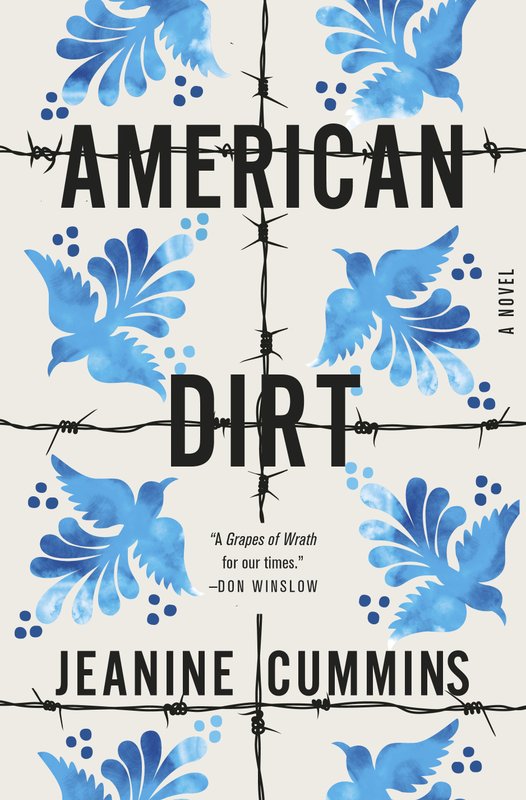
Image: Cover for American Dirt. Flatiron Books. All rights reserved.