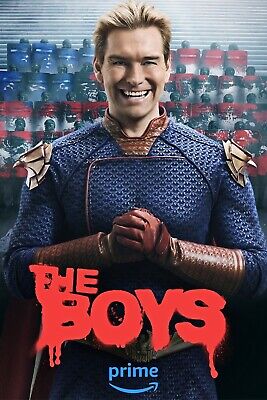
What hit me the hardest about The Boys was how it took everything we love about superheroes and flipped it on its head, exposing the ugly truth of what power without accountability really looks like. Unlike the larger-than-life heroes from Marvel and DC, these so-called saviors were reckless, selfish, and disturbingly real—more like celebrities with too much influence than noble protectors.
That moment when A-Train vaporized Hughie’s girlfriend in the blink of an eye wasn’t just shocking; it was a gut punch that made me realize this show wasn’t holding anything back. There was no dramatic rescue, no last-minute justice—it was raw, horrifying, and consequential. It stuck with me because it felt uncomfortably close to reality, like a dark mirror reflecting the corruption and greed we see in the real world. From that point on, I knew The Boys wasn’t just another superhero show; it was something far more brutal, messy, and most importantly, honest.
The Narrative Technologies That Shaped My Experience
What made The Boys so impactful wasn’t just its shocking moments but how it used storytelling techniques to make those moments feel disturbingly real. Every emotional reaction I had—shock, empathy, and curiosity—was amplified by the way the show manipulated narrative structures, character complexity, and cinematic techniques.
Shock and Awe: A Subverison of Superhero Tropes
One of my strongest reactions to The Boys was sheer shock. Unlike traditional superhero stories, where heroes act with nobility and restraint, The Boys delivers graphic, unfiltered depictions of violence, power abuse, and corruption.
The first episode alone had me reeling; seeing A-Train vaporize Hughie’s girlfriend in an instant was both horrifying and surreal. I had never seen a superhero show handle the concept of collateral damage in such a brutal and direct way.
This wasn’t accidental—The Boys deliberately subverts superhero tropes to force viewers to confront uncomfortable realities:
| Traditional Superhero Tropes | How The Boys Subverts It |
| Heroes are noble and selfless | Heroes are corporate-controlled and morally bankrupt |
| Secret identities protect loved ones | No secret identities, everything is about PR |
| Superpowers make heroes invincible | Power leads to unchecked corruption |
| Government and media work with heroes | Government and media exploit heroes for control |
One of the most disturbing examples of this subversion is the airplane scene where Homelander and Queen Maeve abandon innocent passengers to die. In any other superhero story, the heroes would find a miraculous way to save the day. But here, power is about optics, not heroism.
Empathy: Character Complexity and Moral Ambiguity
Despite the show’s cynical take on superheroes, I found myself deeply connected to some of its characters, particularly Hughie and Starlight.
Hughie’s grief and trauma felt incredibly raw. After losing Robin in such a brutal, senseless way, he is left feeling helpless. His journey from a grieving, ordinary guy to someone willing to fight back against superheroes felt personal. The Boys uses close-up shots and raw, shaky-cam cinematography to capture Hughie’s fear and uncertainty, making his pain feel immediate and intimate.
Starlight’s arc was equally moving. She starts as a hopeful, idealistic young hero, believing she can use her powers for good. But as she’s exposed to the corruption within The Seven and Vought International, she quickly realizes that everything she believed in was a lie. Watching her struggle between maintaining her values and playing along to survive was both heartbreaking and inspiring. Her storyline is presented through a mix of media coverage and behind-the-scenes footage, reinforcing how public perception is manipulated in real-time.
In my opinion, while The Boys is full of over-the-top violence and dark humor, its emotional core remains rooted in characters who feel real and relatable, despite the surreal nature of this universe.
Curiosity: How The Boys Uses Narrative to Reflect Reality
Beyond its emotional intensity, The Boys made me rethink superheroes in a broader context. Instead of treating them as fictional entertainment, the show forced me to consider what superheroes would look like in the real world, and as it turns out, the answer wasn’t too comforting.
The show mimics real-world media manipulation, with fake news broadcasts, social media segments, and Vought propaganda commercials giving it a hyper-realistic feel. This blurring of fiction and reality forces us to ask:
- If superheroes existed today, would they truly be noble defenders of justice, or would they be corporate-controlled weapons, used for PR and military dominance?
- How much of our real-world celebrity culture, media spin, and political corruption mirrors what we see in The Boys?
- Are there real-life Homelanders?: Public figures with immense power who are idolized by the public, despite their deeply dangerous nature?
This plays out disturbingly in Gen V, where we see that power corruption isn’t limited to superheroes—humans, in their quest for control, can be just as monstrous. The spin-off challenges the notion that superheroes are inherently bad by showing how young Supes are manipulated, experimented on, and dehumanized by figures like Dean Shetty.
How The Boys Changed My Perspective
Before watching The Boys, I saw superhero stories as pure escapism. Marvel and DC were all tales of good triumphing over evil. This show challenged that perception, making me question:
- Who really benefits from superheroes in fiction and real life?
- How do power and media influence society?
- Is absolute power always corrupting?
These questions continue to shape how I engage with superhero media and broader conversations about power and control.
One of the darkest examples of power being manipulated in The Boys is a scene from Season 4, when Vought International orchestrates a PR event to showcase Ryan, Homelander’s son. The staged rescue turns deadly when Ryan, under Homelander’s guidance, accidentally kills a stunt coordinator. This moment highlights the dangerous path Ryan is being led down and the show’s ongoing exploration of power’s corrupting influence.
Cinematic Techniques: How the Story is Told
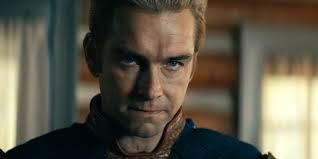
- Camera Work: Extreme close-ups on Homelander’s expressions emphasize his unpredictability and psychological breakdown (and are very very scary!)
- Music and Sound Design: Dark orchestral music builds tension, while ironic pop songs (like “Heroes” by David Bowie) creates disturbing contrasts during violent scenes.
- Mockumentary-Style Sequences: Fake news broadcasts, social media segments, and Vought propaganda commercials give the show a hyper-realistic feel, blurring the line between fiction and real-world media influence (and the build the story world even more!)
How The Boys Changed My Perspective
Before watching The Boys, I saw superhero stories as pure escapism. Marvel and DC were all tales of good triumphing over evil. This show challenged that perception, making me question:
- Who really benefits from superheroes in fiction and real life?
- How do power and media influence society?
- Is absolute power always corrupting?
- How do different audiences interpret The Boys?
- Does its satirical edge go too far, or is it necessary social critique?
- Is there such a thing as too much gore?
- What does the future of superhero storytelling look like in a post-The Boys era?
Regardless of how one answers these questions, The Boys has redefined superhero narratives, making it one of the most thought-provoking viewing experiences I’ve ever had.
Works Cited
- Amazon Studios. The Boys (2019-present). Available on Amazon Prime Video.
- Wikipedia contributors. “The Boys (TV series).” Wikipedia, The Free Encyclopedia, https://en.wikipedia.org/wiki/The_Boys_(TV_series).
- Various promotional images from Amazon Studios and Wikimedia Common