Editing on Wikipedia was a much different experience than what I have been used to when writing academically. Unlike essays I have written before, where the only people reading my work are the professor and maybe classmates, work on Wikipedia is very public. This made the project intimidating but also exciting. Prior to this class I saw Wikipedia as unreliable, as this is what I had been trained to think after years of schooling. I used to avoid Wikipedia like the plague, I never thought it was reliable enough to get my information from. That’s why this assignment was so eye-opening for me. I was able to see all the mechanisms that Wikipedia puts in place that makes the site a good place to learn information, even after years of thinking otherwise.
The article I chose to work on for this project was about Instagram tourism. I chose this because it aligned with my interests in the topic of Overtourism, which I had been working on all semester. The article felt relevant to travel, social media, and cultural impact which I talked about in my posts throughout the semester. The openness of the Wikipedia platform made me very hesitant to make major changes as I did not feel qualified enough to edit a source that many might rely on for information. One of my biggest challenges with this project was learning how to navigate Wikipedia itself. The sandbox, editing tools, and citation format took some time to understand even with the training sessions provided by the Wikipedia Education Team. This learning curve added to my initial anxiety, if I made any mistake it would be highly visible. Because of this I made my edits cautiously and focused on improving the clarity of the article rather than making drastic changes. Some of my classmates experienced the more confrontational side of Wikipedia, by entering edit wars and interacting with editors on talk pages. I am not a confrontational person so thankfully I did not have these encounters directly, but hearing about them allowed me to better understand the collaborative and highly regulated aspect of Wikipedia. My interactions with the platform were mostly indirect as I did not have any experience with talk pages or other editors due to the article’s inactivity. Rather than having human editors respond to my work I noticed that automated bots were making edits to my citations and layout. When looking deeper into these bots, I noticed they were triggered by other editors that were a part of the article. This showed me how structured and monitored Wikipedia truly is and how there is a system in place to ensure consistency and credibility altering my previously negative view of Wikipedia.
Being the scared perfectionist I am, when editing my article I made sure I had clear goals for my contributions before making them official. Since I couldn’t figure out how to operate my sandbox, and I was terrified to mess up on the actual editing page of the article, I ended up planning my edits in a document. I planned to add context to the background and analysis section and improve the consequences section which I felt lacked a specific direction and jumped from idea to idea. I believe that I successfully accomplished these goals. I added new paragraphs that were supported by academic sources. I also reorganized the consequences section to improve flow and clarity, as one portion of the section I felt did not belong. Although the sentence did not fit, I did not want to erase another editor’s work as I did not want to insult them. Instead, I decided to work around it change the wording and reorder the paragraph so that it would fit more smoothly. Although my edits might have been minor, I feel they contributed to improving the organization and readability of the article while also adding more context to the issue that the article addresses. This project taught me a lot about how even small changes can matter in contribution to a larger work especially on such a collaborative platform such as Wikipedia. In all, what I took from this project with Wikipedia is that my high school English teachers were wrong. I can use Wikipedia to get my information and even use the site to find sources for my academic papers. The excitement in this discovery has lead me to let all my friends know to not feel guilty about learning from Wikipedia, it’s actually a decent source.
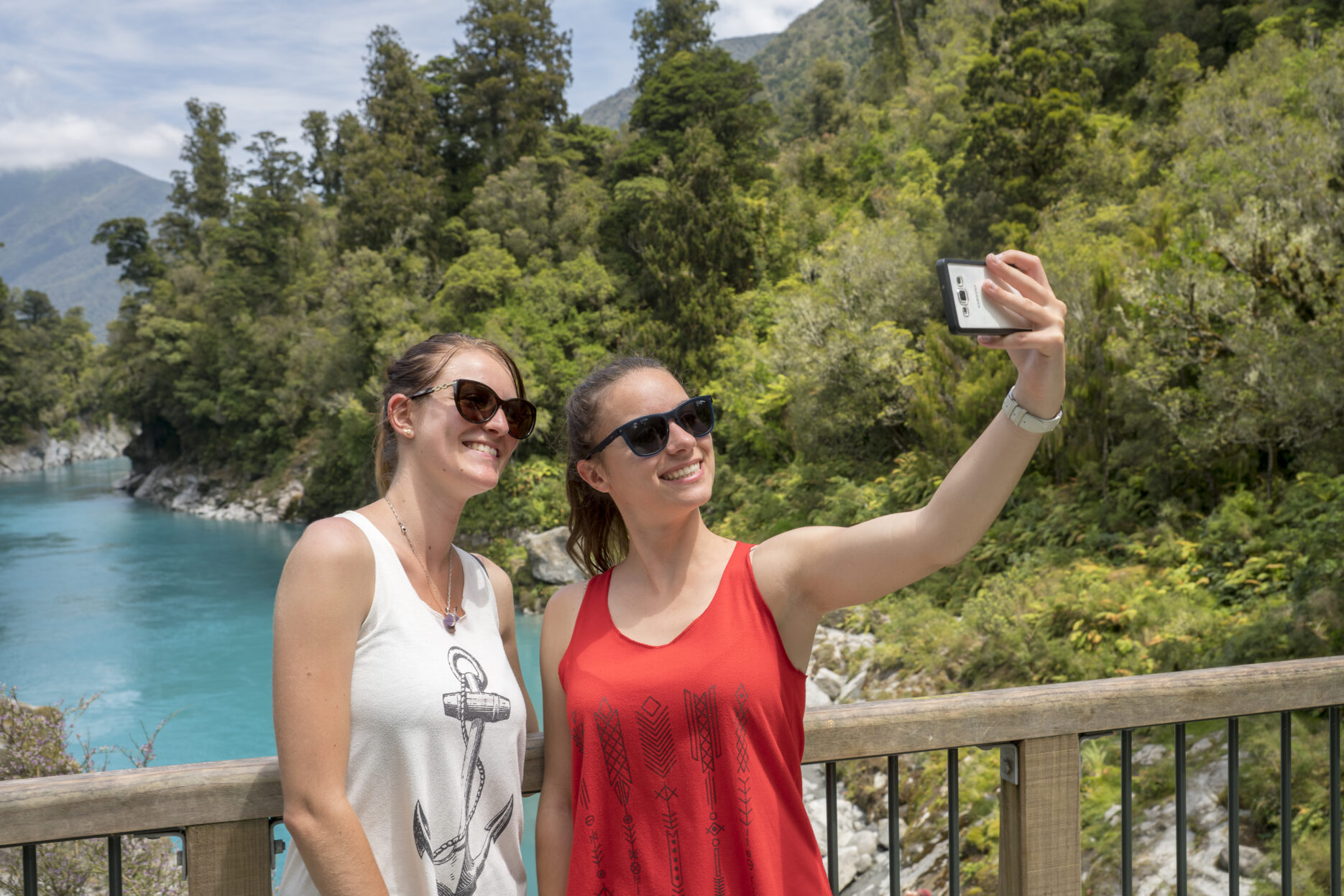
Image Attribution
Nimmo, S. (n.d.). Tourist Taking A Selfie at Hokitika Gorge. Development West Coast. Licensed under CC BY-SA 4.0 as part of the West Coast Wikipedian at Large project.