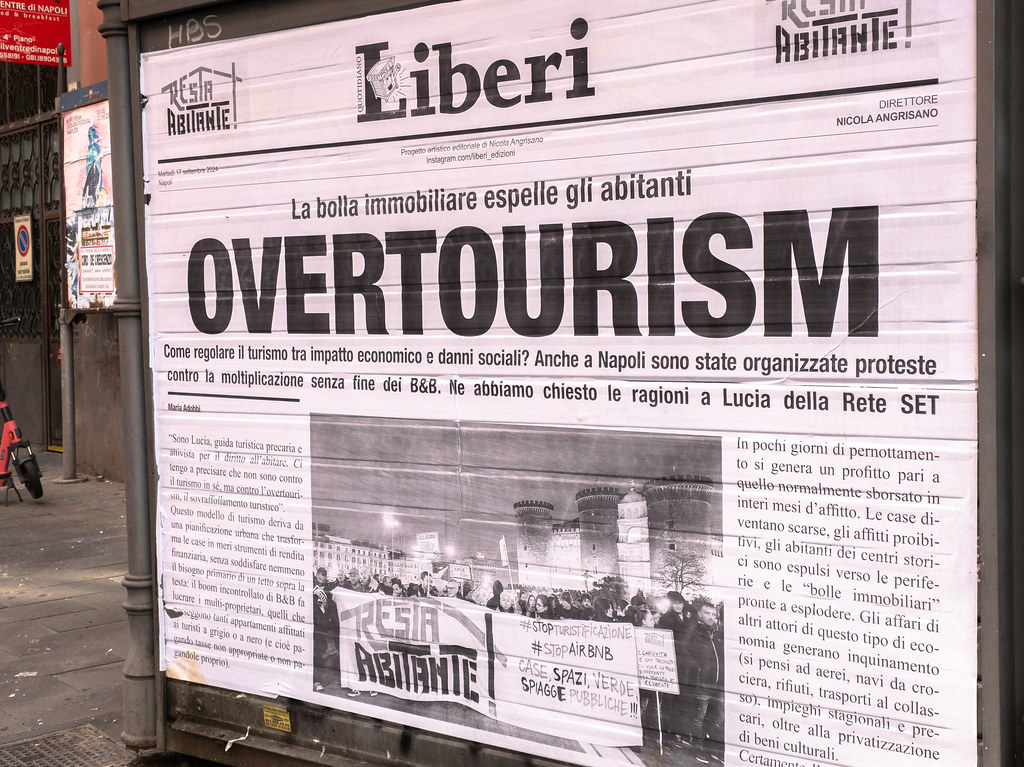
We all enjoy traveling. Visiting new places, meeting new people, and encountering other cultures. But what happens when we all visit the same destination at once? Destinations such as Venice, Bali, and Barcelona have begun to feel the strain of too many visitors. This has resulted in environmental damage, overcrowding, and the loss of local culture. I’ve seen it on my travels and maybe you might have begun to notice it as well. This is a growing issue and has caused worldwide concern but there are ways to lessen the impact. In this post I will explore how overtourism affects popular tourist destinations, what’s being done to combat it, how smarter policies and more mindful travel habits can help, and how you as a traveler can play a role in creating a more sustainable future for tourism.
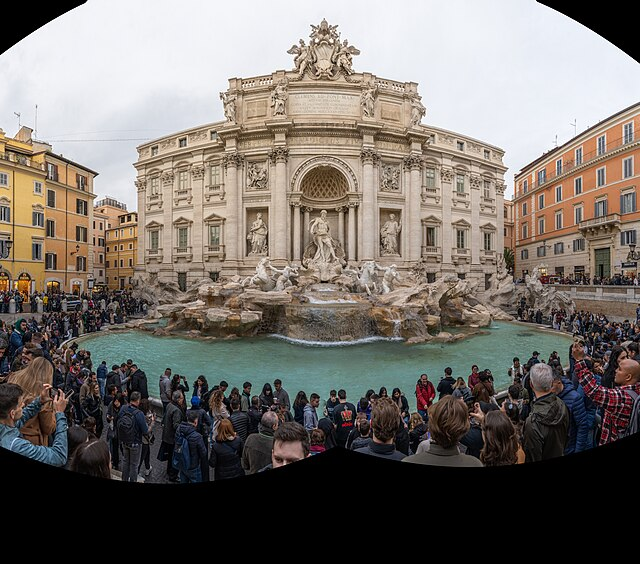
Images from Roma Project (Creative Commons Zero, Public Domain Dedication). Trevi Fountain in Rome, Italy
What is Overtourism, Why does it matter?
When we think of travel we often think of it as an escape, whether that is from work, school, or just life in general. It can be a refreshing change of scenery, and a chance to explore new cultures. But sometimes the very act of being a tourist can change from gentle admiration into unintended harm. That’s what is meant when we talk about overtourism. When you hear the word overtourism you might think of the famous pictures of how crowded the Trevi Fountain in Italy is. That is what is meant by the term, it is a situation where the number of visitors exceeds what a place can comfortably handle, and the result is declining quality of life for locals and a degraded experience for visitors.
Definition of overtourism
To understand this complex problem in its entirety we need to go more in depth about what overtourism means. It is when a destination exceeds the maximum capacity to sustain visitors. According to national geographic, “The term ‘overtourism’ is relatively new, having been coined over a decade ago to highlight the spiralling numbers of visitors taking a toll on cities, landmarks and landscapes” (Leahy, 23). This problem has only started to occur recently as people have started to turn back to travel following the pandemic. This has started to cause a strain on tourist sites and in some places the population has increased by over 1000% just due travellers (Leahy, 23). Having this many people in one place can have major consequences.
Some of the consequences
When overtourism happens, the effects can ripple across the environment, culture, and daily life of the residents. Some of the main consequences include:
- Environmental degradation: When there are more people in an area that means more use of fragile ecosystems. This includes greater waste, more pollution, and potential damage to natural features. For example, in Puerto Rico tourism growth has been linked with littering, illegal off-road vehicle use in protected zones, and strain on beaches, forests and nesting grounds of endangered species. In one specific case, the bioluminescent bay in La Parguera is suffering from sediment stirred up by motorboats and construction, reducing the glow of plankton because of oxygen depletion—driven in part by increased tourism development and lax enforcement (Sumit et al, 2025).
- Overcrowding and infrastructure strain: Public transport, roads, local services, water, and waste systems can become overloaded. This means that visitors may find the experience less enjoyable with long lines, crowded sights, while locals may find everyday life harder.
- Community impacts: When tourism grows unchecked, local housing can become overpriced and this pushes out residents. Local businesses also may be replaced by tourist-oriented ones, and the authenticity of the community can erode. According to a journalist, “there is a knock-on effect of traditional stores being replaced by businesses catering to tourists, like souvenir shops, burger joints and “bubble tea” spots.” The journalist then quotes a resident of Spain,,”‘Our lives, as lifelong residents of Barcelona, are coming to an end,’ he said. ‘We are being pushed out systematically.’’’(Protesters, 25)
- Visitor experience degrades: It might sound counterintuitive, but visiting overcrowded destinations may become less satisfying. This is because the “specialness” wears off when there are busloads of visitors, countless tourist traps, and natural wonders are diminished. I have seen this first hand on my travels. As I visited popular historical sites in Istanbul I found that they were crawling with tourists. One prominent example was in the Grand Bazaar, this area was so packed that you had no choice but to continue moving with the crowd of people. There was not really an opportunity to stop and take a look around. The Grand Bazaar of Istanbul also happened to go viral on both TikTok and Instagram and in my opinion these platforms contribute to the problem. On this same trip I also happened to see a lot online about a destination known as Pamukkale, which was known for its salt flats and hot springs. When I inquired further to my friend and her mom, who happen to be Turkish, they told me that this was such a popular destination and that the springs have started to dry out.
Why it matters for travellers (that means you)
If you like to travel for the same reason I do, to experience a destination’s environment, culture and uniqueness, when those factors begin to degrade due to overtourism, the place you came to explore changes and sometimes changes dramatically. As individuals, our travel choices have an impact on the places we visit no matter how small they may be. Recognizing overtourism helps travellers make better decisions, and choose when and how to visit so that we’re part of the solution, not part of the problem.
How travelers can help
You can help ease the pains and impacts of overtourism as well! Small choices add up and for frequent fliers, this is where you can make a real difference.
- Consider longer stays: Slow travel reduces the number of arrival/departure events as well as flights. It also spreads your economic benefit over more days.
- Travel during off-peak: Visit during low seasons help to reduce pressure on local infrastructure and lead to a better experience.
- Be mindful of where your money goes: Eat at family-run restaurants, buy from local artisans, and use locally owned guides. This helps support residents instead of multinational chains.
- Avoid “Instagram tourism”: Try and avoid only going to the spots everyone posts and explore less popular neighborhoods, parks, and community events.
- Respect rules and culture: Follow signage, stay on marked trails, and be mindful of noise, dress codes, and sacred places.
A few quick numbers to show impact: international arrivals recovered after the pandemic with roughly 1.4 billion tourists in 2024, and to put it in perspective that’s about how many people that live in New York City (International Tourism n.d.). When destinations cap visitors are charge targeted fees, it can both reduce crowding and generate funds that go to conservation and housing mitigation.
The experiences of popular tourist destinations
To go into more detail about why you should be more mindful of your travels. Destinations that are celebrated for their unique culture, natural beauty, or welcoming communities are now feeling the strain of visitor overload and locals are speaking out and resisting the harm being done to their homes.
West Maui, Hawaiʻi
One popular place that has been urging a reduction of visitors is Hawaii. Even after the tragic wildfires in the summer of 2023 around Lāhainā, visitors began returning to West Maui only months later. This left some residents so outraged they began a petition. One petition gathered over 10,000 signatures asking for the reopening to be delayed so the community could heal and rebuild (Alfonseca, 2023). Even prior to this, locals say tourism was already placing heavy burdens on infrastructure, environment and cultural sites, and the reopening pushed those tensions out to the surface.
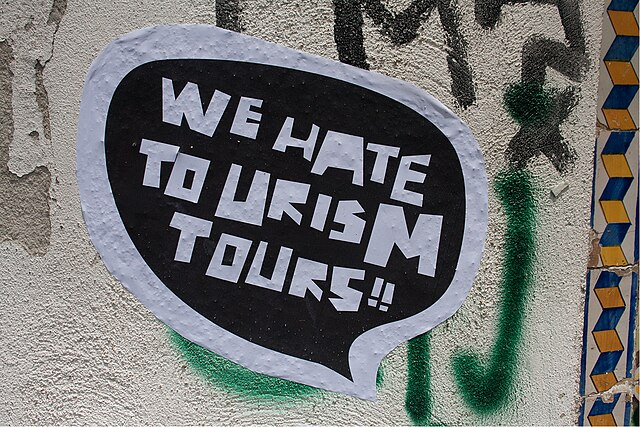
We Hate (Creative Commons Attribution 2.0)
Barcelona & Mallorca, Spain
Throughout Europe, the backlash has been even more visible. In June 2025, protesters in Barcelona and Mallorca held a march against mass tourism. At this protest they used water-guns on tourists as a symbolic act of their frustration. In these protests residents held up signs saying “One more tourist, one less resident.” They stuck stickers saying “Citizen Self-Defense,” and “Tourist Go Home.” One resident in Barcelona said that rental costs had risen over 30% because homes were increasingly used for short-term tourist stays, pushing out long-time locals. There is also a reduction of traditional stores as they are being replaced by shops catered to tourists (Protesters, 25). The anger of locals is evident and something needs to be done about this issue. Cities such as Barcelona and Mallorca are starting to lose their homes and culture.
Cultural Loss
There has also been a rise in gentrification, displacement, and cultural erasure in popular tourist destinations. When a place becomes a “hot spot,” wealthy outside buyers start to purchase property. This property is used to create Airbnbs replacing family homes and this is how long time locals are getting slowly pushed out (Rojas-Lebron, n.d.). This does not just create an economic problem, but it also threatens the culture and traditions of an area. Puerto Rico is a very clear example of this. In recent years there has been a lot of luxury development, investor tax breaks, and an explosion of short-term rentals that have caused many historic neighborhoods to become too expensive for the residents that grew up there. This has caused so many problems that popular singer Bad Bunny had tackled these issues in his most recent album NADIE SABE LO QUE VA A PASAR MAÑANA as he calls out how his own island has been reshaped due to tourism and foreign investment. His take on these issues went viral and brought light to these problems and opened up international conversation about how places like Old San Juan and beach towns in the west coast are no longer primarily for Puerto Ricans and they’re being redesigned to cater to outsiders. The culture of places has begun to be warped into something Instagram friendly, while residents are pushed to the side changing who a place is truly for. The culture that people travel to see has begun to disappear.
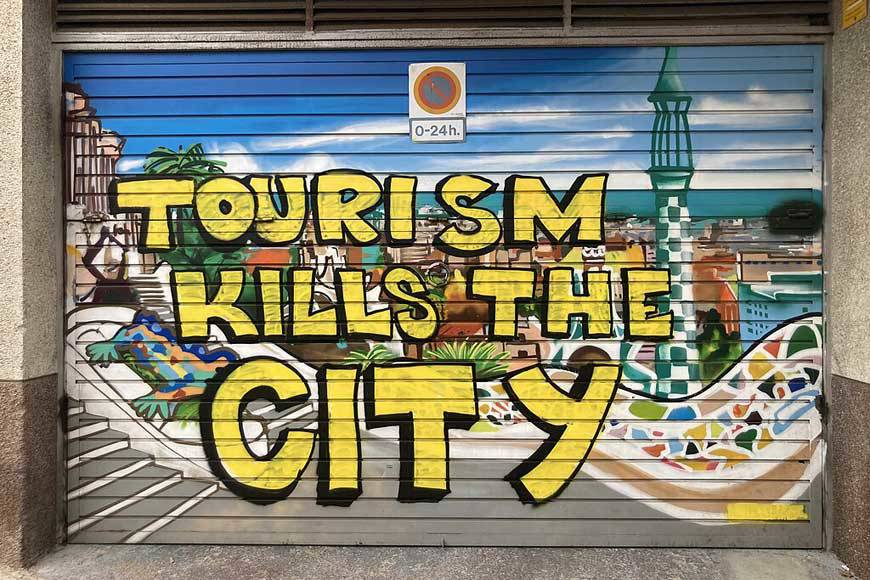
A graffiti in Barcelona (Mattsjc/Wikimedia Commons – cc by 4.0)
How local governments have responded
When crowds of tourists get out of hand, governments are finally taking action by enacting visitor limits, tourist taxes, and off-season promotion. Some places have begun to impose strict daily entry caps by creating a timed-ticket system, and other cities have introduced day-visitor fees or “tourist taxes” to discourage short, high-impact visits and raise funds for conservation and infrastructure (Kilipiris et al, 2012). Venice also created a tourist fee program which produced millions in revenue and was recently expanded, and showed how pricing can both moderate and fund protections. Governments also try to flatten demand by marketing the shoulder and low seasons so attractions aren’t packed every weekend (Nelken-Zitser et al, 2025).
What’s being done
Steps industries have taken: certifications and greener operations
The travel industry has begun responding too. Hotels, tour operators, and tour-booking platforms are starting to use sustainable-travel certifications, energy-efficient operations, and low-impact itineraries. These standards that come from local eco-labels to international certifications, encourage smaller group sizes, waste reduction, and partnerships with local suppliers. This is all aimed at keeping tourism economically useful without destroying what attracts visitors in the first place (Kilipiris et al, 2012). Research into operationalizing sustainable tourism stresses that micro-enterprises, or local travel agencies and small hotels, must be central to the strategy of combating over tourism, not just an afterthought.
Sustainable tourism — will it stick?
Can “responsible tourism” really balance preservation and livelihoods?
Sometimes. If policy, industry, and traveler behavior all change together there is a better chance of lessening the impacts of over tourism. Academic research shows that the theory of sustainable tourism can be operationalized, but its success depends on embedding sustainability into small businesses and local governments, not just the greenwashing done by big brands (García, 2022). When tourism firms such as travel agents, small hotels, local guides, adopt real sustainable practices and stick with them, positive outcomes for the environment and community increase but only if these efforts are backed by regulations.
Evidence from communities
Studies of resident perceptions such as, research done in Alcúdia, Majorca, finds that overtourism lowers locals’ quality-of-life, but smart local government management and responsible tourist behavior can lessen those effects (García, 2022). Policy matters, having visitor limits, fair distribution of tourist revenue, enforcement against illegal rentals, and also tourist conduct. Policy, industry practice, and traveler choices all work together to improve destinations, improve resident satisfaction and create more sustainable local economies.
Overtourism is fixable only when all systems make a change. Just one hotel or one government making a change won’t help, but a combination of visitor management, local economic safeguards, and traveler behavior will. You, as a traveler, hold one third of the power. Where you go, when you go, and how you spend are decisions that have an impact. Use those choices intentionally and you’ll help protect the places you love to visit.
Works Cited
- International tourism recovers pre-pandemic levels in 2024. (n.d.). UN Tourism. https://www.untourism.int/news/international-tourism-recovers-pre-pandemic-levels-in-2024
- Kilipiris, F., & Zardava, S. (2012). Developing sustainable tourism in a changing environment: Issues for the tourism enterprises (Travel Agencies and Hospitality Enterprises). Procedia – Social and Behavioral Sciences, 44, 44–52. https://doi.org/10.1016/j.sbspro.2012.05.003
- Nelken-Zitser, J., & Jankowicz, M. (2025, February 11). Venice doubles its last-minute “tourist tax” — with other cities looking to copy its approach to overtourism. Business Insider. https://www.businessinsider.com/overtourism-venice-doubles-last-minute-tourist-tax-other-cities-follow-2025-2
- Rojas-Lebron, G. (n.d.). Gentrification in Puerto Rico: the impact on displacement and local livelihoods. ReVista. https://revista.drclas.harvard.edu/gentrification-in-puerto-rico-the-impact-on-displacement-and-local-livelihoods/
- Sumit, & Sumit. (2025, March 4). Puerto Rico’s tourism boom: How the island balances record growth with cultural and environmental sustainability – Travel and Tour World. Travel and Tour World. https://www.travelandtourworld.com/news/article/puerto-ricos-tourism-boom-how-the-island-balances-record-growth-with-cultural-and-environmental-sustainability/
- Alfonseca, K. (n.d.). Hawaii’s “overtourism” becomes growing debate as West Maui reopens for visitors. ABC News. https://abcnews.go.com/US/hawaiis-overtourism-growing-debate-west-maui-reopens-visitors/story?id=103692850
- Leahy, K. (2023, September 11). Is overtourism a problem?. Travel. https://www.nationalgeographic.com/travel/article/what-is-overtourism
- CBS Interactive. (2025, June 16). Protesters in Spain shoot water guns at tourists in demonstration against Mass Tourism, housing costs. CBS News. https://www.cbsnews.com/news/spain-protest-water-guns-tourism-housing-costs/
- García-Buades, M. E., García-Sastre, M. A., & Alemany-Hormaeche, M. (2022). Effects of overtourism, local government, and tourist behavior on residents’ perceptions in Alcúdia (Majorca, Spain). Journal of Outdoor Recreation and Tourism, 39, 100499. https://doi.org/10.1016/j.jort.2022.100499
Featured Image
Featured Image: “Overtourism, Napoli, 20241020” by G · RTM is licensed under CC BY-NC-ND 2.0.