After creating my visualization (I’ll share it in class but I don’t want to add it here because I don’t want to influence what yours will look like!), I’ve decided that the three things I’m most interested in right now are teaching, letterpress printing, and databases. Here’s a little more on each thing.
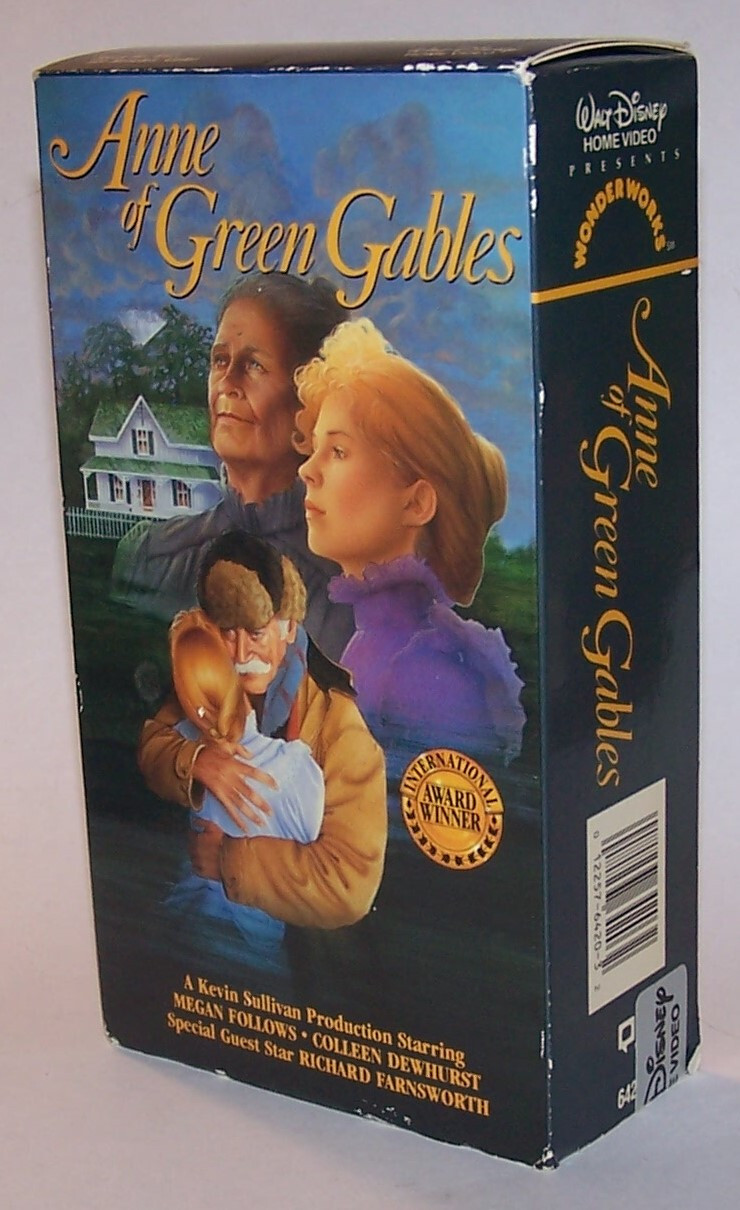
Teaching: I’m fascinated by the way students learn and I’m always trying to find new ways to encourage more authentic learning (not just a performance of knowingness, which often happens because of the way students are evaluated in school). This started a LONG time ago. In my visualization, I added a TV to represent my first time watching Anne of Green Gables and meeting Anne’s teacher Ms. Stacey, who contributed to my desire to become a teacher.
Letterpress Printing: I’ve been interested in the history of printing technologies since I started studying nineteenth-century literature and theater in graduate school, but I’ve recently been learning more as I’ve been working to build a book lab in our university’s makerspace. I’ve loved learning how to make paper by hand, how to compose type, and this semester I’ll be printing holiday cards on the etching press in the makerspace.
Databases: I started noticing my own reliance on recommender systems (Netflix, Pandora, Google) just before the pandemic and this has made me really interested in ways of resisting the passiveness these tools encourage. I’ve become interested in ways of organizing data that can encourage people to browse through structured information rather than waiting passively for an algorithmically generated recommendation. This has led to a summer studying relational databases and learning how to create one that my students can use and contribute to (it’s called WonderCat).
What I Chose
For this assignment, I decided to focus on my experience with Anne of Green Gables because it’s been a huge influence in my life and I’ve never really stopped to think about how and why that might be.
My Experience
When I was a kid, we didn’t have cable TV, so the only thing I could watch were shows on the basic channels (NBC, CBS, ABC, and PBS) and VHS tapes we bought or got from the rental store (video rental stores still exist! Check out Best Video in Hamden if you want a break from streaming services). I don’t know when Anne of Green Gables was first shown on PBS, but that’s where I saw it for the first time and I was instantly in love. At the time, one of the gifts you’d receive for donating to the PBS fund drive was the full set of VHS tapes for the four-hour movie; my mom let me call to donate and request the tapes. I watched the movie over and over and over. I was in love with everything about it, but what I’m going to think about now was the way it felt when Miss Stacy started as the teacher at Avonlea school. Things are pretty horrible for Anne at the start of the movie. Her parents have died of scarlet fever and she’s been adopted by a horrible woman who makes her do all of the chores (she’s one of MANY orphans in fiction and I think this is a big part of why so many people connect with her). She’s sent back to the orphanage after being blamed for something that wasn’t her fault and then she’s sent to Prince Edward Island by mistake (the siblings Marilla and Matthew Cuthbert are getting older and they request a boy from the orphanage–someone who can help with the chores). They’re not sure they can keep Anne once they learn she’s a girl, but then they do, even though she makes lots of mistakes and has a temper. At first, school is frustrating because she has a terrible teacher (I can’t find any video of Mr. Phillips but he’s awful). Anne immediately makes a friend, Diana Barry, but then Diana’s mother forbids their friendship (after Anne accidentally gets Diana drunk on currant wine).
And then, a new teacher comes to town. And she is wonderful in every way. There really had been no women in Anne’s life to that point who were kind and intelligent and beautiful. Only grumpy women and snotty women and gossipy women. Miss Stacy was fresh and new and…maybe modern might be the right word? She was confident and authoritative and caring. I was filled with wonder as she stood before the classroom. I thought it was truly incredible that such a person would exist in the world and so excited Anne got to have her as a teacher.
I think the feeling I had then and what I honestly still feel every time I watch the scene is wonder. Wonder is defined in our glossary of experiences as “an uplifting emotional experience of discovery.”
Features Prompting My Experience
So, what was it exactly that made me feel wonder? Lucky for me, the production company that created the film released a clip that is exactly the part of the film that prompted my experience. If I didn’t have this clip, I’d quote from the scene here, but this is much better!
Rhetorical Strategies Prompting my Experience
To understand how this movie made me feel so inspired by Miss Stacy, I wanted to think about who created her as a character. I know that she wasn’t only created by filmmakers who created the film I watched. She was created first by Lucy Maud Montgomery, the author who wrote Anne of Green Gables in 1908. I found an edition of the novel on Project Gutenberg and used CTRL+F to find the first mention of Miss Stacy. Anne is rambling to Marilla (the woman who adopted her) about her day and she says this:
The trustees have hired a new teacher and it’s a lady. Her name is Miss Muriel Stacy. Isn’t that a romantic name? Mrs. Lynde says they’ve never had a female teacher in Avonlea before and she thinks it is a dangerous innovation. But I think it will be splendid to have a lady teacher, and I really don’t see how I’m going to live through the two weeks before school begins. I’m so impatient to see her.”
-Chapter XXII of Anne of Green Gables (full text from Project Gutenberg)
There is no first day of class as there is in the film. In the novel, we don’t hear Miss Stacy speak. Instead, the narrator explains how Anne was impacted by her:
In the new teacher she found another true and helpful friend. Miss Stacy was a bright, sympathetic young woman with the happy gift of winning and holding the affections of her pupils and bringing out the best that was in them mentally and morally. Anne expanded like a flower under this wholesome influence and carried home to the admiring Matthew and the critical Marilla glowing accounts of schoolwork and aims.
-Chapter XXIV of Anne of Green Gables (full text from Project Gutenberg)
Now that I’ve looked at the way Miss Stacy exists in the novel, I feel confident that my experience was shaped much more by the way the filmmakers created the scene. And beyond brilliant casting (the actress Marilyn Lightstone is magnetic and kind and warm and…how could you not love her?) I think the most important technology they used was a reaction shot, which allowed me as a viewer to see how inspired Anne was by Miss Stacy. That decision was powerful because I already identified with Anne as a character. I am not alone in identifying with Anne in this film and there’s lots more I could say about how that works, but primarily right now, I will conclude by saying that I loved Miss Stacy because I watched Anne love Miss Stacy.
I’m also realizing that the filmmakers rearranged a few things from the book and that my favorite line that Miss Stacy says in the movie was actually something Anne in the book loved about a different teacher, the minister’s wife who took over teaching when Mr. Phillips left.
“Mrs. Allan is perfectly lovely,” she announced one Sunday afternoon. “She’s taken our class and she’s a splendid teacher. She said right away she didn’t think it was fair for the teacher to ask all the questions, and you know, Marilla, that is exactly what I’ve always thought. She said we could ask her any question we liked and I asked ever so many. I’m good at asking questions, Marilla.”
-Chapter XXI of Anne of Green Gables (full text from Project Gutenberg)
The filmmakers gave that line to Miss Stacy! A single character who alone brings great things to Anne. This makes Miss Stacy in the film even more powerful than she is in the novel, when she’s one of several positive female influences in Anne’s life. I don’t think this has a name in our glossary yet, but I think the technology is something used by filmmakers adapting long novels…distilling the complexities and nuances into one powerful cinematic moment. I’m going to do some more research to see if there’s a name for this already. Oh, just kidding. I Googled “combining characters in film adaptation” and turned up “composite character.” So there. Another piece of the technology working here is that the filmmakers created a composite character.
Though I’m tempted to write more and think more about this, I’m going to stop here because I want you all to see that your primary goal as you draft is to put a name to your experience, describe the features that prompted your experience, and then (if you want) try to identify the rhetorical strategies used to create those features
Here’s a summary of my thinking so far:
| Experience | Feature | Technologies |
| Wonder | Miss Stacy talking to the class | composite character + casting + reaction shot |
Works Cited
Anne of Green Gables | Project Gutenberg. https://www.gutenberg.org/files/45/45-h/45-h.htm?hs_article_title=Anne%20of%20Green%20Gables#link2HCH0021. Accessed 25 Aug. 2025.
Anne of Green Gables: Spotlight on Marilyn Lightstone 3. Directed by Sullivan Entertainment, 2013. YouTube, https://www.youtube.com/watch?v=0vutGBoi8Ys.
Featured Image
Box art for Anne of Green Gables VHS Set. Walt Disney Home Entertainment. All Rights Reserved.